How Same-Day Delivery Is Reviving Small Business in Indianapolis
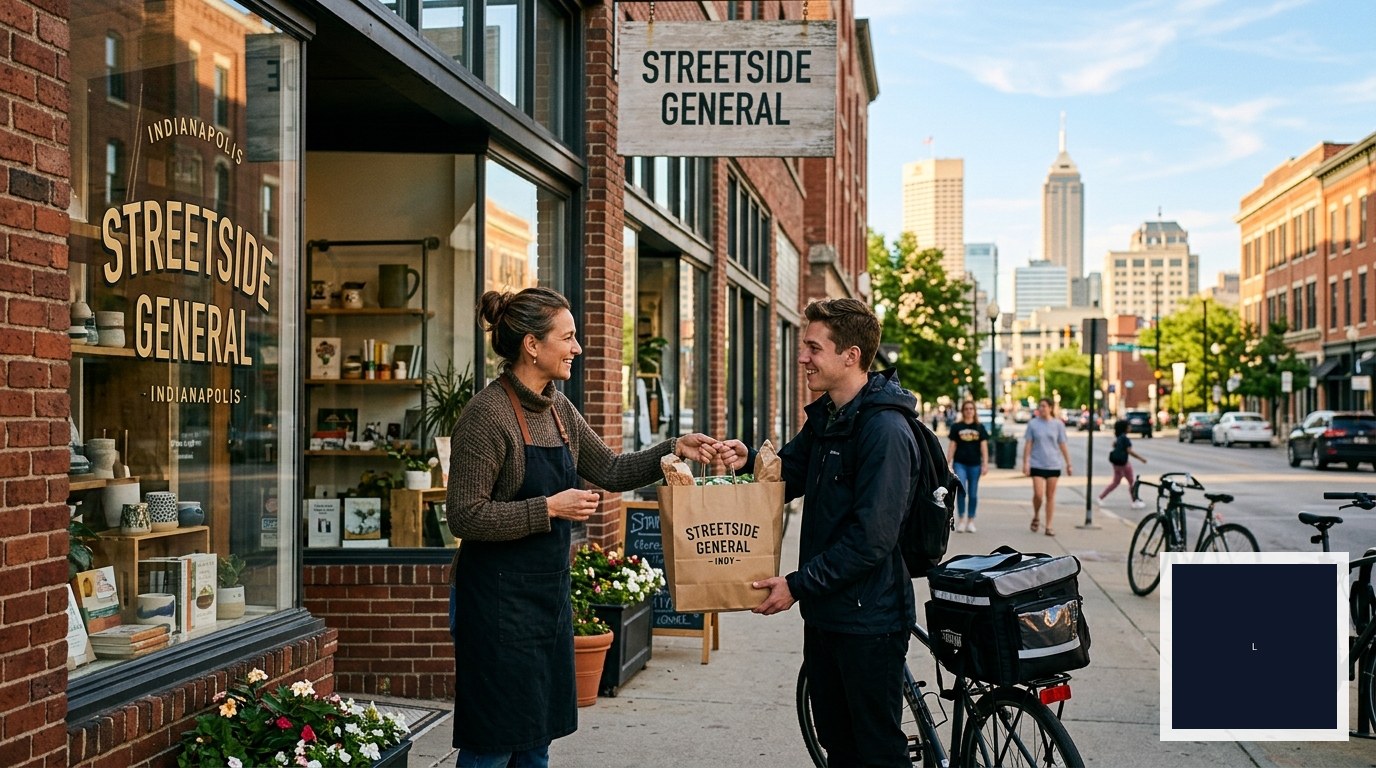
How Same-Day Delivery Is Reviving Small Business in Indianapolis
When Marcus Reed opened Crossroads Jerk Kitchen in Fountain Square three years ago, delivery wasn't part of his business model. The third-party app fees—sometimes 30% per order—would've gutted his already-thin margins on $12 oxtail plates. So he focused on dine-in and walk-up carry-out, leaving money on the table every time someone called asking if he delivered.
That changed six months ago when Reed connected with a same-day delivery platform that operates more like a neighborhood bulletin board than a corporate middleman. Now, Crossroads offers 30-minute delivery within a three-mile radius during lunch and dinner rushes. The difference? He pays a flat per-delivery fee instead of hemorrhaging a third of every order.
"Last Tuesday, we did 47 deliveries," Reed says, pulling up his phone to show the dashboard. "That's 47 orders we would've just lost before. And I'm keeping 91 cents on every dollar."
Reed's story is playing out across Indianapolis, where small businesses are discovering that same-day delivery doesn't have to mean surrendering to algorithms and punishing fee structures.
The Thrift Shop That Went Hyperlocal
Five miles north in Broad Ripple, Second Chance Vintage was dying a slow death by Instagram. Owner Jenny Kowalski had built a modest following posting her best finds—1970s denim jackets, mid-century lamps, vintage Carhartt—but followers didn't always translate to foot traffic.
"Someone in Fishers would DM me about a lamp on Tuesday, and by the time they drove over on Saturday, it was gone," Kowalski explains. "I was losing sales to my own success."
Now, when Kowalski posts a piece, she includes a simple callout: same-day delivery available within Indianapolis. A vintage turntable gets claimed by a grad student in Fountain Square. A leather jacket goes to Irvington. A teak credenza makes it to Butler-Tarkington before lunch.
The math works because the delivery radius is tight and the platform connects her directly with local drivers who are often making multiple stops in the same neighborhood. No warehouse. No national logistics. Just Jenny, a buyer, and someone with a cargo van making $35 for an hour's work.
"I've done $3,200 in delivery sales this month," she says. "That's rent."
When You Need Movers *Today*
The same-day model gets really interesting when you apply it to services, not just products.
Take Naptown Moving, a small operation run by Chris and Deanna Martinez. Most weeks, they're booked solid with scheduled moves. But what happens when someone's lease breaks unexpectedly? When an estate needs to be cleared by Friday? When a business has to relocate inventory now?
Traditionally, those jobs went to whoever picked up the phone, often big national companies with premium rush fees. Now, the Martinezes list their truck and crew availability on the platform each morning. If they have a gap, someone fills it—often within hours.
"We picked up a same-day move last month that paid $680 for four hours of work," Chris says. "The client found us at 9 AM, we moved her studio apartment by 2 PM, and we still made our evening job. That's a Thursday that used to be half-wasted."
The platform also lets them pull in day-of crew when they're overbooked. Need two extra pairs of hands for a sudden three-bedroom job? Post it. Someone in Beech Grove who's between gigs takes it. The job gets done. Everyone gets paid.
The Unglamorous Truth About Hyperlocal
None of this is revolutionary technology. There's no AI, no venture capital war chest, no Super Bowl commercials. It's just infrastructure that treats small businesses like adults—letting them set their own prices, control their own customer relationships, and keep most of their own money.
Marcus Reed still works 60-hour weeks. Jenny Kowalski still drives to estate sales at 6 AM. The Martinezes still load their own truck. But now they're competing on something closer to equal footing, reaching customers they couldn't reach before, and filling gaps in their revenue that used to just stay gaps.
In a mid-size city like Indianapolis, where small businesses make up the texture of neighborhoods, that matters. Not because it's disruptive or innovative—but because it's honest, local, and actually sustainable.
---
Looking to connect your local business with same-day customers—or find the services you need right in your neighborhood? See how Lumo keeps it simple, local, and fair.