How Same-Day Delivery Is Saving Small Business in Indianapolis
How Same-Day Delivery Is Saving Small Business in Indianapolis
At 7:43 PM on a rainy Tuesday, Nadia Rodriguez gets an order at her Venezuelan restaurant, Arepa House, on Virginia Avenue. A family of four wants dinner—now. Not in 90 minutes through a national app with inflated prices and mystery fees. Now.
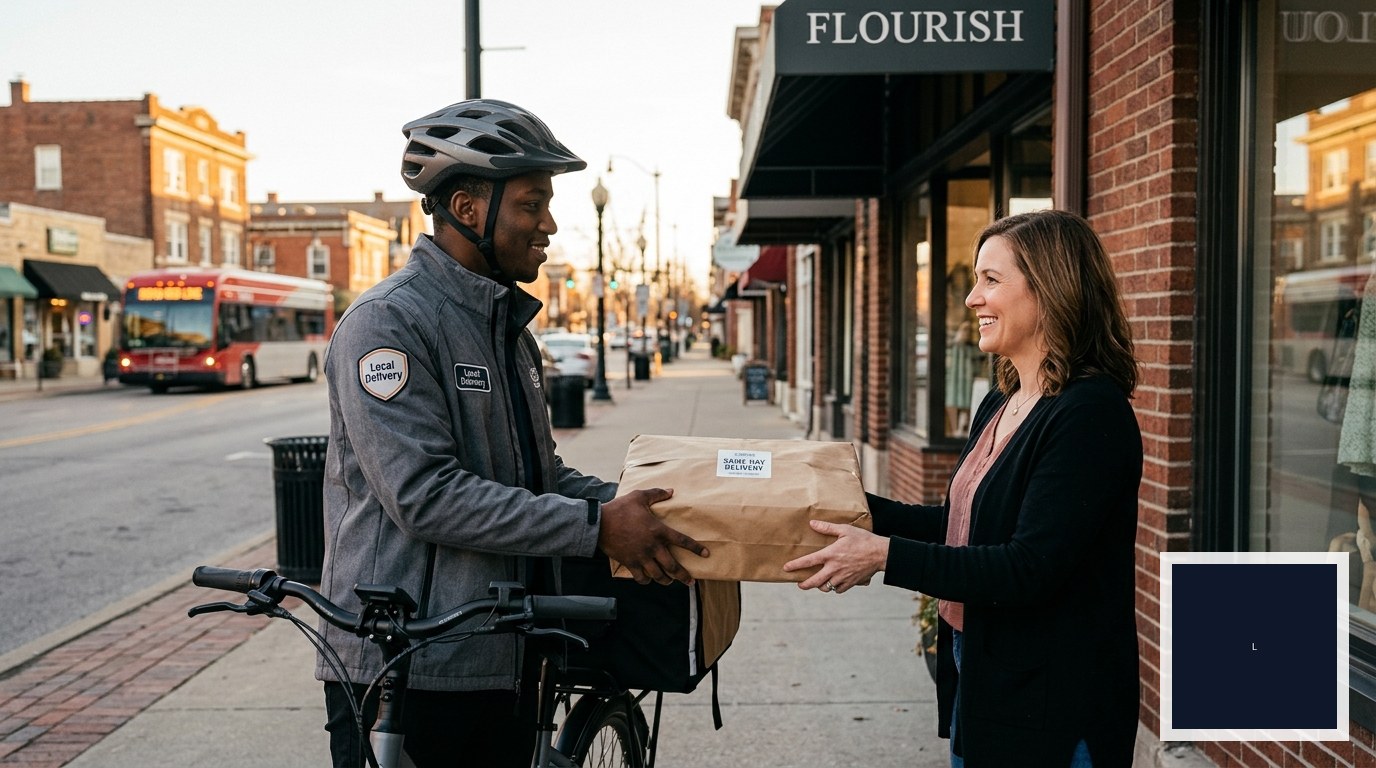
Thirty-one minutes later, their hallacas and tequeños arrive warm. The delivery cost them $4.50. Nadia keeps 93% of the ticket. The driver, a local college student named Marcus, made $18 for forty minutes of work.
This is the promise of hyperlocal same-day delivery—and it's quietly reshaping how small businesses compete in mid-size cities like Indianapolis.
The Restaurant That Couldn't Afford DoorDash
Nadia opened Arepa House in 2022 with savings and a Small Business Administration loan. She knew delivery would be essential, but the economics of national platforms didn't work. Commission rates of 25-30% would kill her margins. Marking up menu prices would kill her reputation.
So for eighteen months, Arepa House was dine-in and pickup only. She watched customers choose mediocre chain food simply because it arrived at their door.
Then she discovered same-day platforms that connect local businesses with local couriers—no venture capital middleman taking a cut to subsidize expansion in Singapore. The commission? Under 10%. Delivery radius? Three miles, which covers Fountain Square, downtown, and Irvington. Speed? Thirty minutes, because the driver isn't juggling four orders across the city.
"Last month, delivery was 34% of revenue," Nadia says. "I hired two people. That doesn't happen without fair delivery."
The Thrift Shop That Went From Browse-Only to Buy-Now
Six miles north in Broad Ripple, Alex Chen runs Repeat Boutique, a curated vintage shop in a neighborhood known more for foot traffic than digital orders. His Instagram has 8,000 followers. His website mostly served as a lookbook.
The problem: His customer base wasn't just 20-somethings who could drop by on Saturday. It was also young parents in Carmel, remote workers in Fishers, and anyone who saw a $42 vintage Levi's jacket on Instagram at 2 PM and wanted it by dinner.
"People would DM me constantly: 'Hold this, I'll come by this weekend,'" Alex says. "Fifty percent never showed."
Now Repeat Boutique offers same-day delivery within a 15-mile radius. Customers text or DM their order. Alex confirms it's available, processes payment, and schedules a courier pickup within two hours. Delivery happens that afternoon or evening.
Sales are up 41% year-over-year. More importantly, Alex is reaching customers who would never have driven to Broad Ripple. A graphic designer in Greenwood. A lawyer downtown. A stylist in Zionsville building a shoot wardrobe.
"It's not about competing with Amazon," he says. "It's about making local shops as convenient as Amazon—but with personality and curation."
The Moving Company That Finds Crews in Real Time
Then there's the labor side. Nick Paulson runs Crosstown Movers, a small operation that does apartment moves, furniture delivery, and estate cleanouts. His biggest constraint isn't trucks—it's people.
"I'd get a call at 10 AM: someone needs a couch moved from Meridian-Kessler to Castleton, today," Nick explains. "I'd have to say no because my two guys were booked."
Now he uses the gig marketplace side of same-day platforms to find vetted helpers within an hour. Background-checked locals who want four hours of work for $25/hour, today. Not a staffing agency with minimums and fees. Not Craigslist chaos. A platform that handles matching, payments, and ratings.
Last month, Nick completed 22 jobs he would've turned down a year ago. Total extra revenue: $8,400.
"These platforms get called 'gig economy' like it's a bad word," he says. "But they let me run a bigger business without payroll I can't afford, and they let college kids make rent without a rigid schedule. Everybody wins."
What This Actually Means
Indianapolis isn't New York. It doesn't have the density for ten-minute grocery delivery funded by billions in venture capital. But it has something better: real businesses serving real neighbors, now with the logistics to compete.
Arepa House isn't trying to be Chipotle. Repeat Boutique isn't trying to be ASOS. Crosstown Movers isn't trying to be U-Haul. They're trying to serve their city—and finally, the infrastructure exists to let them do it profitably.
Same-day delivery doesn't replace the experience of walking into Nadia's restaurant or browsing Alex's racks. It complements it. It says: shop local doesn't have to mean inconvenience yourself.
---
If you're a local business owner or someone who wants to support the Indianapolis economy with your wallet and your time, check out Lumo—where local businesses and local people actually connect, no Silicon Valley detour required.