
How freelance photographers and videographers get gigs in 2025
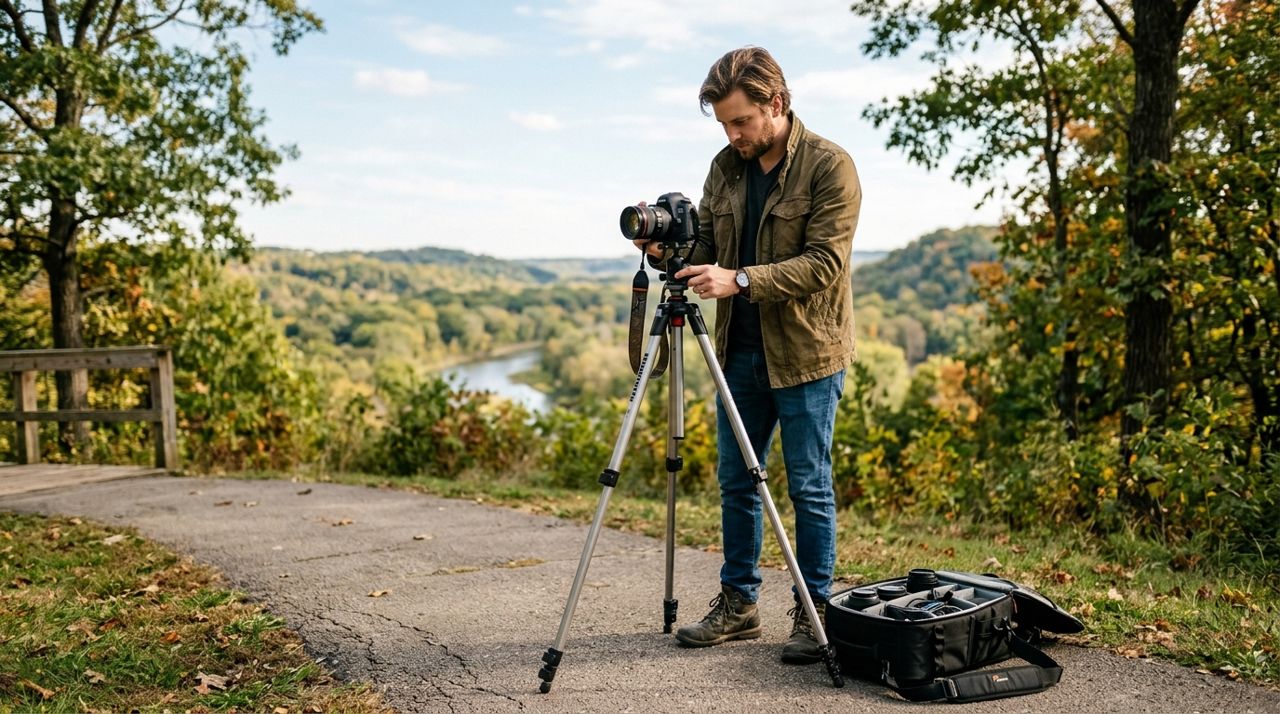
Freelance photography and videography offer flexible, creative work that pays $75–150 per hour for events, $200–500 for real estate shoots, $300–1,500 for weddings, and $500–3,000 for commercial video projects. The market is strong—businesses need product photos, families want portraits, real estate agents require listing shoots, and couples are always booking weddings.
The challenge isn't skill; it's finding clients consistently and managing bookings without drowning in texts and emails. This guide walks through the practical steps to market yourself, price your work, deliver professional results, and turn photography or videography into reliable side income.
- 01
Step 1: Define your services and set your rates
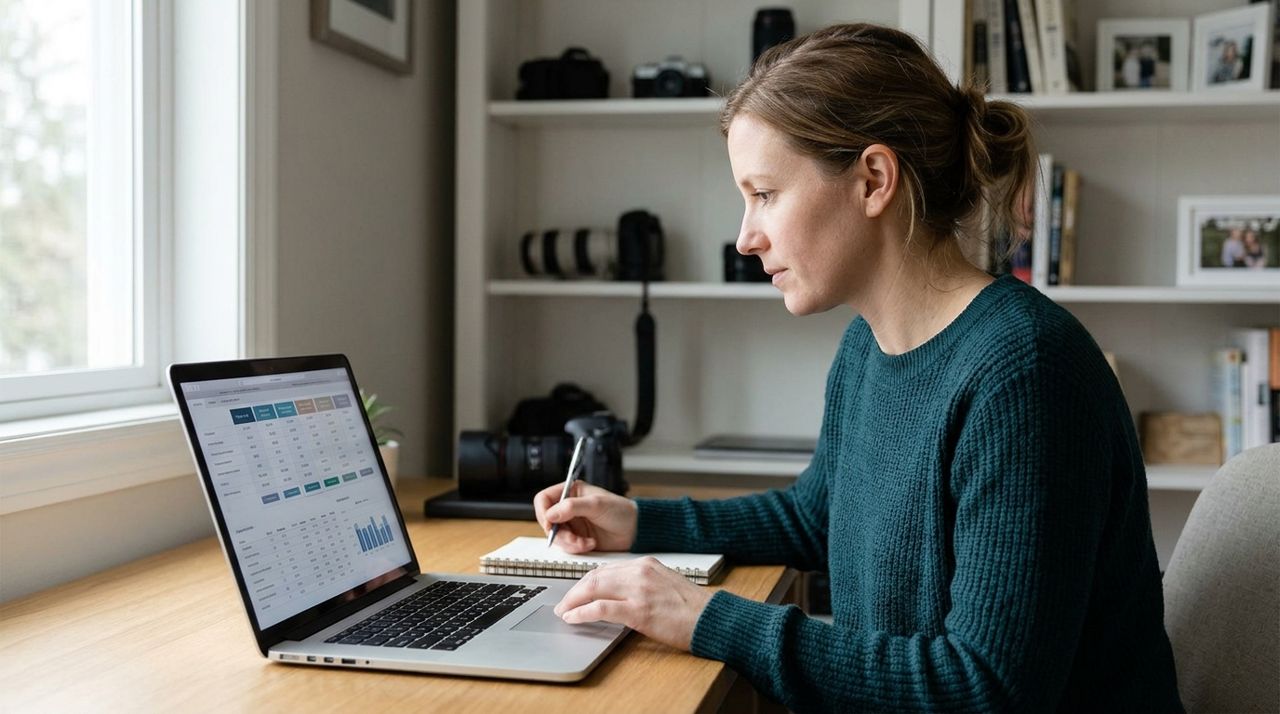
Photographer reviewing pricing sheet and service packages on laptop screen Start by choosing 2–3 specialties rather than trying to do everything. Event photography, real estate shoots, family portraits, product photography, wedding videography, and corporate videos each have different clients and rates. Research what photographers in your city charge: headshots run $100–300, one-hour portrait sessions $150–400, real estate shoots $150–350, wedding photography $1,500–5,000, and corporate video projects $800–3,000.
Create a simple price sheet with three tiers (basic, standard, premium) that include clear deliverables: number of edited photos, shoot duration, delivery timeline, and usage rights. Don't underprice to win clients—clients who only choose the cheapest option are often the hardest to work with. Include your equipment (full-frame camera, lenses, lighting, drone if relevant) and experience in your marketing, but price based on the value you deliver, not your gear cost.
- 02
Step 2: Build a portfolio that sells your work
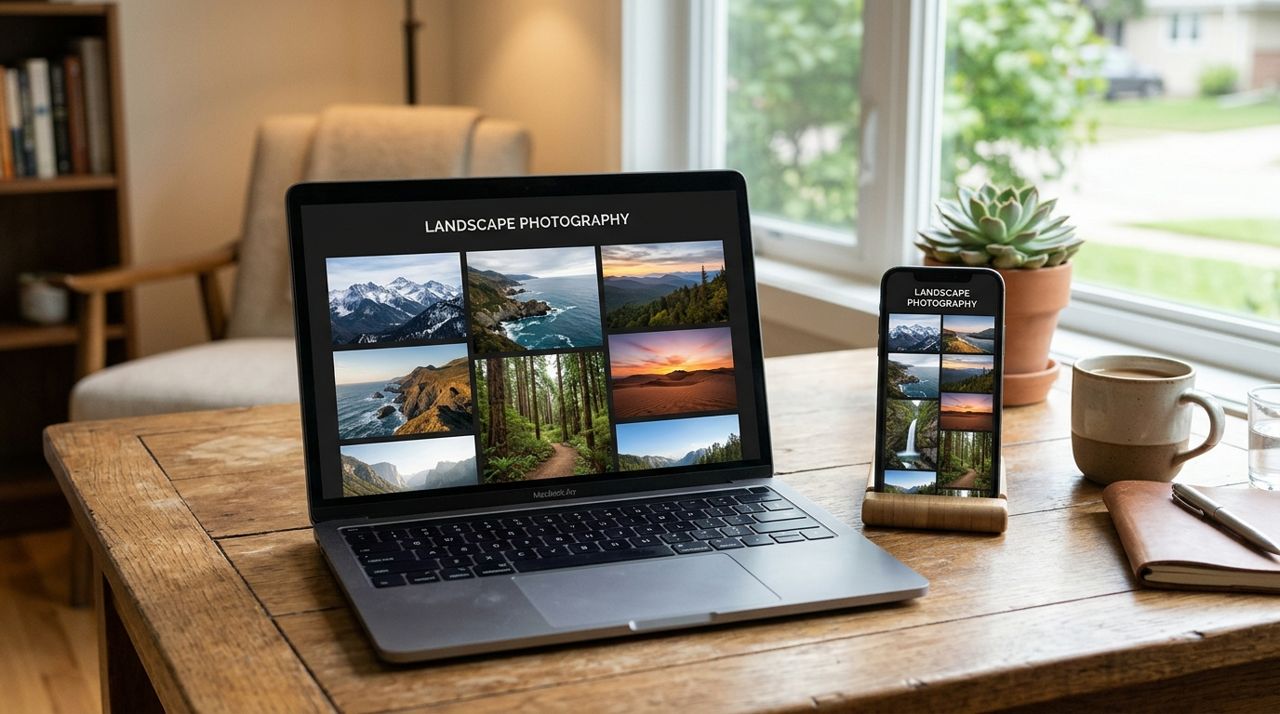
Professional photography portfolio displayed on laptop and mobile phone screens You need 15–25 strong images or 3–5 video samples to show potential clients. If you're just starting, offer free or discounted shoots to friends, local businesses, or nonprofits to build your portfolio—but always deliver professional quality and deadlines. Create a simple website using Squarespace, Wix, or Adobe Portfolio ($8–16/month) with your best work organized by category.
Each portfolio piece should show the style of work you want to get hired for. If you want corporate video clients, don't fill your portfolio with personal projects. Include before/after shots for real estate, full event coverage samples for weddings, and varied angles for product photography. Add a contact form, your services and rates, and testimonials if you have them. Update your portfolio every 3–4 months as you complete better work.
- 03
Step 3: Market yourself where clients are looking
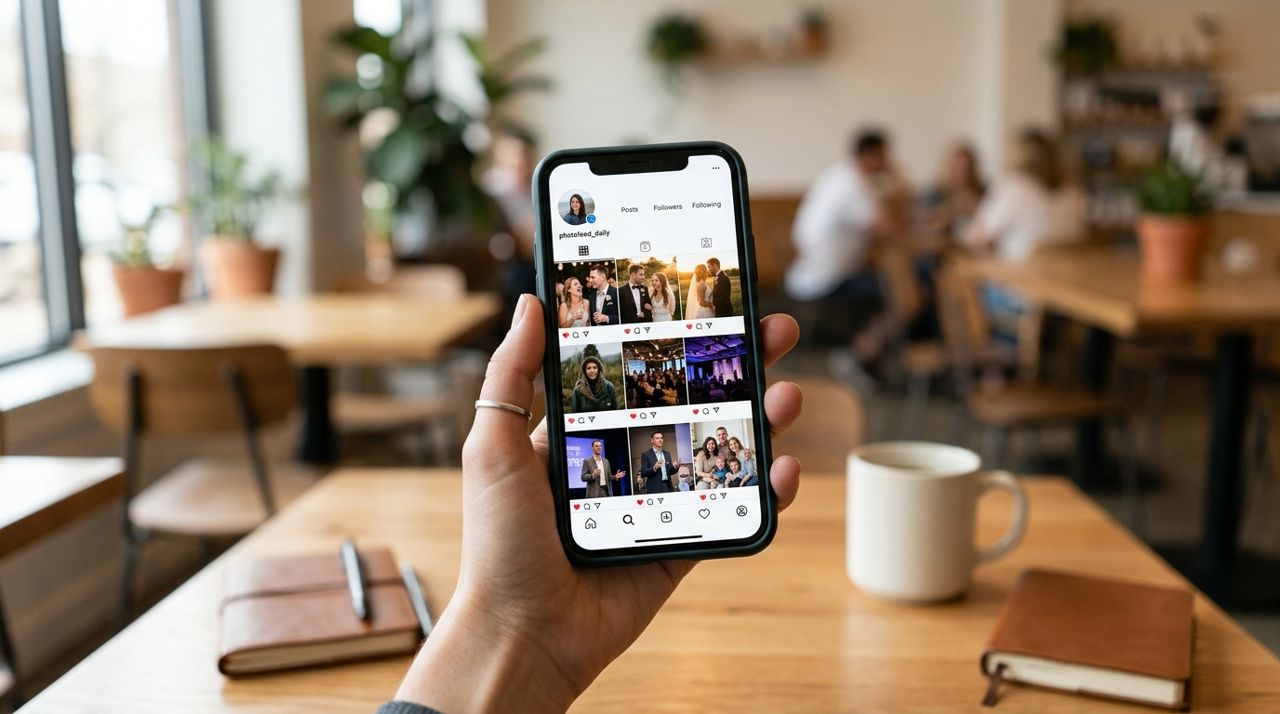
Smartphone showing photographer's Instagram feed with professional event and portrait photos Post your work consistently on Instagram (3–5 times per week) and Facebook, using location tags and relevant hashtags so local clients find you. Join local Facebook groups for small businesses, real estate agents, wedding planning, and neighborhoods where potential clients ask for photographer recommendations. Share your portfolio and respond quickly when someone posts 'looking for a photographer.'
List yourself on platforms where people actively search for photographers: Thumbtack, Bark, Gigsalad, and local marketplaces. Apps like Lumo let you set up a worker profile for photography and videography services, turn on job alerts within your chosen radius, and get notified when someone nearby needs a shoot. You keep 90% of the job price and can accept or decline each request. Network with wedding planners, real estate agents, event coordinators, and small business owners who regularly need photographers—one good referral partner can keep you busy for months.
- 04
Step 4: Respond fast and book with clear contracts

Photographer and client reviewing and signing service contract on tablet When an inquiry comes in, respond within 2 hours—photographers who reply quickly book 60–70% of leads versus 20–30% for those who wait a day. Ask about the date, location, duration, deliverables they need, and their budget. Send your rate and package details, and offer a brief phone call to discuss their vision.
Once they agree, send a simple contract (find photographer contract templates free online at LawDepot or Rocket Lawyer) covering the date, time, location, your rate, deposit amount (typically 25–50%), cancellation policy, delivery timeline (usually 2–4 weeks for edited photos, 4–6 weeks for video), and usage rights. Collect the deposit via Venmo, PayPal, Zelle, or in-app payment if booking through a platform. The contract protects both sides and shows you're professional.
- 05
Step 5: Show up prepared and deliver more than expected
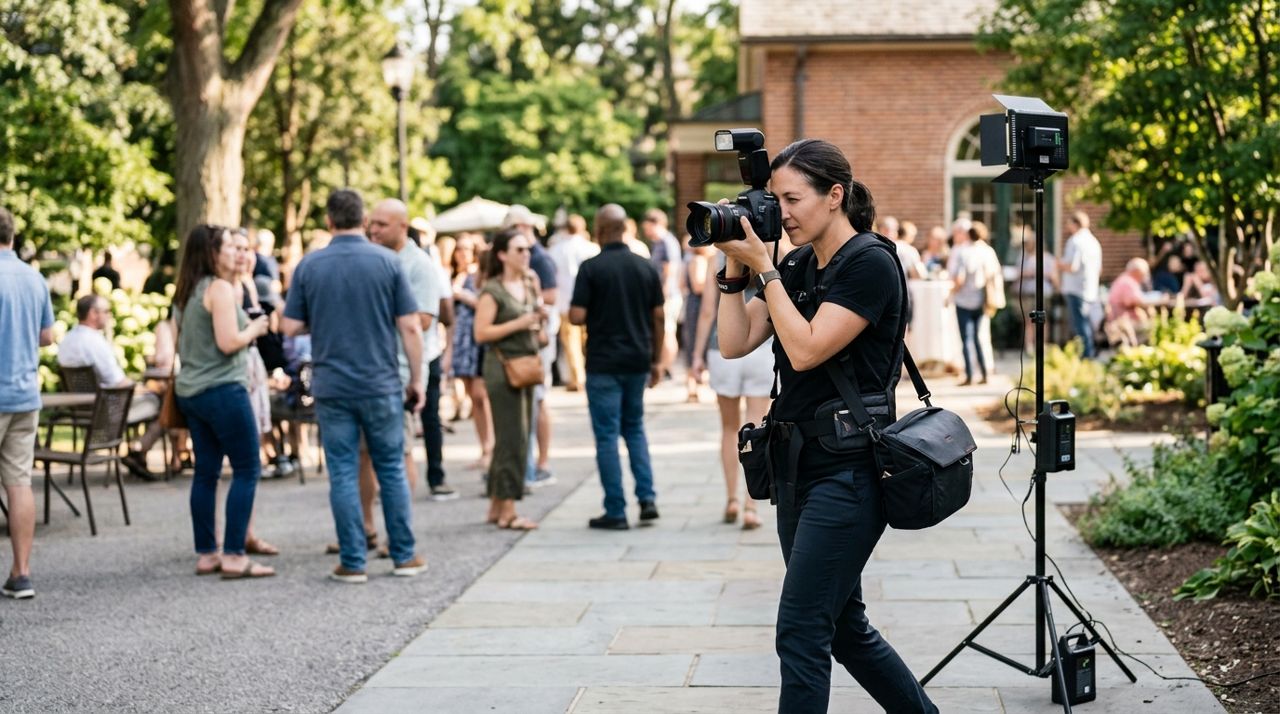
Professional photographer with camera and lighting equipment capturing event photos Arrive 15–30 minutes early to scout lighting, angles, and backup locations. Bring fully charged batteries, empty memory cards, backup camera body if you own one, and lighting equipment. Dress one step nicer than the event or shoot setting—business casual for corporate work, neat casual for family portraits.
During the shoot, take 20–30% more shots than you think you need; it's easier to choose the best images later than to realize you missed a key moment. Direct subjects confidently but kindly—most people feel awkward in front of a camera and appreciate guidance. Capture a mix of posed shots and candid moments. For video, shoot extra B-roll footage and ambient sound. Before you leave, confirm the delivery date and how you'll send the final files (Google Drive, Dropbox, WeTransfer, or a gallery platform like Pixieset).
- 06
Step 6: Edit efficiently and deliver on schedule
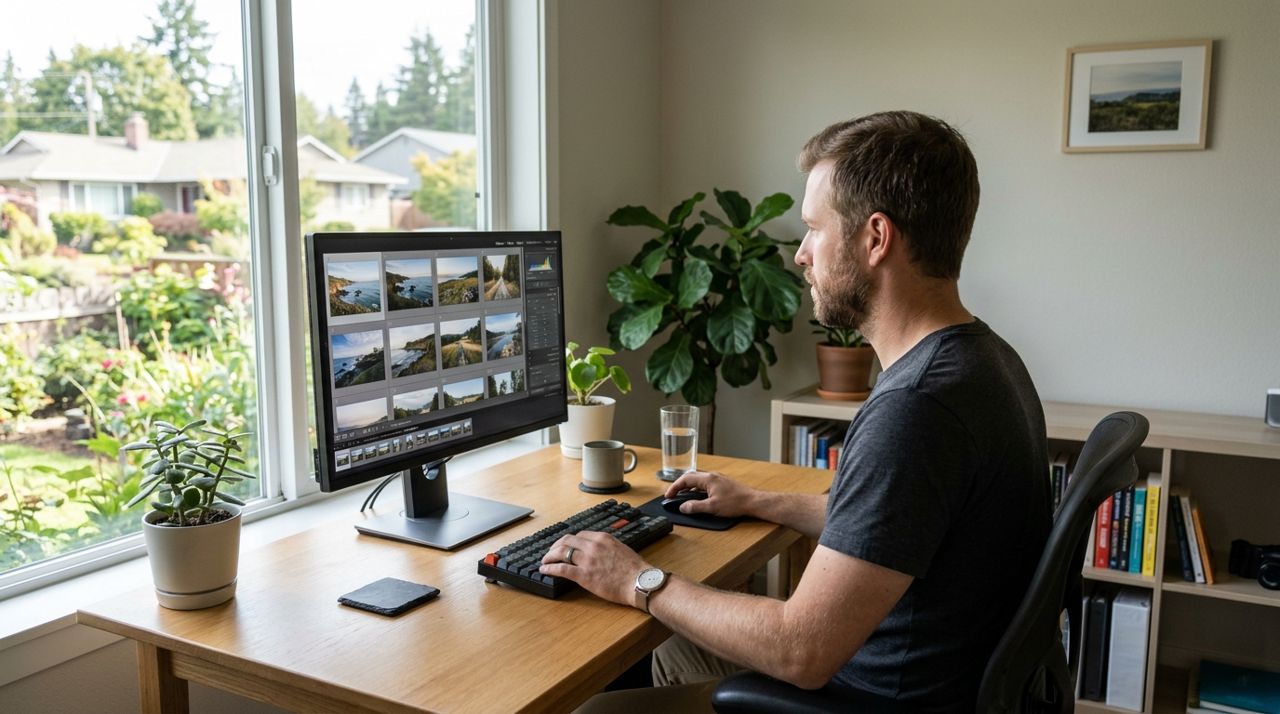
Photographer editing photos on computer using professional editing software Edit in batches and develop a consistent style—your editing process will speed up dramatically after your first 10 shoots. Use Lightroom for photos ($9.99/month) and Premiere Pro or Final Cut Pro for video ($20.99–299/month). For each shoot, cull the bad shots first, then edit the keepers for exposure, color, and sharpness. Most portrait and event shoots deliver 50–100 edited images per hour of shooting; weddings typically deliver 400–800 images.
Deliver files through a client gallery (Pixieset, ShootProof, or Google Photos album) with download options. Always deliver on or before your promised date. Include 2–3 extra shots beyond what the package promised—small overdelivery earns great reviews. Send a follow-up message asking if they're happy and requesting a review or testimonial. Happy clients refer friends, rebook for future needs, and leave reviews that bring you more work.
- 07
Step 7: Track income and reinvest in growth
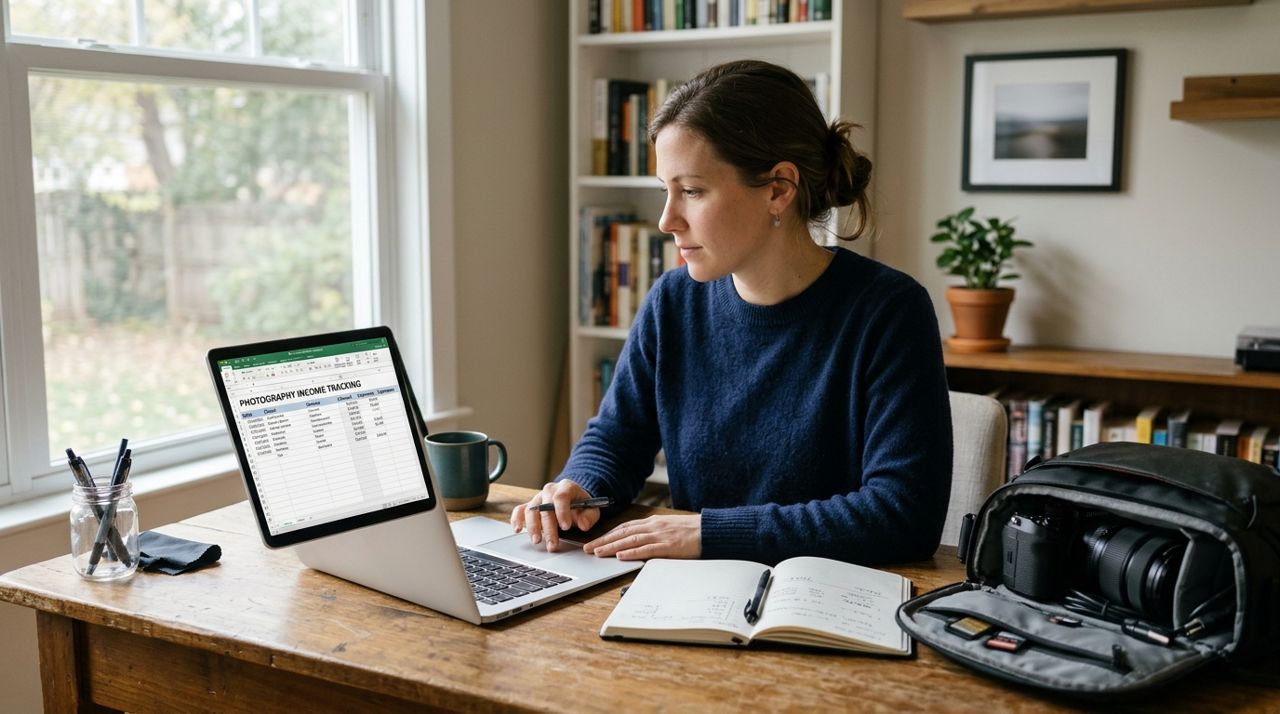
Freelance photographer reviewing income spreadsheet and business expenses on laptop Keep a simple spreadsheet logging each job's date, client name, service type, amount charged, expenses (gas, props, equipment), and payment status. Most freelance photographers aim for 10–20 shoots per month to earn $2,000–8,000 in side income. Set aside 25–30% of earnings for taxes if you're in the U.S.—freelancers pay quarterly estimated taxes to avoid penalties.
Reinvest 10–15% of revenue into better gear (lenses make more difference than camera bodies), education (online courses, YouTube tutorials, workshops), and marketing (paid ads, portfolio upgrades, networking events). After 6–12 months of consistent bookings, consider raising your rates by 15–25%—established photographers with strong portfolios and reviews command premium pricing. The clients worth working with will pay for quality and professionalism.
Pro tips
- Always scout the location in advance if possible—you'll shoot faster and better knowing the lighting and angles.
- Offer a 'next-day sneak peek' of 5–10 favorite shots to keep clients excited while you finish editing.
- Create email templates for common inquiries (rates, availability, package details) so you can respond in under 5 minutes.
- Build relationships with other wedding vendors, event planners, and real estate agents—they book photographers constantly and refer clients who trust their recommendations.
Frequently asked questions
- How much can I realistically earn as a freelance photographer?
- Part-time photographers booking 8–12 shoots per month typically earn $1,500–4,000, depending on specialty and rates. Full-time freelancers with consistent bookings earn $4,000–10,000+ monthly. Wedding and commercial work pays more but requires more experience and marketing effort than portraits or real estate.
- What equipment do I need to start booking paid photography work?
- You need a reliable camera (full-frame or crop-sensor DSLR/mirrorless), one versatile lens (24–70mm f/2.8 or 50mm f/1.8), memory cards, spare batteries, and basic editing software. For events and portraits, add an external flash or portable lighting. Start with what you have and upgrade lenses before upgrading the camera body.
- How do I handle clients who ask for discounts or extra free work?
- Politely explain what's included in each package and offer to customize a package within their budget by adjusting deliverables, not your hourly value. If they push for freebies, they're likely to be difficult throughout the project—it's okay to decline and focus on clients who respect your pricing.
Freelance photography and videography offer creative, flexible income once you build systems for marketing, booking, and delivery. Start with one or two specialties, create a strong portfolio, respond to inquiries quickly, and always deliver professional work on time. The photographers who succeed long-term focus on building relationships and reputation, not just chasing the next booking. If you're ready to start taking gigs, set up your profile and availability where clients are looking.
Photos are illustrative. Service prices are typical ranges and vary by city. How we write our guides.
More guides like this

How to Start a Cleaning Side Hustle with Basic Supplies
You don't need a franchise or expensive equipment to start earning as a cleaner. With a few basic supplies and the right approach, you can book your first clients this week.
How to Start a Handyman Business with Just Your Toolbox
You already own the tools. This guide shows you how to turn them into a profitable handyman business, from pricing your first job to building a steady client base.
How to Start a Dog Walking & Pet Sitting Side Hustle in 2025
Dog walking and pet sitting can bring in $300-800 a week working part-time, and you set your own hours. Here's how to launch your pet care side hustle from day one.