
How to Get Roadside Help for a Dead Battery or Flat Tire
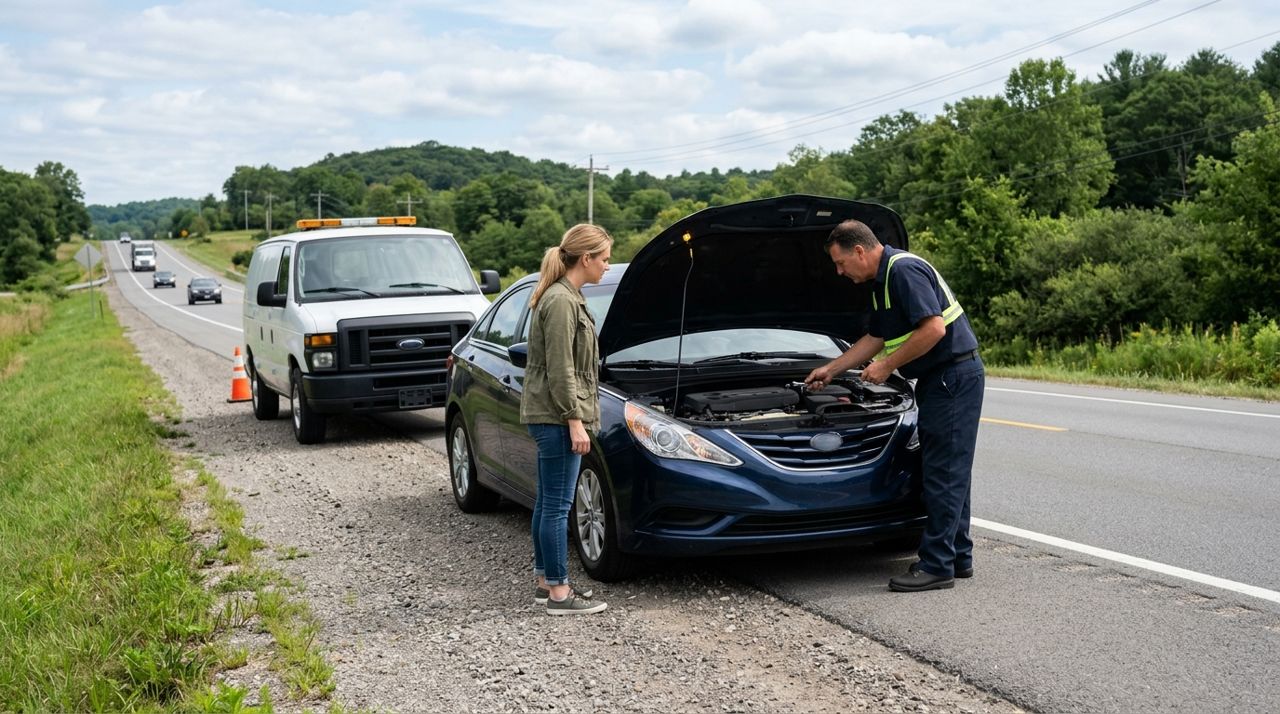
You turn the key and hear that horrible clicking sound, or you feel the steering wheel pull hard to the right as your tire deflates. A dead battery or flat tire isn't just inconvenient—it can leave you stuck in a parking lot, on the side of a highway, or in an unfamiliar neighborhood. Calling a tow truck for a $200 tow is overkill when you just need a jump-start or a tire change.
This guide walks you through getting roadside help fast, what to expect when a tech arrives, and how to avoid common mistakes. You'll learn how to describe your problem clearly, what a reasonable price looks like, and how apps like Lumo connect you with local pros who can get you back on the road in under an hour.
- 01
Step 1: Make sure you're safe and know your location
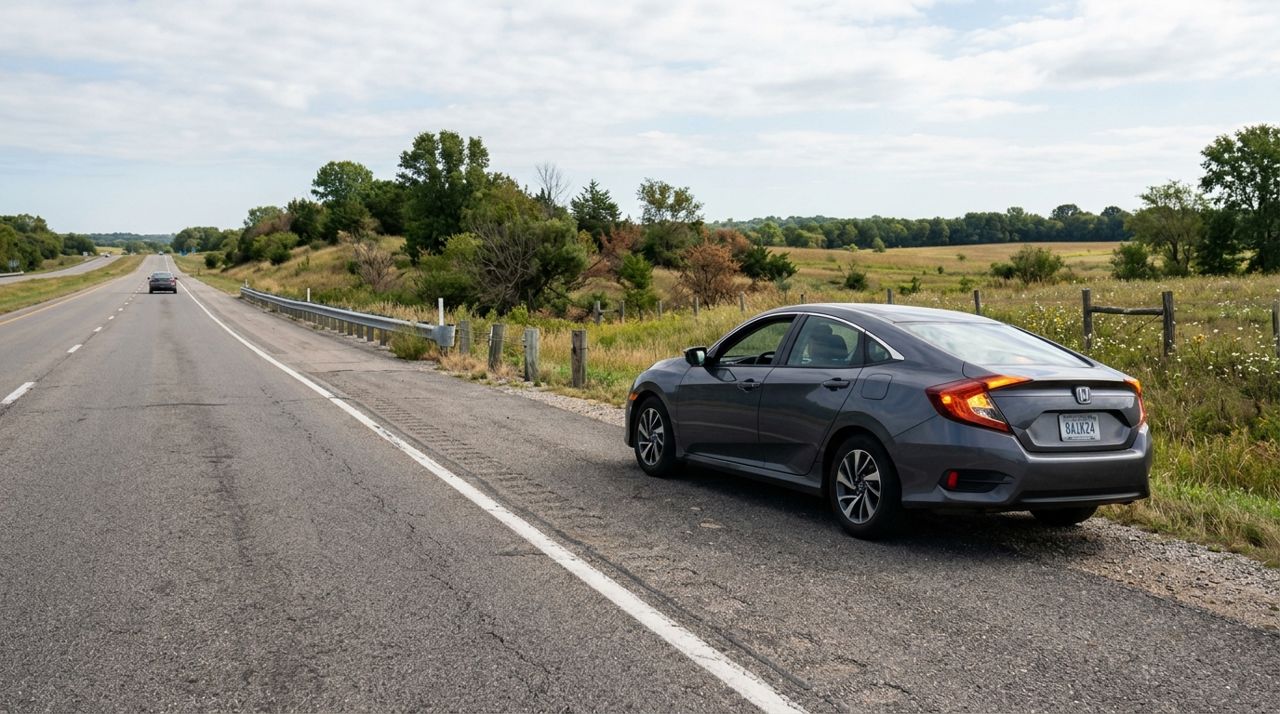
Car with hazard lights on pulled over on roadside shoulder Before you do anything else, get yourself and your passengers to safety. If you're on a highway or busy road, turn on your hazard lights, pull as far onto the shoulder as possible, and exit the vehicle on the side away from traffic if it's safe to do so. If you're in a parking lot or residential street, you're already in a safer spot.
Next, figure out exactly where you are. Open your phone's maps app and note the nearest cross streets or landmarks. If you're on a highway, look for mile markers. You'll need to tell the roadside tech your precise location—'on Main Street' isn't enough if Main Street is twelve miles long. Take a screenshot of your map location or copy the address; this will save time when you request help.
- 02
Step 2: Diagnose whether it's a dead battery or flat tire
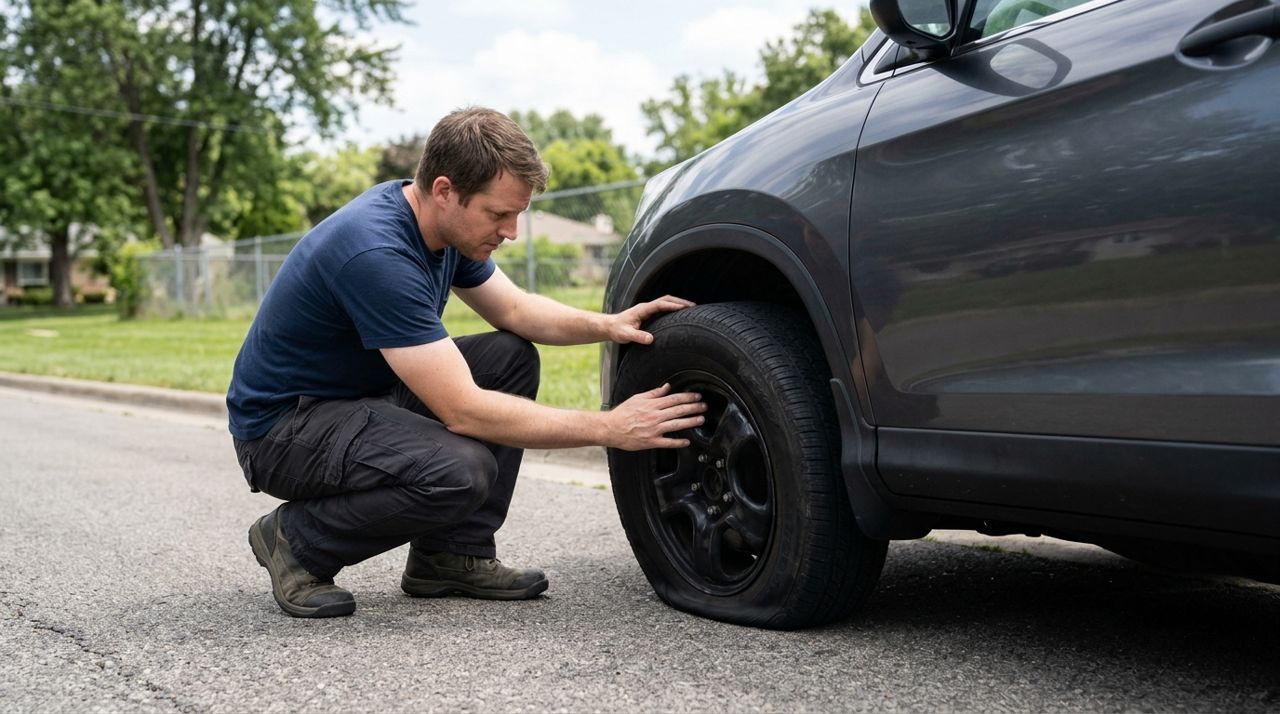
Person crouching next to car inspecting a deflated flat tire A dead battery is usually obvious: the engine won't turn over, you hear rapid clicking, or the dashboard lights are dim or won't come on at all. If the radio and lights were working but now nothing happens, it's almost certainly the battery. If you left your headlights on or haven't driven the car in a week, that's another clue.
A flat tire is just as clear: the car pulls to one side, you hear a flapping sound, or the steering feels mushy. Get out and visually inspect all four tires—the flat will look noticeably lower or completely collapsed. Don't try to drive on a flat; you'll ruin the wheel. Knowing which problem you have will help you request the right service and get an accurate price quote upfront.
- 03
Step 3: Request help through an app or service
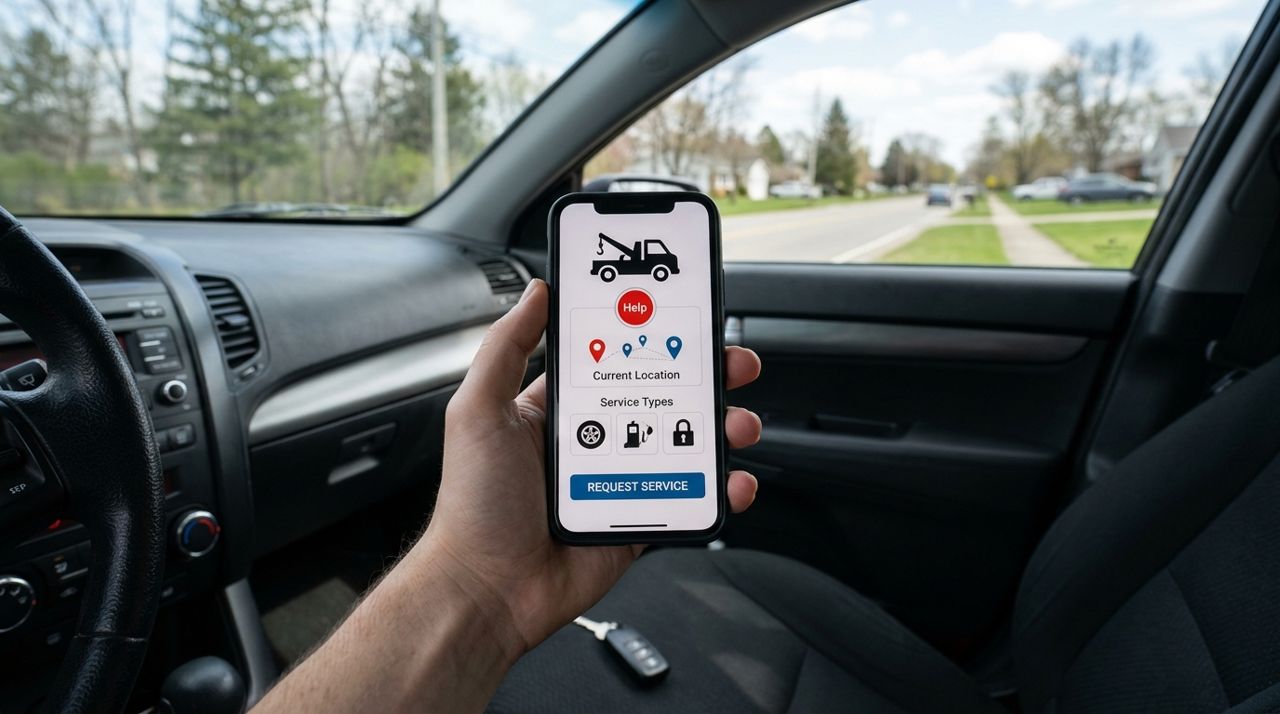
Hand holding smartphone displaying roadside assistance service request on screen You have a few options: call your insurance roadside assistance if you have it (usually $50–$100 per year), contact AAA if you're a member ($60–$120/year), or use an on-demand app to hire a local pro. Insurance and AAA can take 45 minutes to two hours during busy times, and you're stuck with whoever they send.
On-demand apps let you see nearby techs, their ratings, and their price before you book. Open the app (Lumo lets you pick car care from the welcome screen), describe the problem—'dead battery needs jump-start' or 'flat tire needs spare installed'—add your exact location, and send the request. Techs in your area will see it and respond with their availability and price, typically $40–$80 for a jump-start and $50–$100 for a tire change, depending on your city. You'll get in-app messages when someone accepts the job.
- 04
Step 4: Confirm details and wait for the tech
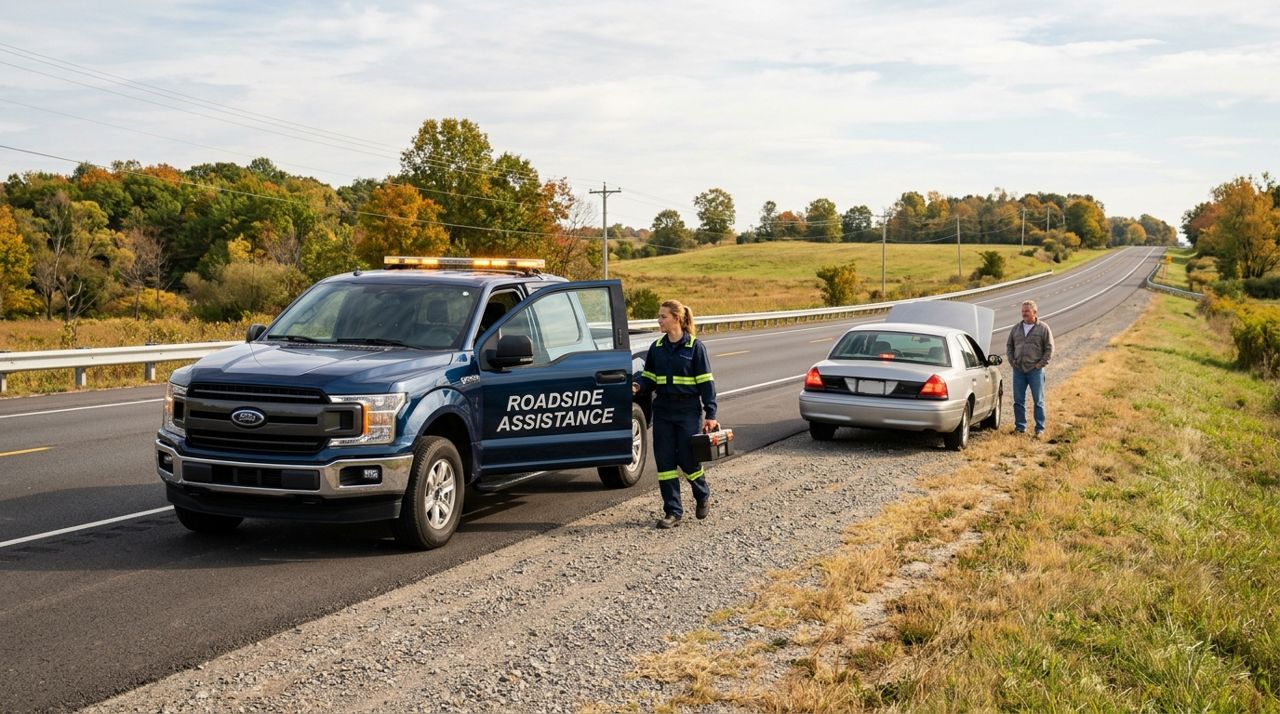
Roadside assistance technician arriving in service vehicle to help stranded motorist Once a tech accepts your request, confirm the details through in-app messaging. Make sure they know whether you need a jump-start or a tire change, and clarify if you have a spare tire and jack in your trunk (most techs bring their own, but it helps to know). If your battery is old and might not hold a charge, ask if they can sell and install a new battery on the spot—some carry common sizes for $120–$180 installed.
Most apps will show you the tech's name, photo, vehicle, and estimated arrival time, usually 20–45 minutes. You can track their location on a map. Stay in a safe spot (inside your car with doors locked if you're on a busy road, or in a nearby business if you're in a parking lot). Keep your phone charged and the ringer on so you don't miss messages.
- 05
Step 5: Let the tech do the work and ask questions
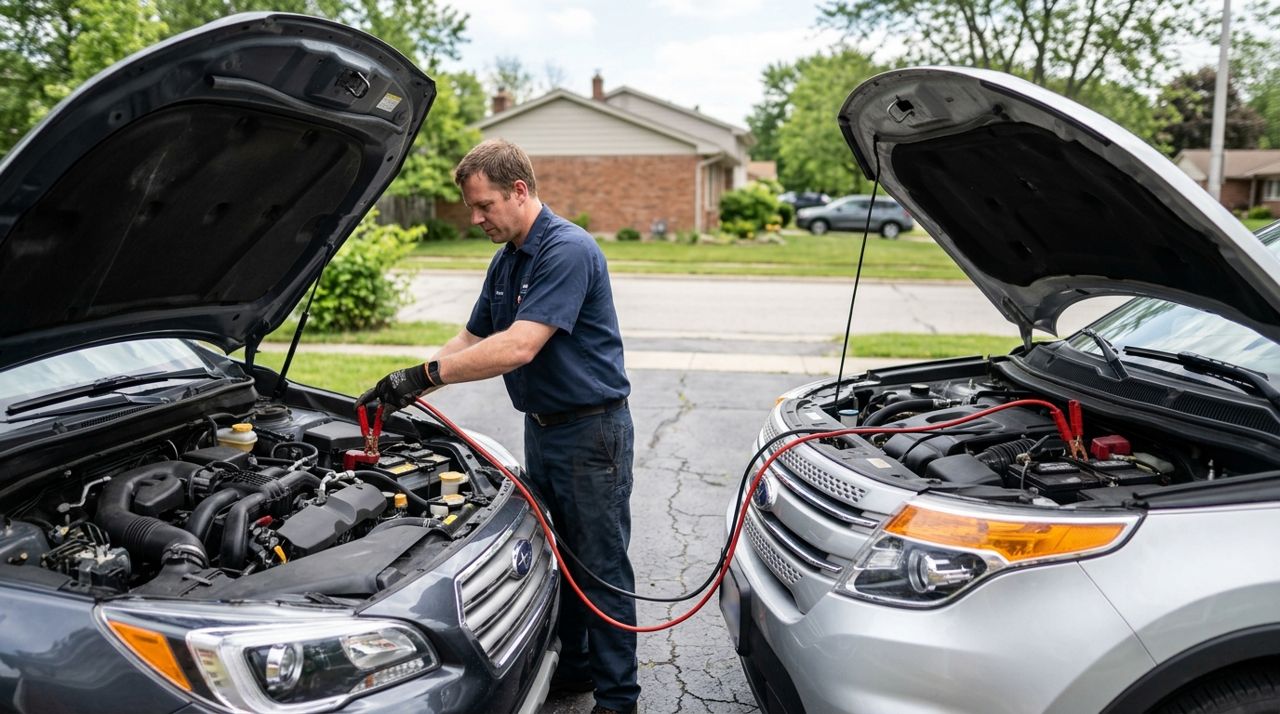
Technician connecting jumper cables to dead car battery under open hood When the tech arrives, point out your car and explain the problem briefly. For a dead battery, they'll connect jumper cables or a portable jump pack to your battery terminals—red to positive, black to negative—and start your engine within five minutes. Let your car run for at least 15 minutes afterward to recharge the battery, and avoid turning it off until you reach your destination. If the battery won't hold a charge, you'll need a replacement.
For a flat tire, the tech will lift your car with a jack, remove the flat, and install your spare (or a portable tire plug if the puncture is small and in the tread). A spare tire—especially a compact 'donut' spare—is only rated for 50 miles at 50 mph, so drive straight to a tire shop. Ask the tech if they noticed anything else, like worn brakes or other tire damage. Good techs will give you a heads-up about problems they spot.
- 06
Step 6: Pay, tip, and leave a review

Person sitting in car using phone to rate and review service Payment happens in the app by card—no need to fumble for cash or write a check on the side of the road. The price you agreed to upfront is what you pay; there are no surprise fees. Tipping is optional but appreciated, especially if the tech arrived fast, worked in bad weather, or went above and beyond. A 10–20% tip ($5–$15 on a $60 job) is standard.
After the job is done, you'll be prompted to rate the tech and leave a review. Be honest: if they were fast, professional, and explained what they did, say so. If something went wrong, mention it so the tech can improve and other customers know what to expect. Reviews help good techs build their reputation and help you make better choices next time you need help.
- 07
Step 7: Follow up: replace the battery or fix the tire
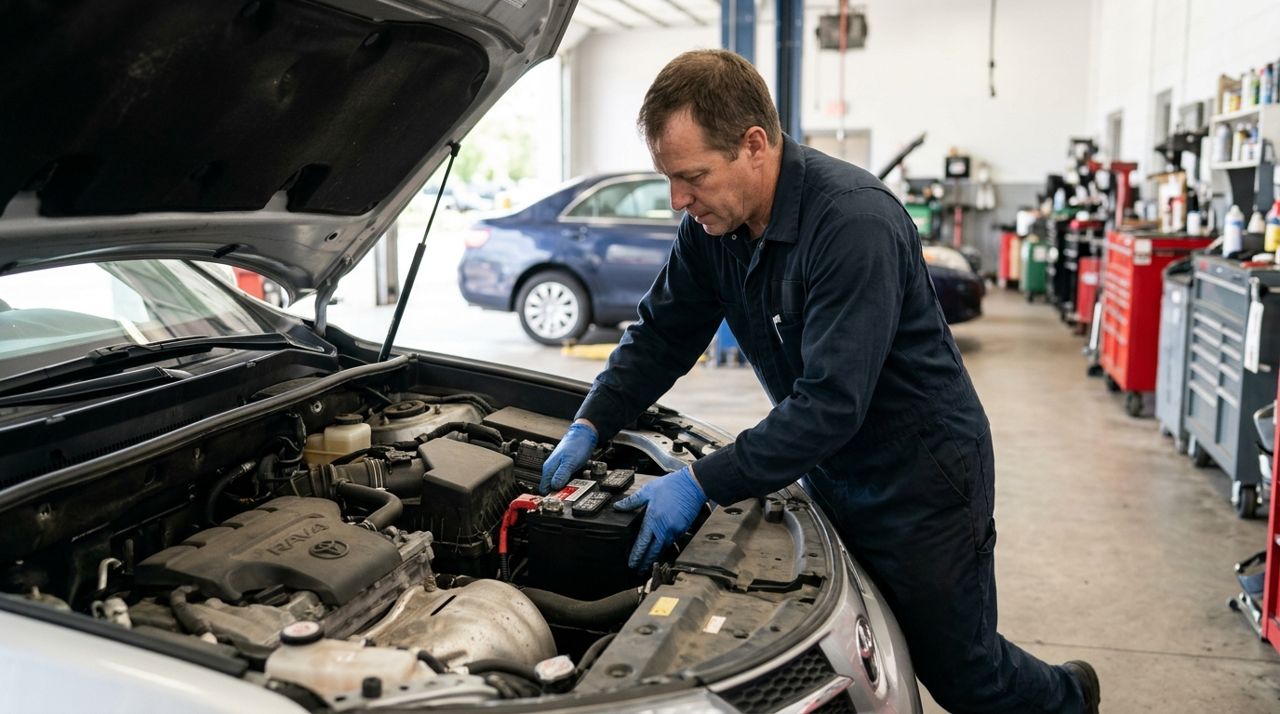
Mechanic installing new car battery in engine compartment at auto shop A jump-start is a temporary fix. If your battery is more than three years old, or if you've needed multiple jump-starts recently, replace it soon—batteries fail without warning. Most auto parts stores will test your battery for free and install a new one for $100–$200 depending on the size. If your alternator isn't charging the battery, you'll need a mechanic; that repair runs $300–$800.
If you drove away on a spare tire, get the flat repaired or replaced within a day or two. Tire shops charge $15–$30 to patch a puncture, or $100–$250 for a new tire if the flat isn't repairable. Don't ignore it—driving on a donut spare for weeks is unsafe and illegal in some states. And toss a portable jump starter ($50–$80 on Amazon) and a tire repair kit in your trunk so you're ready next time.
Pro tips
- Keep a portable jump starter and basic tools in your trunk so you can help yourself or others in a pinch.
- If you're on a highway at night, stay inside your car with seatbelt on and doors locked until help arrives; it's safer than standing outside.
- Take a photo of your tire's sidewall code before you call for help—it tells the tech the size and speeds up a replacement if needed.
- Ask your insurance agent if roadside assistance is already included in your policy; many comprehensive plans cover it at no extra cost.
- Save your roadside app login and payment info ahead of time so you're not fumbling with passwords when you're stressed and stranded.
Frequently asked questions
- How long does roadside help usually take to arrive?
- On-demand services typically arrive in 20–45 minutes, depending on your location and time of day. Insurance and AAA roadside assistance can take 45 minutes to two hours during peak times. Apps that show you nearby techs in real time give you the fastest response.
- What if my spare tire is also flat or missing?
- Tell the tech upfront so they can bring a spare or arrange a tow to a tire shop. Some techs carry used spares or can plug and inflate your flat if the puncture is small. If you need a tow, expect to pay $75–$150 for a short trip to the nearest shop.
- Can I get help if I'm not a member of AAA or don't have roadside coverage?
- Absolutely. On-demand apps let anyone request roadside help without a membership. You pay only for the job you need—jump-start, tire change, lockout service, or fuel delivery—with no annual fees or contracts. It's often faster and cheaper than traditional services for one-off emergencies.
Getting stranded with a dead battery or flat tire is stressful, but help is closer than you think. With a clear plan, the right app, and a local pro who can arrive in under an hour, you'll be back on the road fast. Next time your car won't start or your tire goes flat, you'll know exactly what to do—and you won't waste time or money on a tow truck you don't need.
Photos are illustrative. Service prices are typical ranges and vary by city. How we write our guides.
More guides like this
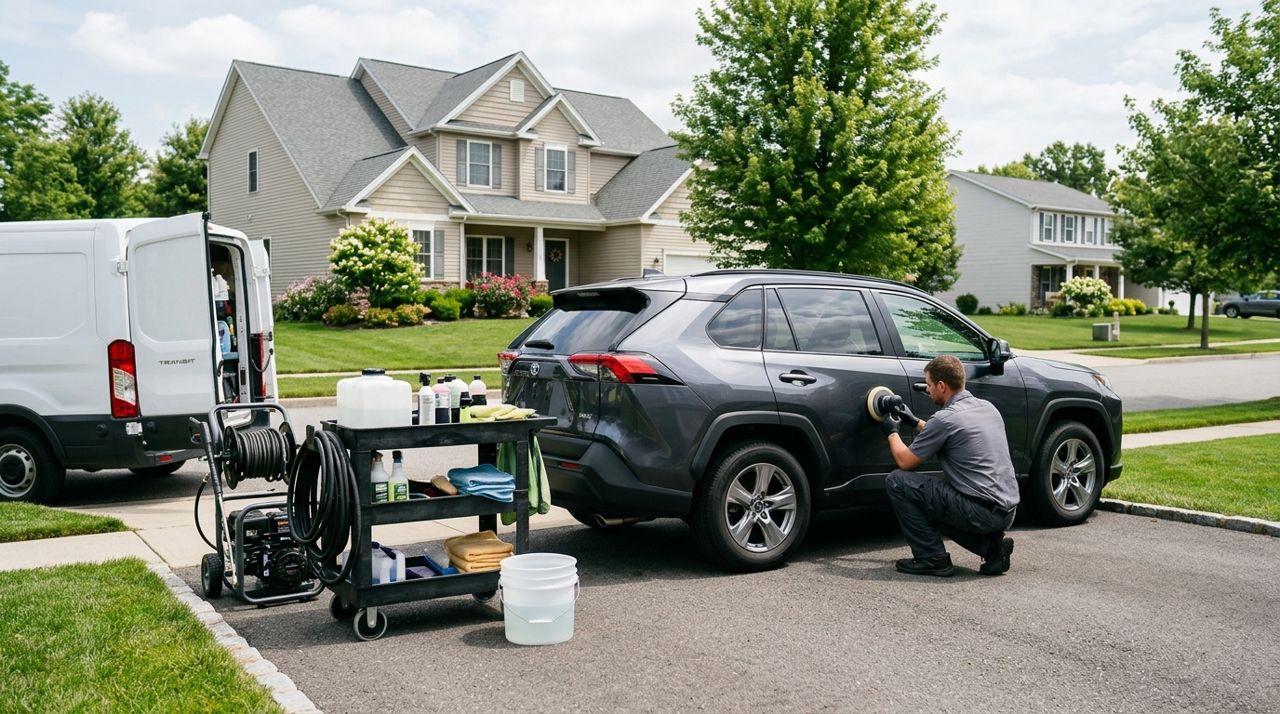
How to Book a Mobile Car Detail That Comes to Your Driveway
Mobile car detailing brings professional cleaning, waxing and interior care straight to your driveway. Here's how to find a pro, book the right service, and get a showroom shine without leaving home.

How Food Delivery Works: From Browsing Menus to Getting Dinner
Ordering dinner for delivery is simple once you know the process. This guide walks through every step from browsing restaurants to getting your meal at the door.

How to Order Lunch for Your Office Team Without the Chaos
Ordering lunch for eight coworkers shouldn't feel like herding cats. Here's how to coordinate a group order, keep everyone happy, and get food delivered on time without juggling twenty phone calls.