
How to Hire Help Moving a Single Heavy Item in Your City
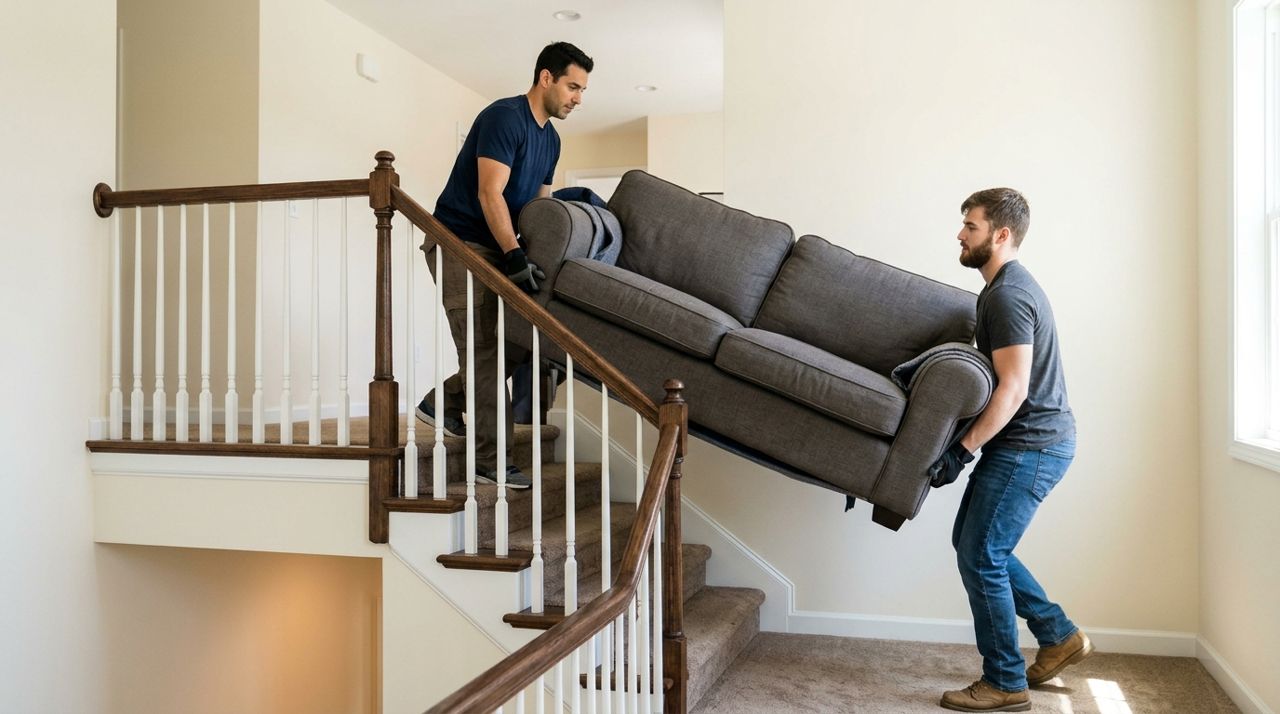
You don't need a full moving truck and a four-hour minimum just to move one couch across town or haul a piano down to the basement. But you do need help—heavy furniture causes more than 15,000 emergency room visits every year in the U.S., and most of those happen during amateur moves. Professional movers charge anywhere from $75 to $400+ for single-item jobs depending on your city, the item's weight, and how many stairs are involved.
This guide walks you through hiring local help for a single heavy item move, from getting accurate quotes to protecting your floors and making sure the job goes smoothly. Whether it's a sectional sofa, a gun safe, or an upright piano, you'll learn how to find reliable help, what to expect to pay, and how to avoid the common mistakes that turn a simple move into an expensive disaster.
- 01
Step 1: Measure the item and every doorway, staircase, and hallway
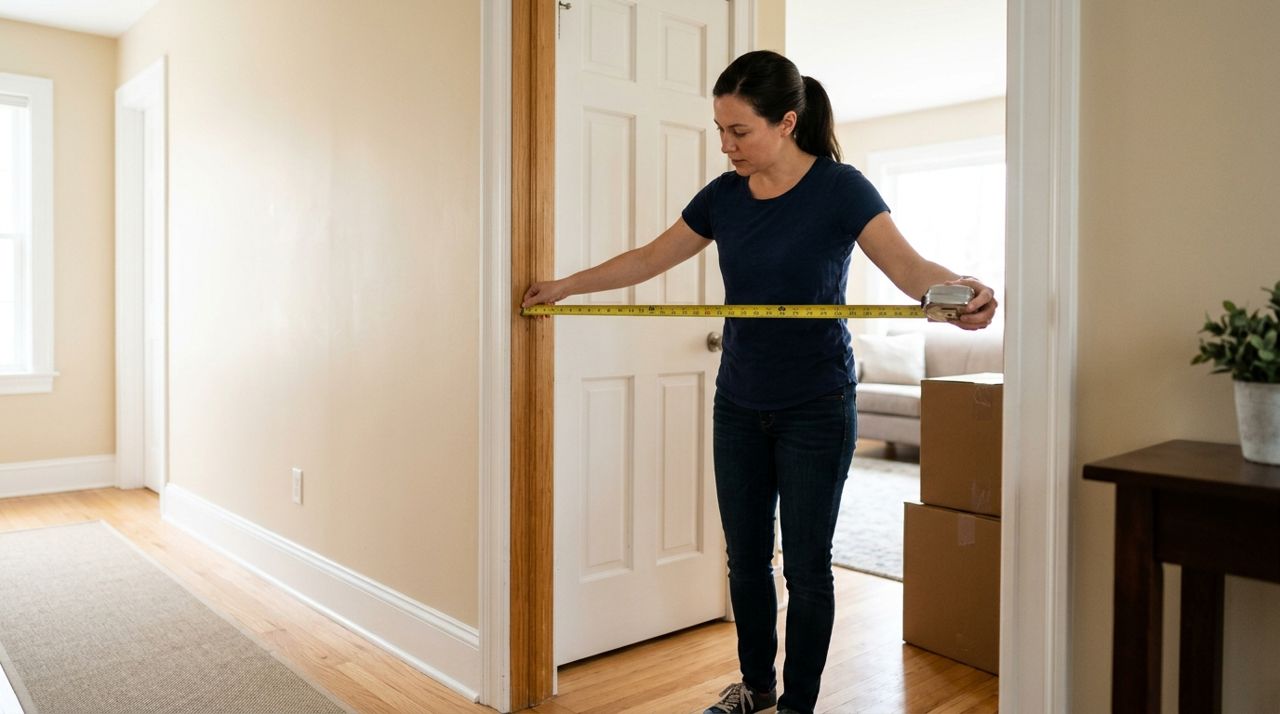
Person measuring a doorway width with a tape measure before moving furniture Before you hire anyone, grab a tape measure and write down the dimensions of the item you're moving: height, width, and depth. Then measure every doorway, hallway width, staircase width, and any turns the item will need to make. Measure the diagonal of doorways too—a couch that's 38 inches wide might need to go through a door at an angle. Take photos of tight spots.
Most movers will ask for this information upfront because it determines how many people they'll send and whether they need special equipment. A piano that has to go up a narrow exterior staircase might require a crane or hoist, which changes the price dramatically. If your item won't fit through a doorway, you'll need to know that before anyone shows up.
- 02
Step 2: List what makes your move complicated
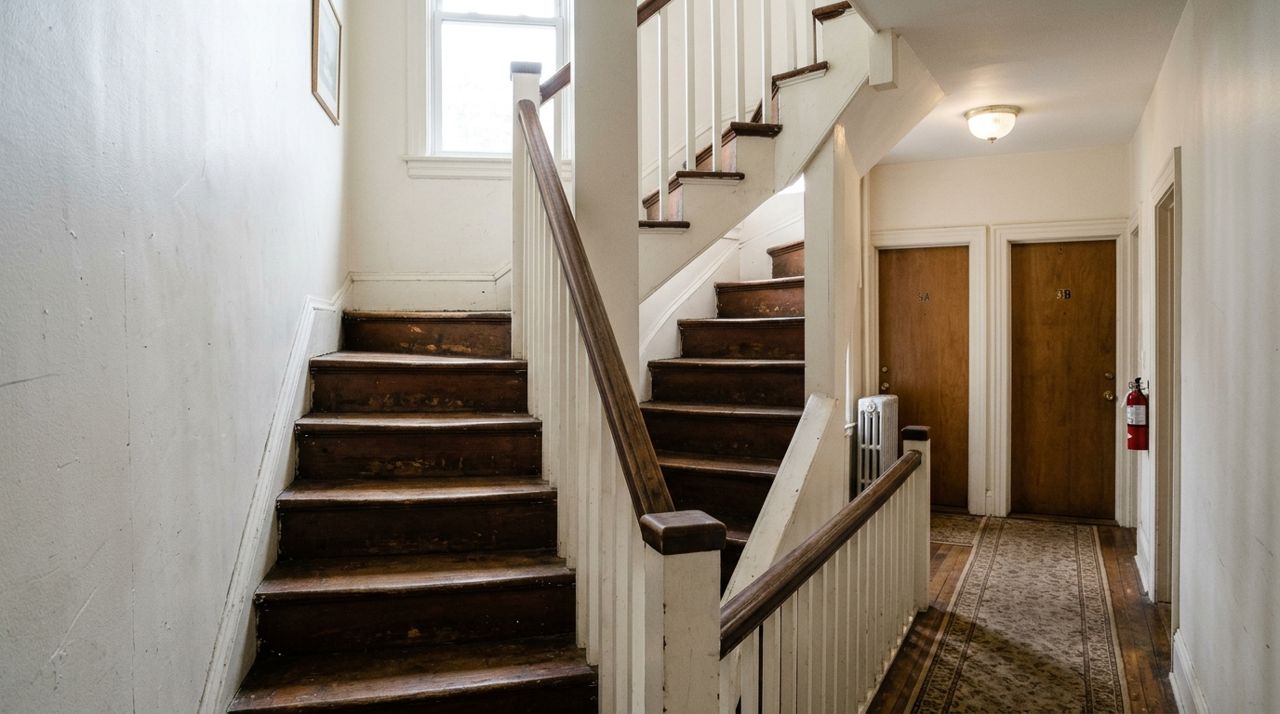
Narrow apartment staircase with a tight turn, common challenge for furniture movers Movers price single-item jobs based on weight, distance, and complications. Make a list of everything that adds difficulty: number of stairs (and whether they're narrow or have turns), whether the item needs to be disassembled or reassembled, if there are tight corners, whether you're moving between floors in the same building, and the distance between pickup and drop-off if it's going to a different address.
Also note the parking situation. If the movers have to park three blocks away or pay for parking, that affects the quote. Mention if you need floor protection, furniture pads, or if the item is especially fragile (like an antique dresser or a baby grand piano). The more accurate your description, the more accurate the quote.
- 03
Step 3: Request quotes from local movers

Person using smartphone to book a local moving service through a mobile app Look for movers who specialize in single-item or small moves rather than calling full-service companies that require minimums. Open Lumo and tap the 'Customer' mode, then select 'Moving' from the services list. Describe your item, the pickup and drop-off locations, stairs, and any complications you listed in step two. You can also search online for 'single item movers' or 'labor-only movers' in your city.
Expect to pay $100–$150 for a simple ground-floor couch move within the same building, $200–$350 for moves involving stairs or short distances between addresses, and $400+ for pianos, safes, or items requiring special equipment. Most movers for single items charge a flat rate rather than hourly. Get at least two quotes and ask if the price includes floor protection and insurance.
- 04
Step 4: Confirm insurance and what's included
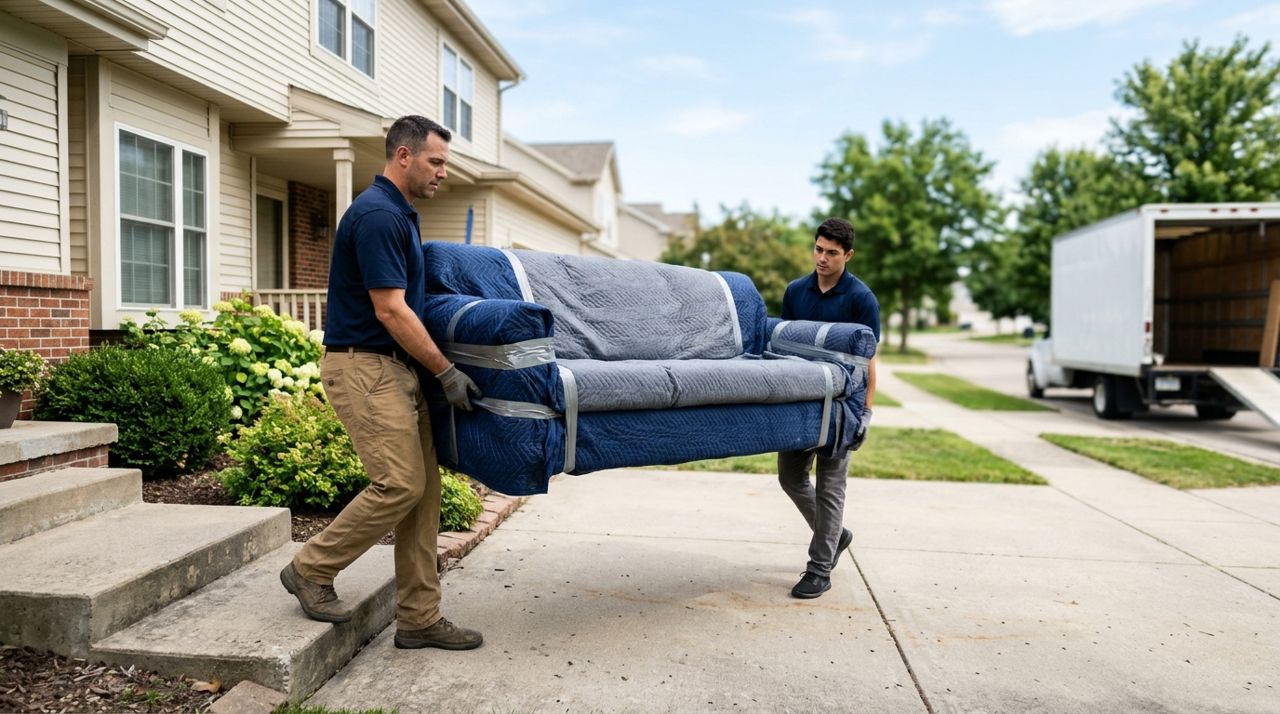
Two professional movers carefully carrying a sofa wrapped in protective padding Before you book, ask the mover directly what their quote includes and what happens if something gets damaged. Professional movers should have liability insurance—ask for proof. Find out if they bring furniture pads, floor runners, and straps, or if you're expected to provide those. Clarify whether disassembly (like removing couch legs) and reassembly are included or cost extra.
If you're moving something valuable like an antique armoire or a $10,000 piano, ask about additional coverage. Basic liability often covers only a few dollars per pound, which won't replace a damaged heirloom. Some movers offer full-value protection for an extra fee. Get everything in writing, even if it's just a confirmation message in the app.
- 05
Step 5: Prepare the path and protect your home
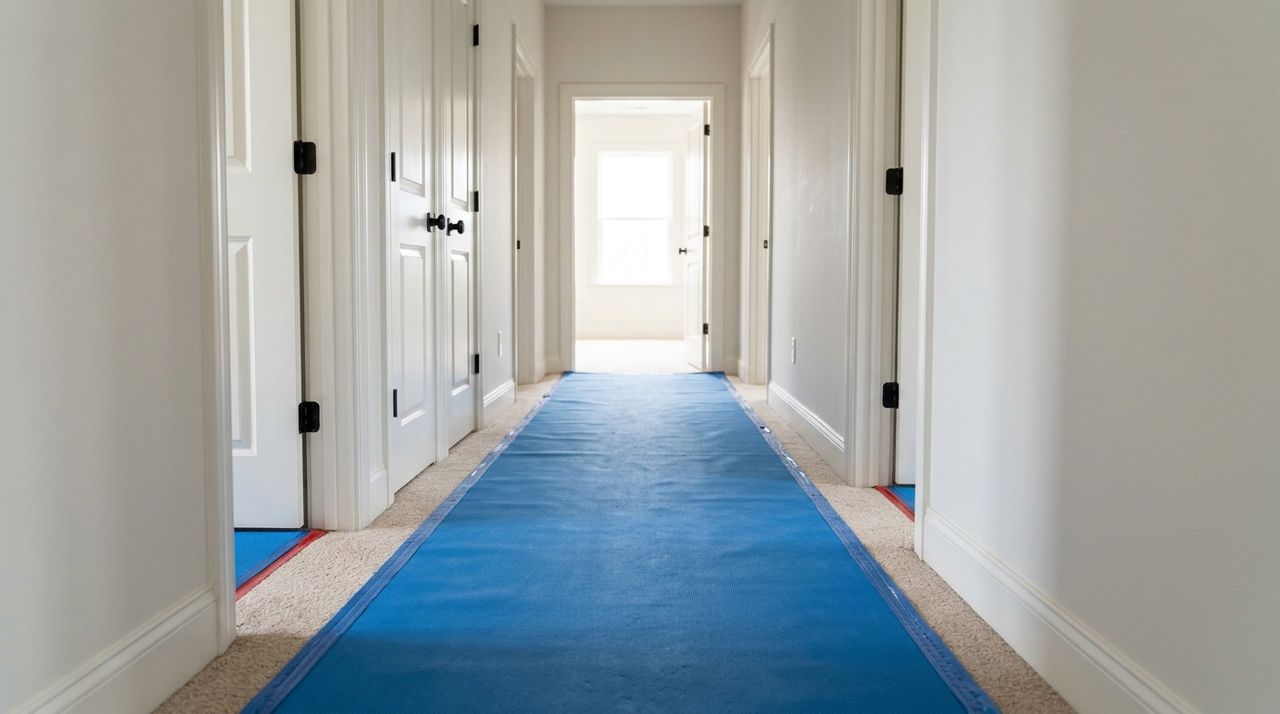
Empty cleared hallway with protective floor covering prepared for furniture moving On moving day, clear the entire path from the item's current spot to the exit, and from the entry to its new spot. Move rugs, small furniture, lamps, and anything else that could get knocked over. If you have hardwood floors or tile you want to protect, lay down cardboard or ask the movers to put down floor runners.
Remove anything breakable from shelves or tables along the route. If you're moving a couch out of a tight living room, take the door off its hinges to gain a few extra inches. Prop open any doors the movers will go through. Make sure pets are secured in another room. The less time movers spend navigating obstacles, the faster and safer the move goes. Have a clear parking spot ready as close to the entrance as possible.
- 06
Step 6: Be present and communicate
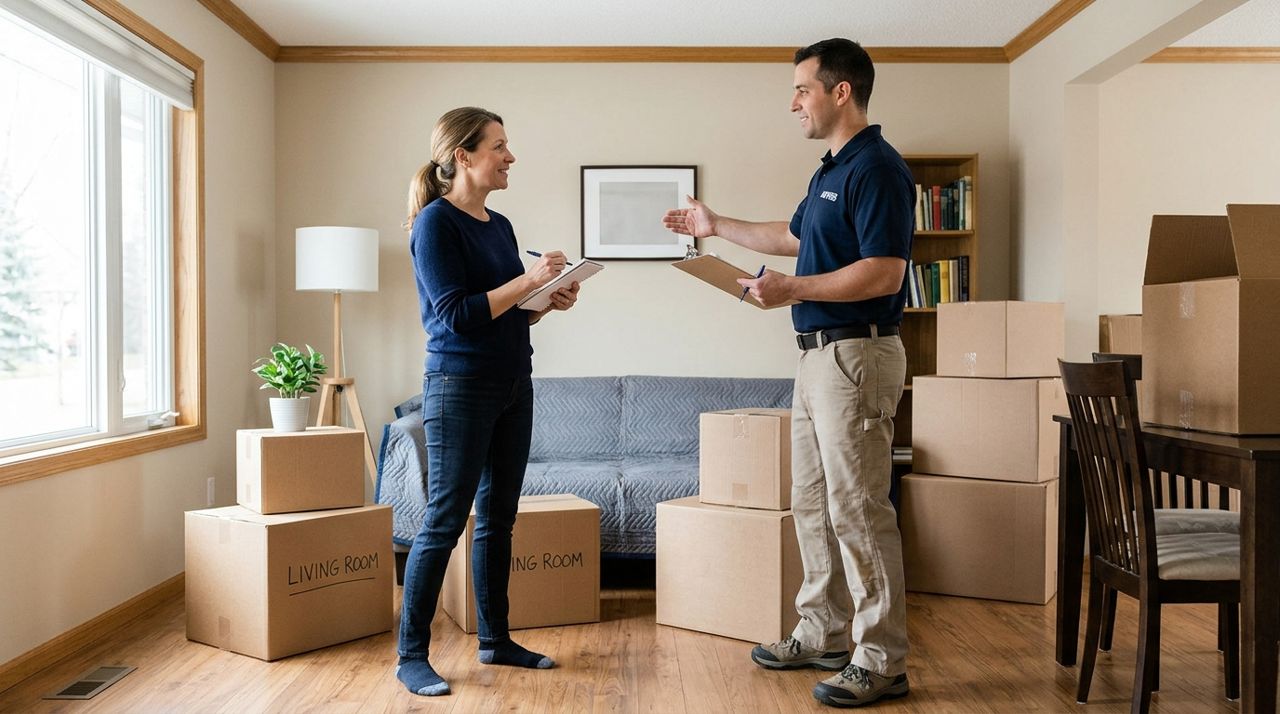
Homeowner discussing furniture placement details with professional mover in living room Stay available while the movers work, but let them do their job—they move heavy items for a living and have techniques you probably don't. Point out any spots you're worried about (a freshly painted wall, a fragile banister) and ask them to be extra careful there. If something looks unsafe or you're concerned about their approach, speak up politely.
Watch where the item is placed at the destination to make sure it's exactly where you want it, because moving it again costs extra. If anything gets damaged, take photos immediately and mention it to the movers before they leave—most disputes are easier to resolve on the spot. After the job, you can tip through the app if the crew did good work; 10–20% is standard if you're happy with the service.
- 07
Step 7: Inspect and rate the service
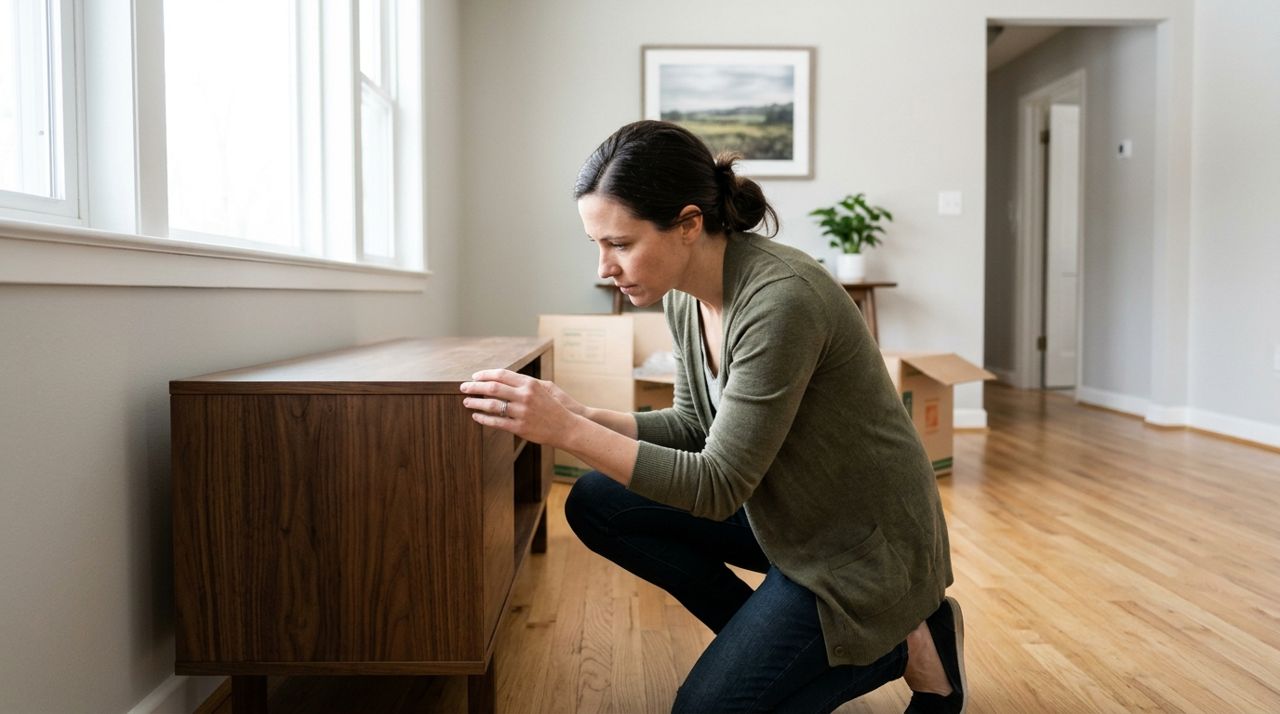
Person carefully inspecting furniture piece for damage after professional movers have finished Once the movers leave, inspect the item and the path they used for any damage. Check corners of walls, door frames, and floors. Look at the item itself for scratches, dents, or loose parts. If you hired pros through Lumo, you'll get a prompt to rate and review the service—this helps other people in your city find reliable help and holds movers accountable.
If something was damaged and it wasn't documented on the spot, contact the mover within 24 hours with photos. Most pros will work with you to make it right, especially if you booked through a platform where their reputation matters. If the job went smoothly, a good review goes a long way for independent movers building their business. And if you'll need help again (moving that item back out when you relocate, or moving other things), you now have someone reliable you can call directly.
Pro tips
- Book at least three days ahead for better availability and pricing; last-minute single-item moves often cost 30–50% more.
- Take photos of the item before the move so you have documentation if damage occurs.
- For pianos or items over 300 pounds, hire only movers who specialize in that type—general movers may not have the right equipment.
- If you're moving an item between units in the same building, reserve the elevator and check your building's insurance requirements for movers.
- Keep the original packaging if you have it (especially for TVs or glass items)—it makes the move safer and some movers charge less if items are pre-protected.
Frequently asked questions
- How much does it cost to hire someone to move one piece of furniture?
- In most U.S. cities, moving a single couch or dresser costs $100–$200 for simple ground-floor moves, $200–$350 if stairs are involved or you're going a few miles, and $400–$800+ for pianos, gun safes, or items requiring special equipment like hoists. Prices vary by city, item weight, and complications like narrow staircases or long carries.
- Do I tip movers for moving just one item?
- Yes, if they did good work. Tip $20–$40 total for a simple move, or 10–20% of the total cost for more complicated jobs. If you book through an app like Lumo, you can add the tip digitally after the job is done, and 100% goes to the movers.
- What if the movers damage my furniture or home?
- Take photos immediately and point it out before the movers leave. Professional movers carry liability insurance that should cover damage they cause. If you booked through a platform, report the issue through the app with photos within 24 hours—this creates a record and most pros will work with you to resolve it fairly.
Hiring help to move a single heavy item doesn't have to be complicated or expensive if you measure carefully, get clear quotes, and prepare your home ahead of time. With the right information and a little planning, you can get that couch up the stairs or that piano into your living room safely, without throwing out your back or putting a hole in the wall. Open Lumo, describe what you need moved, and connect with local movers who can give you a straight quote today.
Photos are illustrative. Service prices are typical ranges and vary by city. How we write our guides.
More guides like this
How to Hire Movers for a One-Bedroom Apartment (Without Surprises)
Moving a one-bedroom apartment doesn't require a full moving company's crew and cost. Here's how to hire local movers who'll show up on time, handle your stuff carefully, and charge a fair price.
How to Hire Someone to Haul Away Junk and Old Furniture
Getting rid of old furniture, broken appliances and years of accumulated junk doesn't have to mean renting a truck and hurting your back. Here's how to hire someone to haul it all away efficiently and affordably.

How to hire local movers for college dorm move-in day
Moving into a dorm means hauling boxes up narrow stairs, navigating crowded parking lots, and racing the clock on move-in day. Here's how to hire local helpers who know the drill and make it easy.