
How to Deliver Food & Groceries by Bike in a Dense City
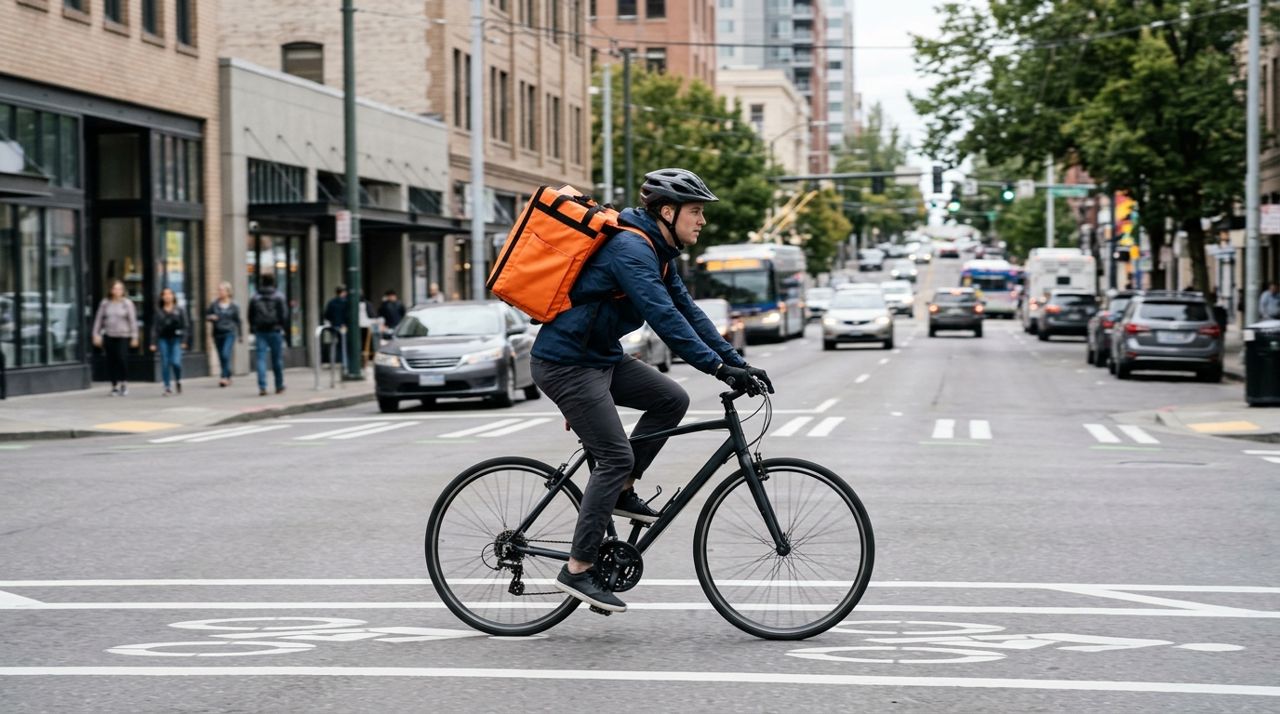
In a dense city, a bike or e-bike often beats a car. You skip traffic, take shortcuts through alleys and parks, and park right at the door. But bike delivery has its own challenges: managing multiple orders in a backpack, staying visible at night, climbing stairs, and working through rain or heat.
This guide walks you through the real mechanics of bike delivery—how to set up, what gear you need, how routing and earnings work, and how to stay safe and efficient. Whether you're on a pedal bike or an e-bike, you'll learn what a typical shift looks like and how to make it work for you.
- 01
Step 1: Sign up and set your delivery zone
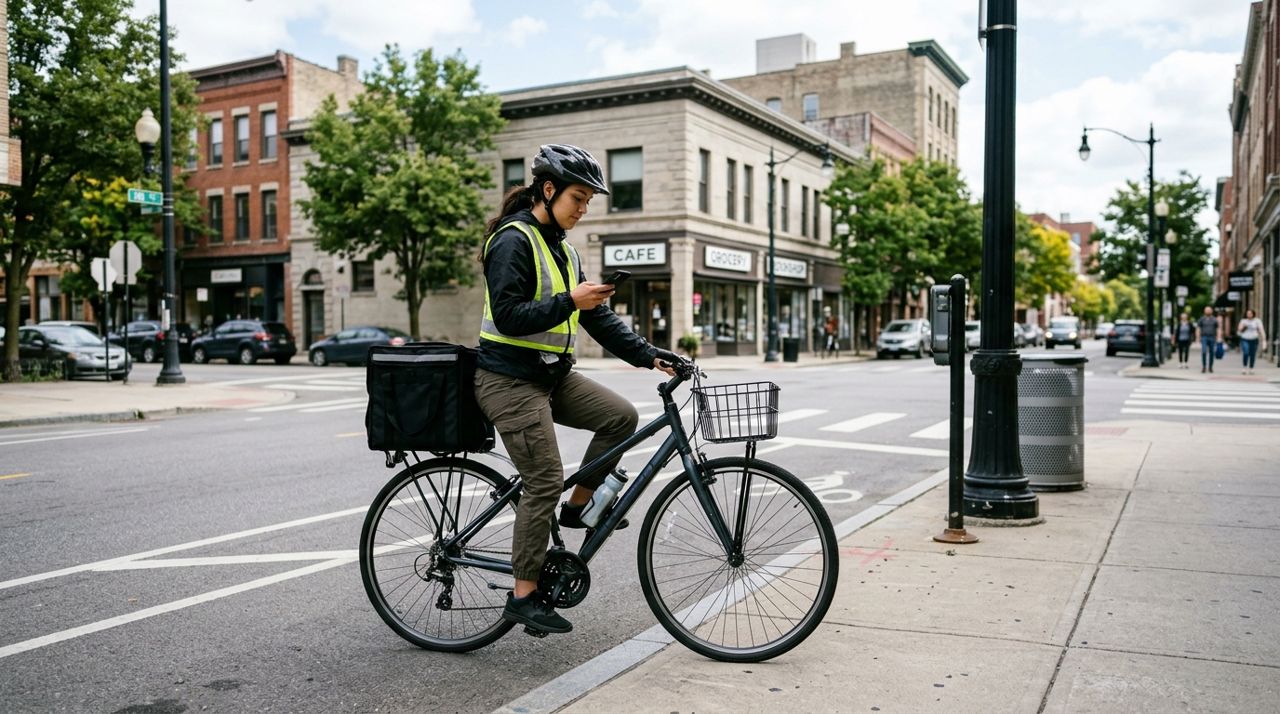
Delivery cyclist checking phone map on city street corner Download the app (golumo.app on iPhone, Android or web) and choose the Worker mode on the welcome screen. Sign in with email, phone, Google or Apple. In your profile, set your job-alert radius—start with 1-2 miles in a dense city so you're not riding across town for a $6 order. Enable 'delivery' in your job types and turn on location permissions so customers can track you live on a map.
Set your working hours if you have a regular schedule, or just toggle 'on duty' whenever you're ready to ride. You'll get instant alerts when new orders come in nearby. Check the busy map in the app to see where orders are clustering—usually lunch (11am-2pm) and dinner (5-9pm) in business districts and residential neighborhoods.
- 02
Step 2: Accept orders and plan your route
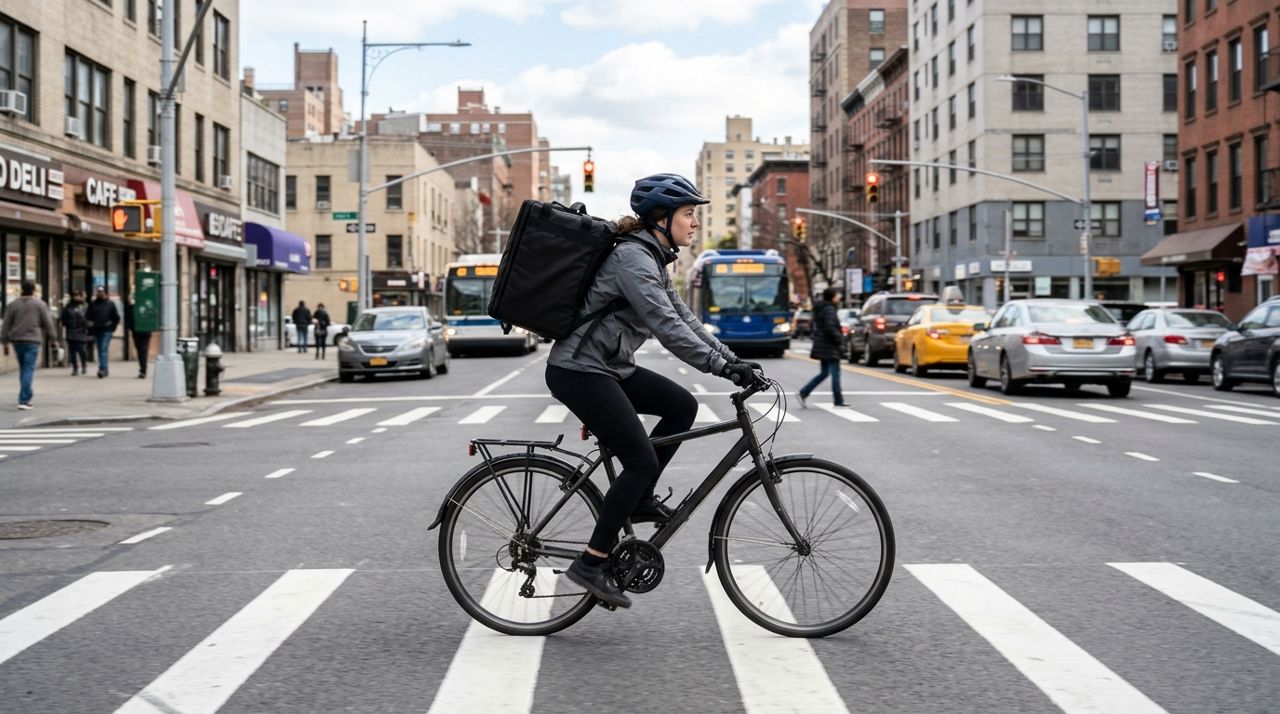
Bike courier navigating busy city intersection with delivery bag When an alert pops up, you see the pickup address, drop-off address, estimated distance, and your cut (you keep 90% of the delivery fee). Tap to accept. If the restaurant or shop is more than ten blocks away, consider declining unless it's slow—your time on a bike is precious.
Once you accept, the app shows the pickup location on a map. Plan your route: use bike lanes, low-traffic streets, and paths through parks. Avoid one-ways going the wrong direction and streets with heavy truck traffic. If you're picking up multiple orders (some apps batch them), confirm the drop-off addresses are close to each other. A five-mile detour costs you ten minutes and your legs.
- 03
Step 3: Pick up the order and pack it securely
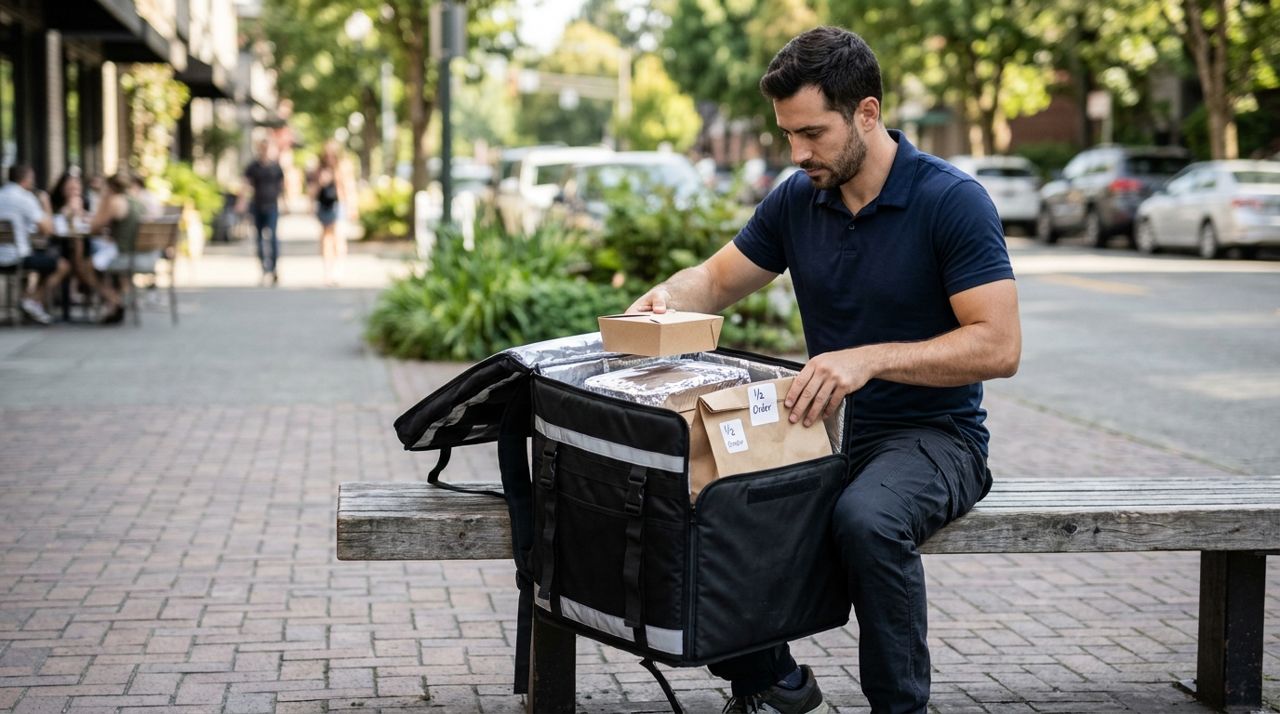
Delivery worker carefully packing food order into insulated backpack Arrive at the restaurant or shop, check in with staff, and confirm the order name. Inspect the bag: hot food should be sealed and upright, cold items separated if possible. Place everything in your backpack or rack bag with heavier items at the bottom.
For drinks, nestle them between soft items or use a bottle cage. If you're carrying pizza, a rigid pizza bag strapped to a rear rack works best. On an e-bike with a front basket, balance the weight so steering isn't wobbly. Take thirty seconds to pack well—a spilled milkshake costs you your rating and a re-delivery.
Before you leave, double-check the address in the app and note any gate codes or apartment numbers in the delivery instructions.
- 04
Step 4: Ride safely and follow traffic laws
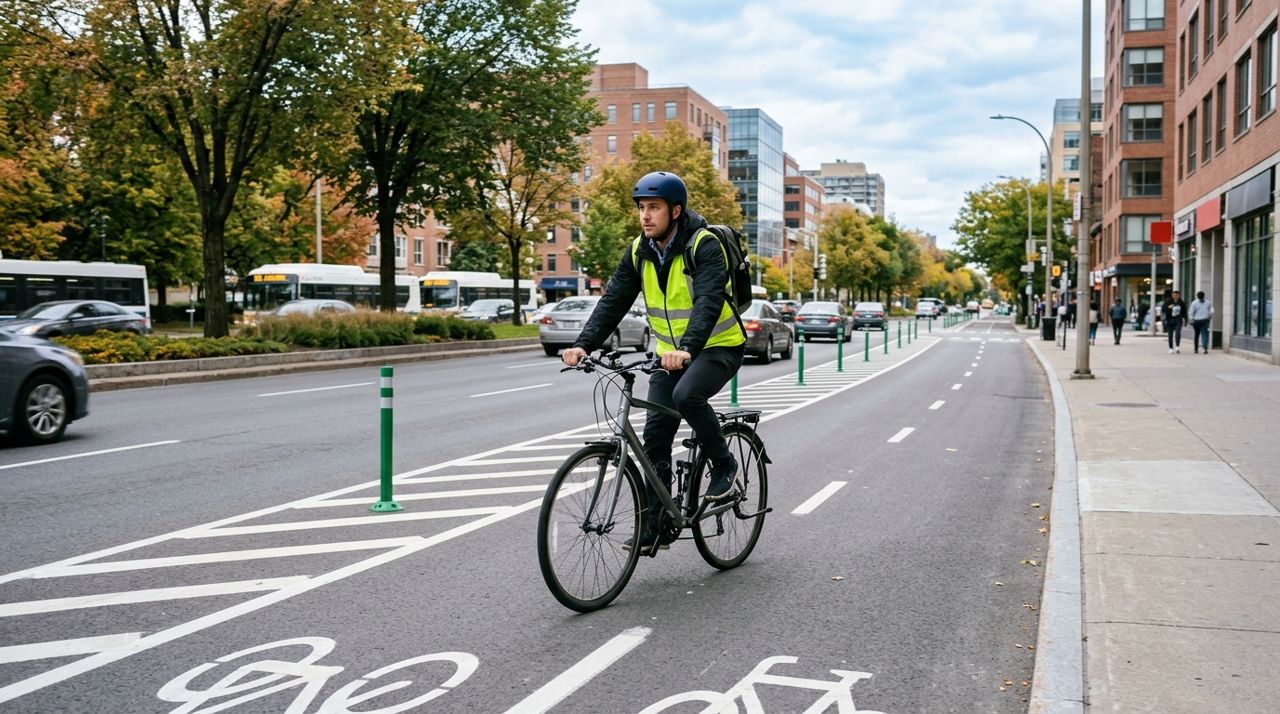
Cyclist wearing reflective vest riding in protected city bike lane Head to the drop-off using bike lanes wherever possible. Obey red lights and stop signs—a ticket costs more than you'll earn in a day. Use hand signals, wear a bright vest or reflective gear after dark, and keep your headlight and taillight charged.
Watch for car doors opening, pedestrians stepping into the bike lane, and potholes. If you're on an e-bike, remember you're moving faster than drivers expect. In rain, slow down on metal grates and painted crosswalks—they're slippery. If it's truly dangerous (ice, heavy snow, flooding), it's okay to go off duty.
Customers can follow you live on the map, so don't make unnecessary detours. If you need to stop for a minute, pull over and let them see you're paused.
- 05
Step 5: Complete the delivery and take the photo
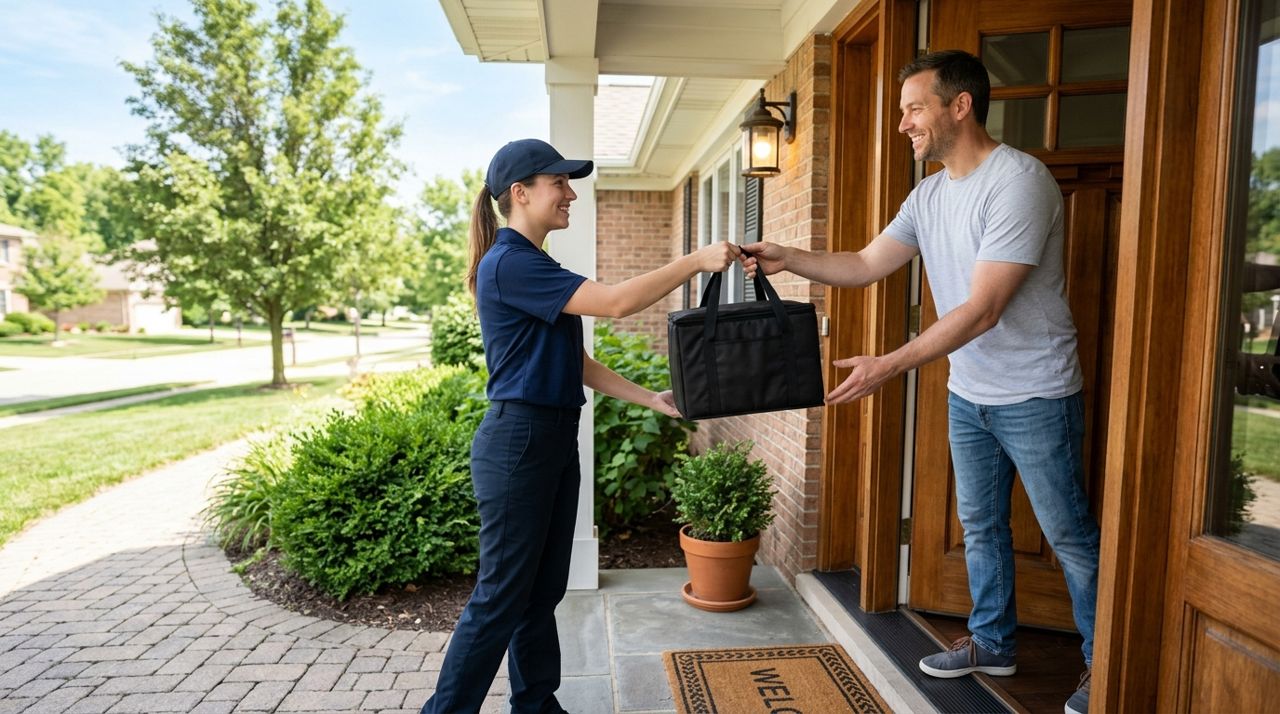
Delivery person handing insulated food bag to customer at doorstep When you arrive, lock your bike if you're going into a building, or lean it where you can see it. Ring the bell or knock, hand over the order, and smile. If it's a 'leave at door' delivery, place the bag on a clean, dry spot (not the ground if you can help it), step back, and take the required drop-off photo through the app.
The photo protects both you and the customer—it proves you delivered. Make sure the address number or apartment door is visible in the frame. If the customer isn't answering and instructions say 'hand to customer,' try calling through the in-app messaging, wait two minutes, then follow the app's instructions (usually take a photo and mark it complete).
After delivery, customers can tip 10%, 15%, 20% or a custom amount. You'll see it in your wallet right away—100% of tips go to you.
- 06
Step 6: Track your earnings and cash out
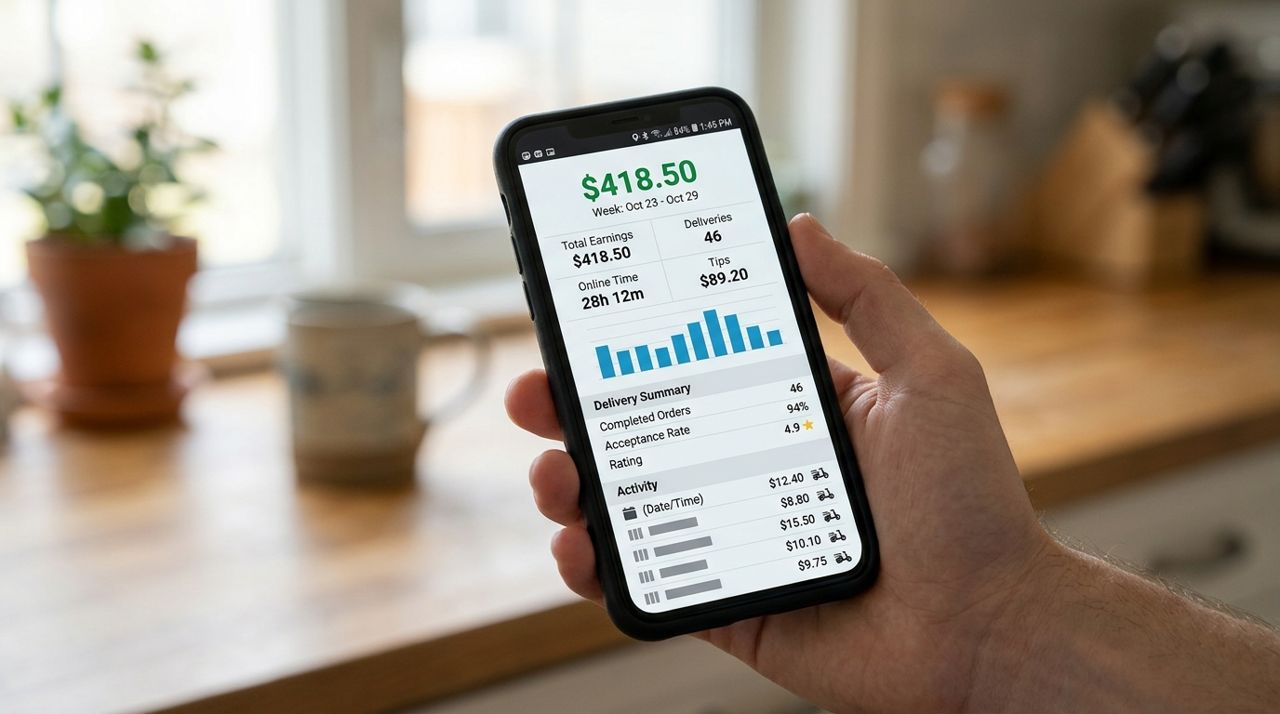
Smartphone screen displaying delivery earnings and completed orders summary Your earnings land in your in-app wallet immediately after each job. You keep 90% of the delivery fee, plus 100% of any tip. In a typical dinner shift (two hours), expect 4-8 deliveries depending on distance and order volume; at $4-$7 per delivery plus tips, that's $30-$70 for the shift.
On busy nights or weekends, you can push higher. Check your earnings in real time and cash out whenever you want—most platforms process payouts to your bank in 1-3 days. Track which neighborhoods and times pay best, and plan your schedule around them. If you're on an e-bike, factor in charging time (and electricity cost if you pay it); pedal bikes have zero 'fuel' cost.
- 07
Step 7: Maintain your bike and your body
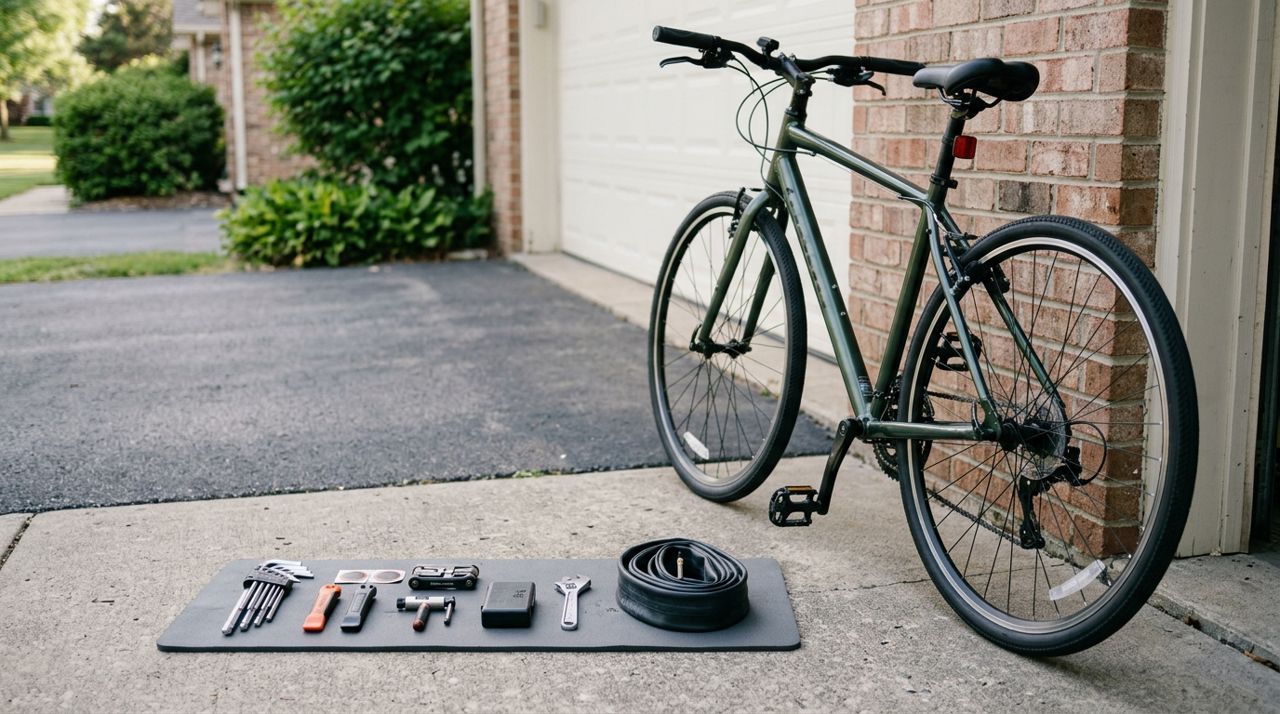
Bike repair tools and spare tube laid out next to bicycle After each shift, wipe down your bike, check tire pressure, and inspect your chain and brakes. A flat tire or broken chain in the middle of a delivery costs you time and money. Carry a spare tube, tire levers, a multi-tool, and a pump or CO2 cartridge.
Hydrate constantly—carry a water bottle in a cage. Eat before and during long shifts; low blood sugar kills your speed and mood. Stretch your wrists, neck, and lower back between orders. If your knees or wrists hurt, adjust your saddle height and handlebar position, or see a bike-fit specialist. This is a physical job; taking care of yourself means you can work tomorrow.
Pro tips
- In rain, double-bag orders in plastic grocery bags and keep a dry towel in your backpack to wipe your phone screen.
- Learn the loading-dock entrances and shortcuts in your zone—they save minutes per delivery and add up fast.
- If you're delivering in winter, invest in pogies (handlebar mittens) and a balaclava; numb fingers can't work a phone.
- Keep your phone charged with a portable battery pack strapped to your frame or in your pocket.
- Join a local bike-courier chat or forum—experienced riders share which buildings have bike rooms, which restaurants are slow, and where cops ticket.
Frequently asked questions
- Do I need a special bike or e-bike to deliver?
- No. Any reliable bike works, but an e-bike makes hills and long distances much easier and lets you take more orders per hour. A comfortable saddle, good brakes, and lights are more important than an expensive frame. Many full-time couriers ride used hybrids or cargo bikes.
- What if a customer isn't home or the address is wrong?
- Use the in-app messaging to call or text the customer. Wait two minutes, then follow the app's protocol—usually you take a photo and mark it delivered, or return the order to the restaurant if it's very wrong. You still get paid for your time and distance.
- Can I really make decent money on a bike in a city?
- Yes, if you work smart. Experienced bike couriers in dense cities often earn $18-$28 per hour during peak times by clustering short deliveries, avoiding slow restaurants, and working the busiest neighborhoods. Your costs (bike maintenance, tubes, snacks) are low, and you keep 90% of each delivery fee plus all tips.
Bike delivery in a dense city is a real job with real skills—route planning, weather management, customer service, and physical endurance. Once you learn your zone and dial in your gear, you can make steady money, stay fit, and enjoy the independence of working on your own schedule. If you're ready to start, download the app, set your radius, and take your first ride.
Photos are illustrative. Service prices are typical ranges and vary by city. How we write our guides.
More guides like this
How to Sign Up to Deliver Food and Packages and Get Your First Job
Delivery work offers flexible hours and immediate income, but getting started requires knowing where to find jobs and how to set yourself up for success.
How to Use the Busy Map to Find Where Orders Are Coming In
The busy map shows you real-time order activity in your city. Here's how to read it, position yourself in hot zones, and earn more per hour with less idle time.
How to Take a Perfect Drop-Off Photo Customers Trust
A clear drop-off photo is your proof of delivery and your best protection against 'never arrived' complaints. Here's how to take photos that customers trust every single time.