
How to Find a Long-Term Rental Apartment in a New City: A Step-by-Step Guide
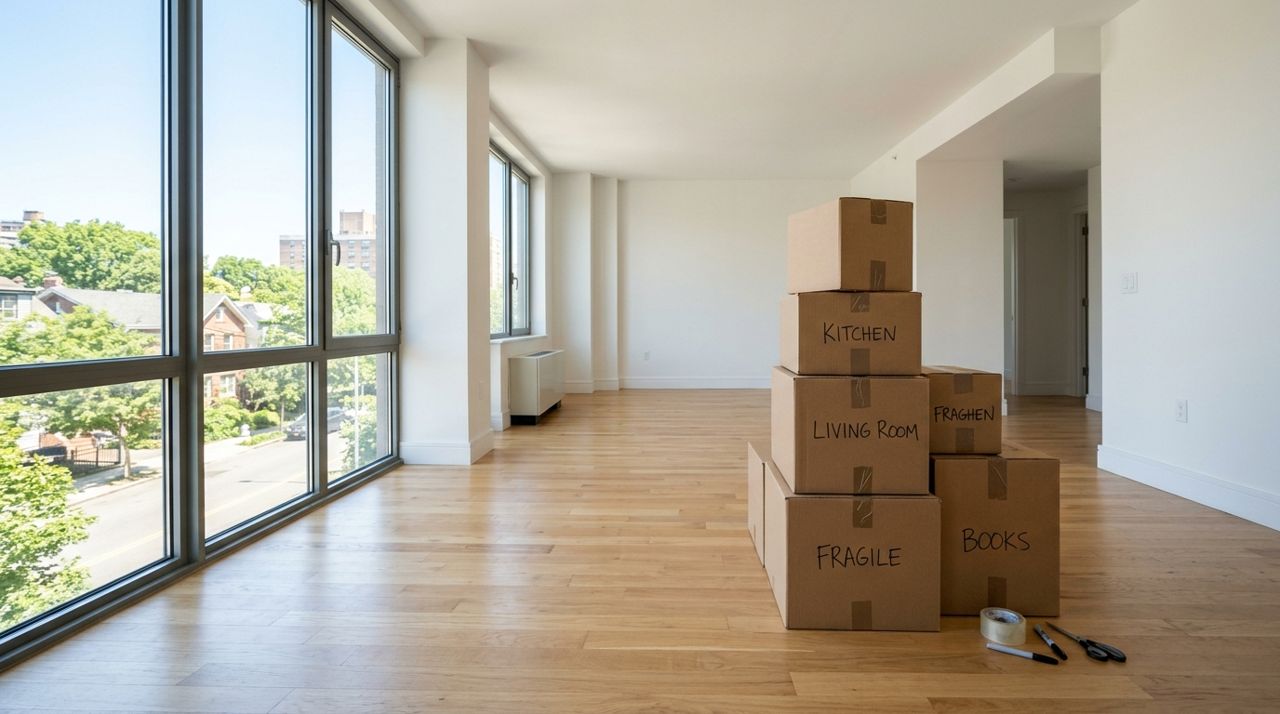
Moving to a new city means starting your apartment search from scratch in neighborhoods you don't know, often while juggling a job transition or family move. The stakes are high: sign the wrong lease and you're stuck for a year in a place that doesn't fit your commute, budget, or lifestyle.
This guide gives you a practical roadmap for finding a long-term rental apartment remotely or on the ground. You'll learn how to narrow your search by neighborhood, spot red flags in listings, tour apartments efficiently, and handle the application process so you can move in with confidence.
- 01
Step 1: Set your budget and must-haves before you search

Person sitting at desk writing budget calculations in a notebook with calculator nearby Start by calculating exactly what you can afford. A common guideline is that rent shouldn't exceed 30% of your gross monthly income, but factor in utilities (typically $100–$200/month), parking ($50–$300 in cities), pet fees if applicable, and renters insurance (around $15–$30/month). Write down your non-negotiables: number of bedrooms, in-unit laundry, pet policy, parking, proximity to work or schools. Separate those from nice-to-haves like a gym or balcony. This list will save you hours by filtering out places that won't work before you waste time touring them.
- 02
Step 2: Research neighborhoods using multiple sources

Person studying neighborhood map on tablet with coffee cup on table Don't rely on a single website's neighborhood ratings. Cross-reference crime maps (many police departments publish these), commute times using Google Maps during rush hour, and local subreddit threads where residents discuss pros and cons honestly. Walk or drive through neighborhoods at different times of day if possible—a block can feel very different at 7 a.m. versus 10 p.m. Check proximity to grocery stores, pharmacies, and parks. If you're moving with kids, look up school ratings even if you don't have children yet; it affects resale value and neighborhood stability. Make a shortlist of three to five neighborhoods that fit your lifestyle and budget.
- 03
Step 3: Browse rental listings across platforms

Woman sitting on couch scrolling through rental apartment listings on smartphone Cast a wide net by checking multiple listing sources. Use national platforms, local classifieds, and apps that aggregate rentals in your target city. Lumo's real estate mode lets you browse long-term rentals in one place and save properties you're interested in; listing a rental is free for landlords, which means you may find properties not posted elsewhere. Set up alerts so new listings hit your phone within minutes—in competitive markets, good apartments get snapped up in 24 to 48 hours. Filter by your budget, bedroom count, pet policy, and preferred neighborhoods. Save at least 10 to 15 listings to give yourself options as you tour and apply.
- 04
Step 4: Vet listings carefully and contact landlords
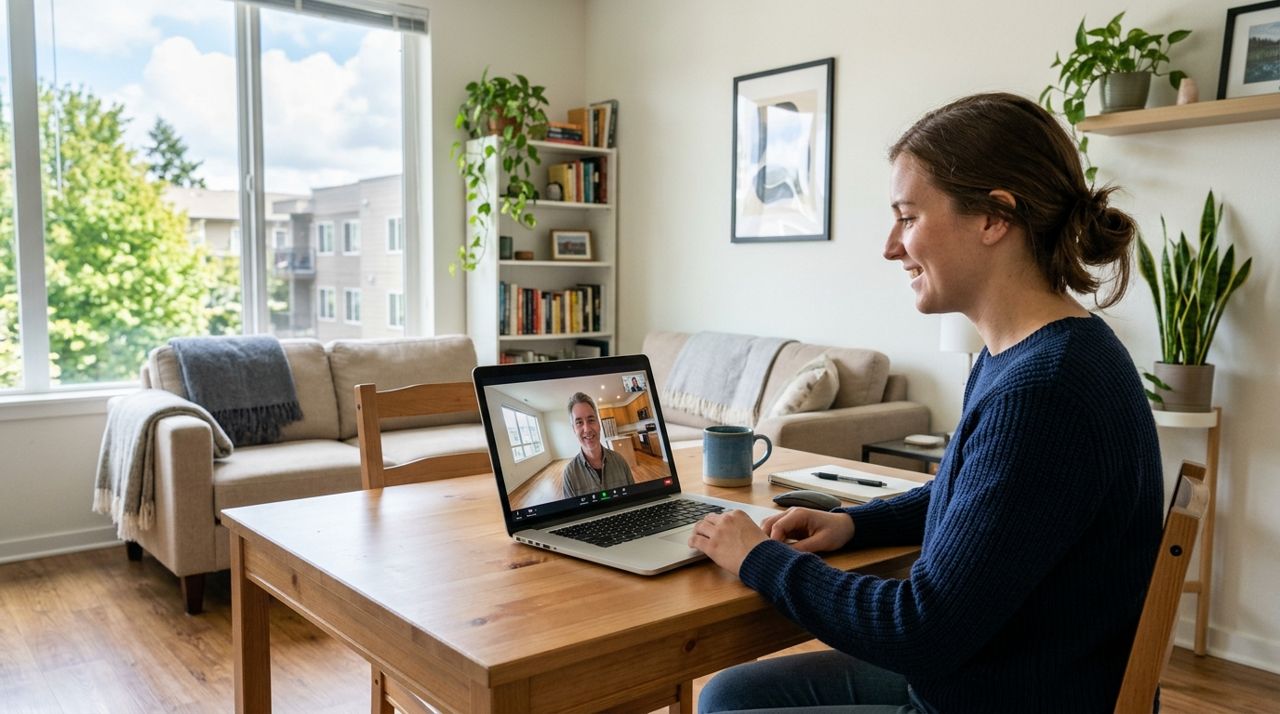
Laptop screen showing video call with landlord giving virtual apartment tour Scams are common in rental markets, especially for out-of-town searchers. Red flags include prices far below market rate, landlords who refuse video tours or in-person meetings, requests to wire money or pay via gift cards, and listings with stolen photos (reverse-image-search pictures). Legitimate landlords will answer questions about lease terms, utilities, parking, and application requirements. Ask about move-in costs upfront: first month, last month, security deposit (typically one month's rent), and any fees. Request a video walkthrough if you can't visit in person. Use in-app messaging when available so you have a record of all communication.
- 05
Step 5: Schedule and conduct thorough apartment tours
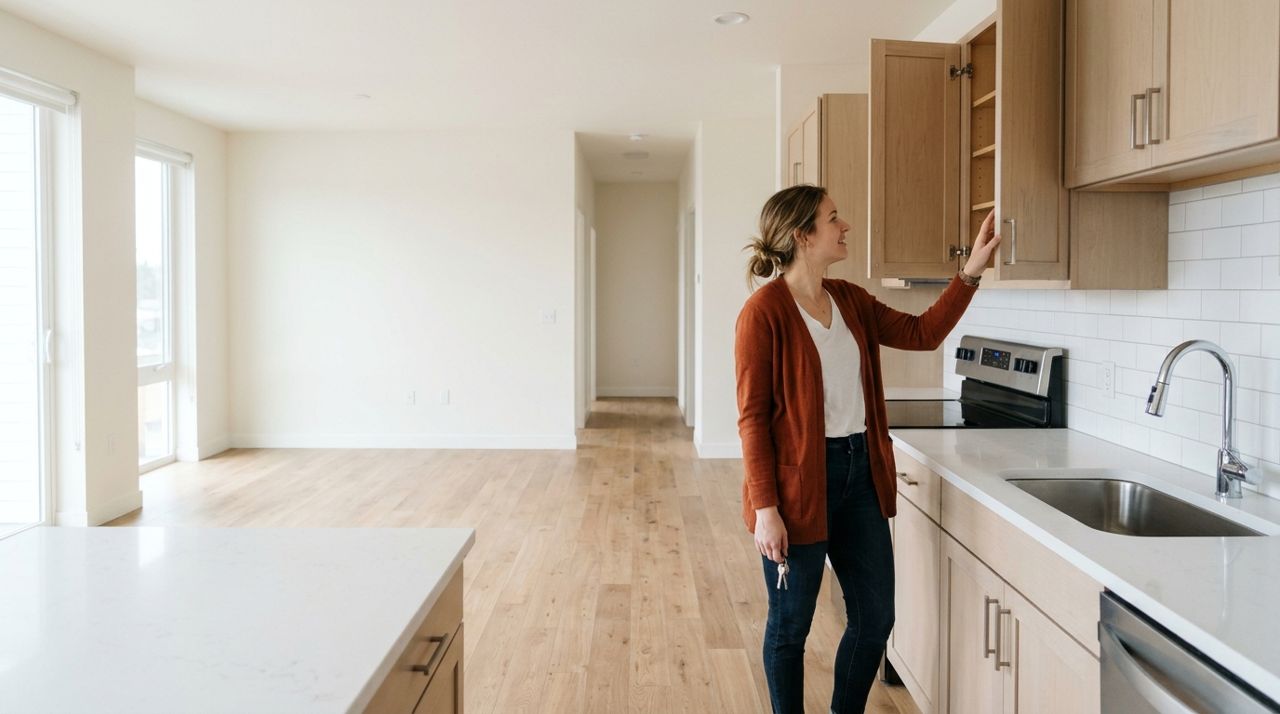
Couple walking through empty apartment during tour, woman checking kitchen cabinets Try to tour in person if at all possible; photos hide a lot. Block out a day or weekend and schedule back-to-back tours in the same neighborhood to save travel time. Bring a checklist: test water pressure and temperature in the shower, flush the toilet, check under sinks for leaks, open and close all windows, inspect outlets, look inside closets and cabinets, and check cell signal strength. Ask neighbors in the hallway or building about noise, management responsiveness, and parking. Take photos and videos so you can compare units later—they all blur together after the third tour. If touring remotely via video, ask the landlord to show you everything on your checklist.
- 06
Step 6: Read the lease carefully and prepare your application
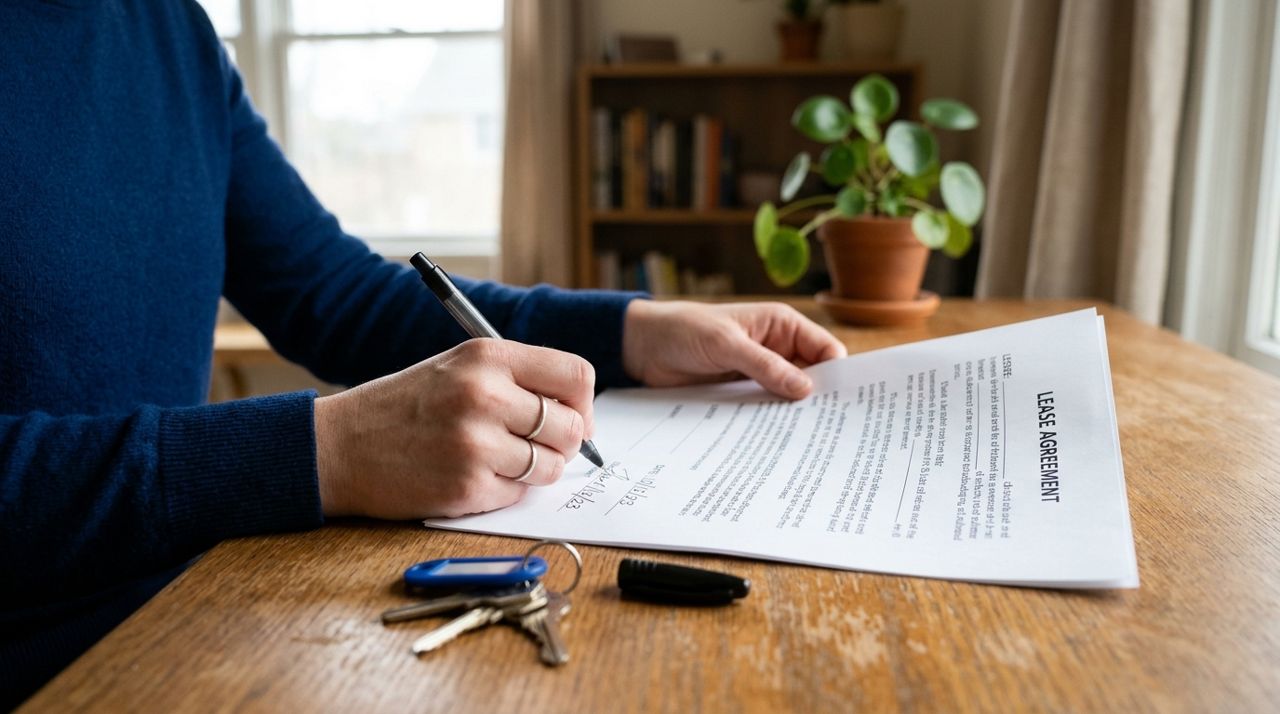
Close-up of hands signing rental lease agreement document on desk with keys nearby Before you apply, read the entire lease document—not just the rent amount. Check the lease length, renewal terms, subletting policy, maintenance responsibilities, guest policies, and penalties for breaking the lease early. Note the notice period required to move out (usually 30 to 60 days). Gather your application materials: government-issued ID, proof of income (recent pay stubs or offer letter), rental history with previous landlord contact info, and references. Most landlords run a credit and background check (expect a $30–$75 application fee). If your credit is under 650 or you have no rental history, offer to pay a larger security deposit or find a co-signer.
- 07
Step 7: Document move-in condition and set up utilities
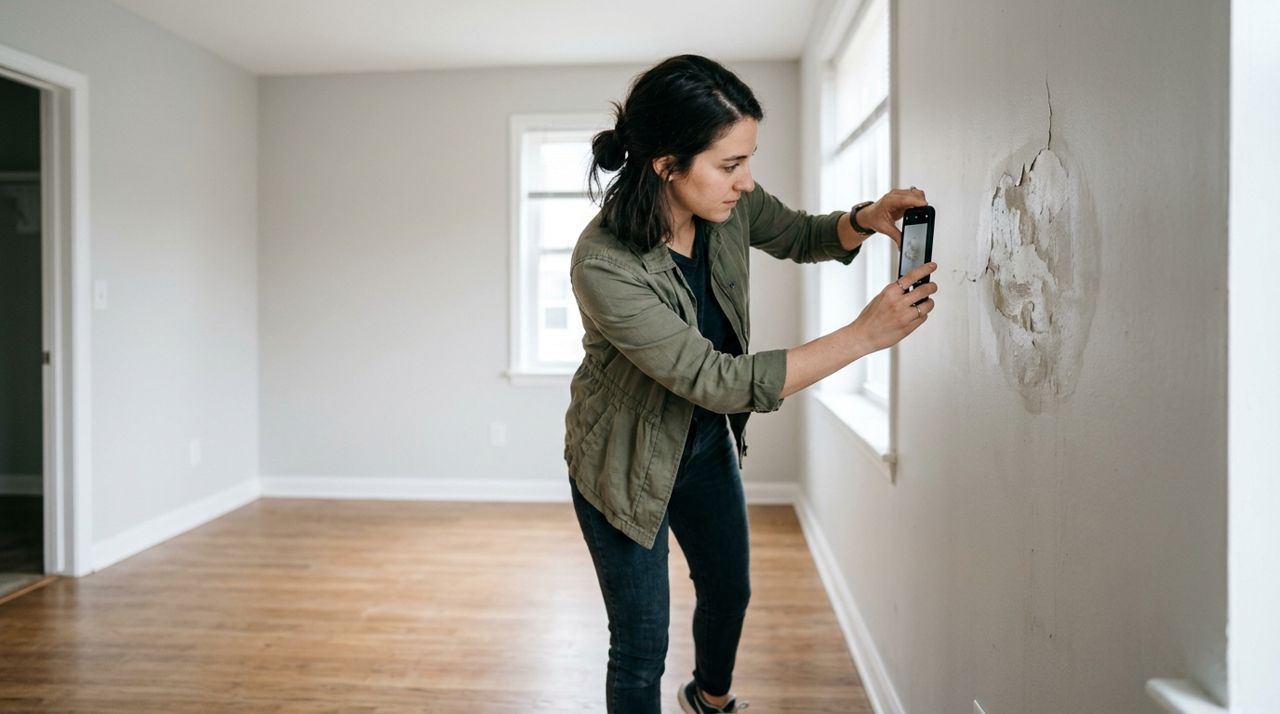
Person using smartphone to photograph wall damage in empty apartment for documentation On move-in day, walk through with the landlord and document every existing issue—scuffs, stains, broken fixtures—with photos and written notes on a condition report. This protects your security deposit when you move out. Test everything again: appliances, heating and cooling, locks, smoke detectors. Set up utilities (electric, gas, water, internet) at least a week before move-in so services are active when you arrive. Buy renters insurance before you move in; it's cheap and covers your belongings if the building floods or burns. Keep copies of your lease, move-in report, and all correspondence with your landlord in a dedicated folder—you'll need them if disputes arise.
Pro tips
- Start your search four to six weeks before your move date; waiting until the last minute leaves you with few options and weak negotiating power.
- In competitive markets, have your application packet ready to submit immediately after a tour—good units often receive multiple applications the first day.
- Consider a short-term rental or extended-stay hotel for your first two weeks in the city so you can tour in person without time pressure.
- Join local Facebook groups or neighborhood forums to find unlisted rentals and get honest opinions from residents about buildings and landlords.
- Don't skip the renters insurance—it costs about as much as one lunch out per month but can save you thousands if disaster strikes.
Frequently asked questions
- How much should I budget for move-in costs?
- Plan for first month's rent, security deposit (usually equal to one month's rent), and sometimes last month's rent upfront—that's two to three times your monthly rent. Add application fees ($30–$75), utility deposits if required, moving costs, and renters insurance. For a $1,500/month apartment, budget $3,500 to $5,000 total to move in.
- Can I negotiate rent with a landlord?
- Yes, especially in slower markets or if you're signing a longer lease. Offer to sign a two-year lease, pay several months upfront, or move in immediately if the unit has been vacant. Landlords may also negotiate on amenities like parking or waive fees rather than lower rent. The worst they can say is no.
- What if I have bad credit or no rental history?
- Offer a larger security deposit (two months' rent instead of one), provide a co-signer with good credit, or show extra proof of income like three to six months of bank statements. Some landlords will overlook credit issues if you can demonstrate financial stability and provide strong references from employers or previous landlords.
Finding the right rental apartment in a new city takes planning, but following these steps will help you avoid costly mistakes and find a place that actually fits your life. Start early, do your homework on neighborhoods, vet listings carefully, and document everything in writing. Whether you're browsing on Lumo or other platforms, the key is staying organized and moving quickly when you find the right match.
Photos are illustrative. Service prices are typical ranges and vary by city. How we write our guides.
More guides like this

How to Book a Short-Term Rental for Your Work Trip in 7 Steps
Booking a short-term rental for a work trip doesn't have to be complicated. Follow these seven practical steps to find the right place, check what you need, and confirm your stay.
How to List Your Home for Sale Without Paying Listing Fees
Listing your home for sale doesn't have to cost you hundreds or thousands in upfront fees. Here's how to create a free listing that reaches serious buyers.
How to List Your Long-Term Rental and Screen Tenants Properly
Listing a rental property and finding reliable tenants takes more than posting an address and waiting. This guide walks you through pricing, photography, listing details, and a tenant screening process that protects your investment.