
How to Price Your Products with Lumo's 5% Fee and Still Profit
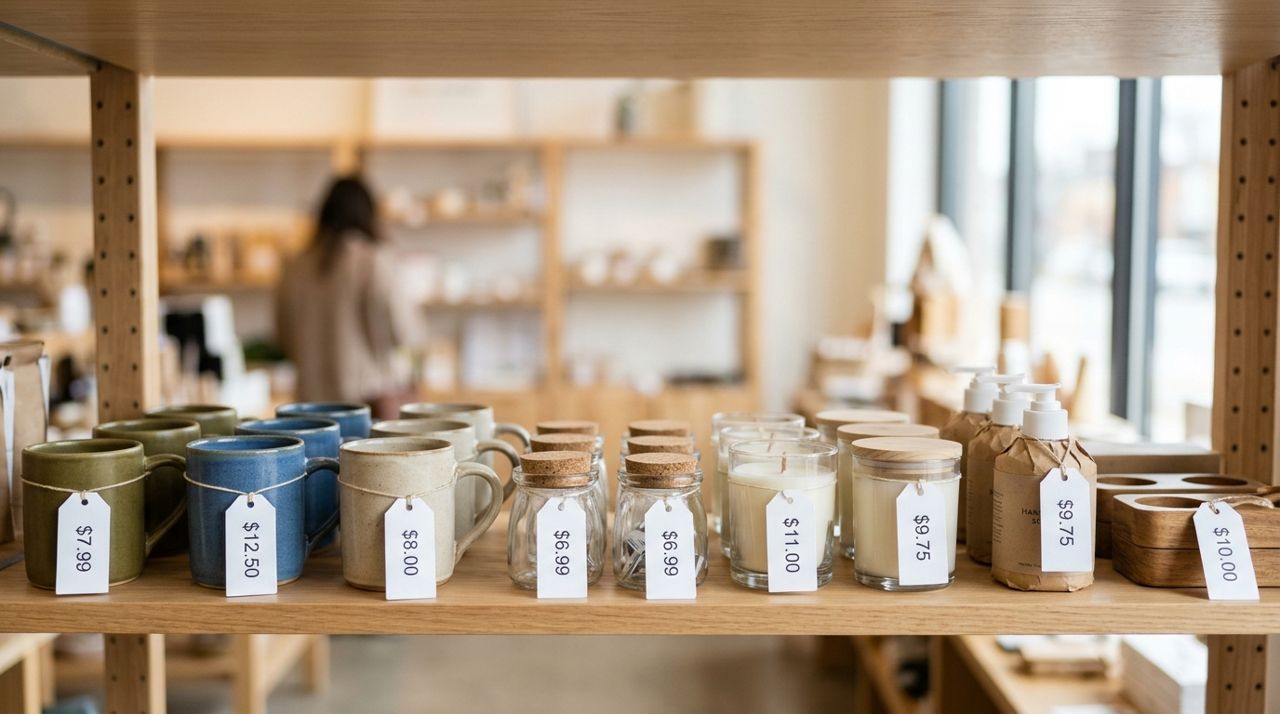
When you open a shop on Lumo, you pay nothing upfront—no monthly subscription, no listing fees. The 5% service fee only kicks in when a customer buys something. That's lower than most platforms (Etsy charges 6.5% plus payment processing; Amazon takes 8-15% depending on category), but you still need to factor it into your pricing strategy.
Many sellers make the mistake of setting prices based solely on their costs, then watching their margins shrink when fees come out. This guide walks you through the math and strategy to price products that cover the 5% fee, remain attractive to buyers, and deliver the profit you need to grow your business.
- 01
Step 1: Calculate your true cost per item
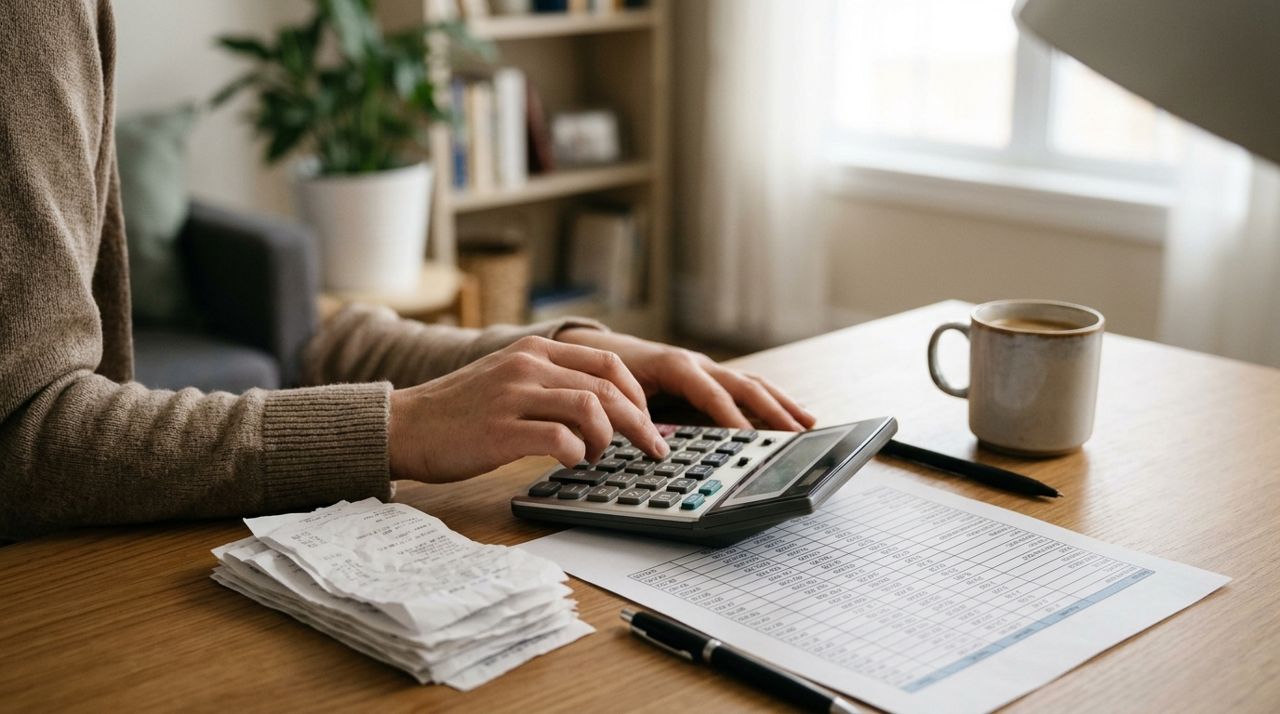
Person using calculator with receipts and cost spreadsheet on desk Before you can price anything, you need to know what each product actually costs you. Start with the obvious: wholesale cost or materials. Then add the hidden expenses most sellers forget:
- Packaging materials (bags, boxes, tissue paper, tape)
- Labels and stickers
- A portion of your rent or storage costs
- A slice of utilities if you're making products at home
- Mileage or delivery supplies if you offer local pickup
For example, a candle that costs you $4 in wax and fragrance might actually cost $5.80 when you add $0.60 for the jar, $0.50 for a label, $0.40 for packaging, and $0.30 for your share of workspace costs. Write down this 'true cost' for every product—it's your baseline.
- 02
Step 2: Decide your target profit margin

Business owner reviewing profit margin percentages on laptop screen Profit margin is what's left after all costs, including fees. Most successful retail shops aim for 40-60% margin on physical goods; services and handmade items can support 50-70%. Lower margins (20-30%) work for high-volume commodity items, but you'll need to sell a lot more to make the same money.
If your candle costs $5.80 to make and you want a 50% margin, you need to pocket $5.80 in profit, so your target revenue per candle is $11.60. At 40% margin, you'd need $9.67 revenue; at 60%, you'd need $14.50. Pick a margin that reflects your market—luxury or handmade items command higher margins; everyday essentials need tighter pricing to compete with big retailers.
- 03
Step 3: Factor in the 5% Lumo fee

Hand writing pricing formula on paper with pen and calculator Lumo takes 5% of your sale price (not your profit). To find the price that leaves you with your target revenue after the fee, divide your target by 0.95. Using our candle example with a $11.60 target: $11.60 ÷ 0.95 = $12.21. Round to a clean number: $12.25 or $12.50.
At $12.25, Lumo takes $0.61 (5%), leaving you $11.64. Subtract your $5.80 cost, and you pocket $5.84 profit—a 50.2% margin. The math is simple once you memorize the formula: (Cost + Desired Profit) ÷ 0.95 = List Price. Always divide by 0.95, not multiply by 1.05—multiplying gives you the fee amount but doesn't build it into the price correctly.
- 04
Step 4: Check competitor pricing in your area

Woman comparing products and prices on smartphone while taking notes Your math might say $12.25, but if every other candle shop in town charges $8-10, you need to reconsider. Open Lumo and browse shops in your category. Check local competitors on Google, Facebook Marketplace, and Instagram. Make a quick spreadsheet: competitor name, product, price, size or features.
If your price is 20% higher than the market, you have three options: accept a lower margin and drop your price to $10-11, add value that justifies the premium (better ingredients, unique scents, custom labels, gift packaging), or target a different customer segment willing to pay more. Sometimes the honest answer is that your costs are too high to compete—in that case, look for cheaper suppliers or focus on products with better margins.
- 05
Step 5: Set your list price and test it
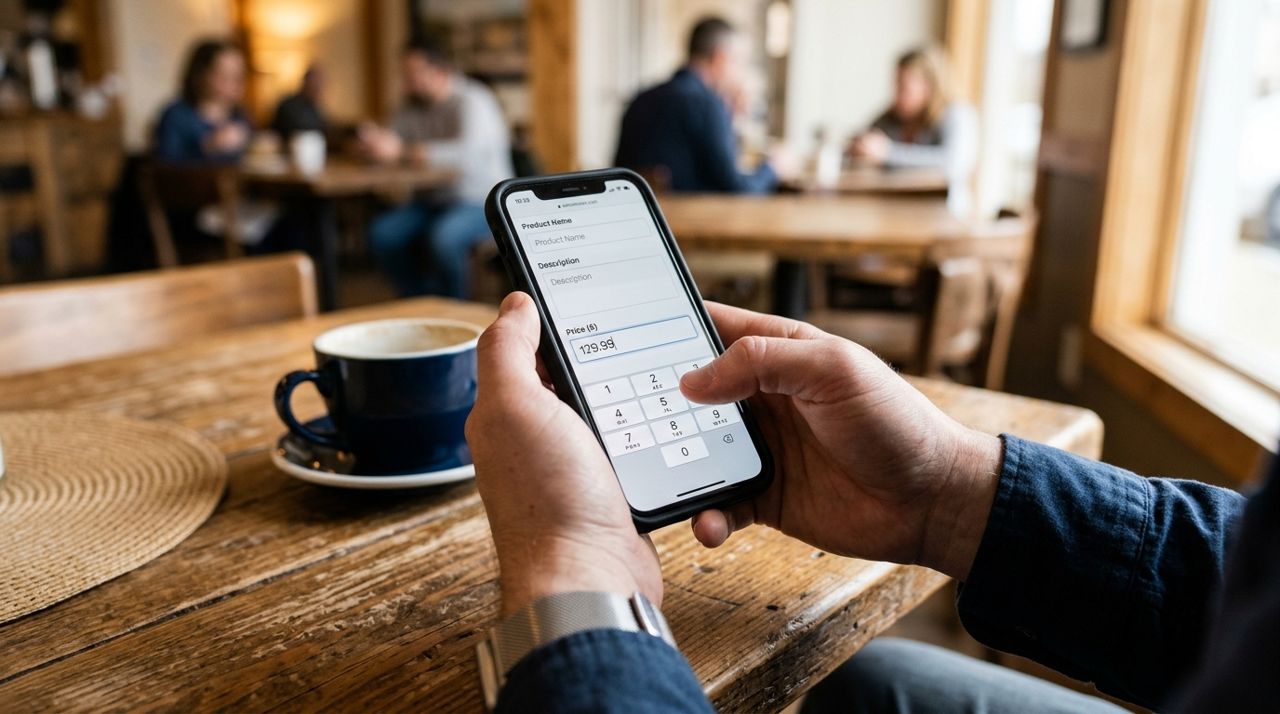
Hands holding phone entering product price on shop listing screen Enter your calculated price in your Lumo shop. Use round numbers that feel natural—$12.50, not $12.37. Prices ending in .99 or .95 still work for bargain positioning, but whole dollars often feel more premium.
Track your first 20-30 orders closely. Are people buying without hesitation, or do they add items to cart but abandon checkout? If you get lots of views but few sales, your price might be too high. If you sell out instantly and get requests for more, you priced too low and left money on the table. Adjust in $0.50 or $1 increments and watch what happens. Pricing is never one-and-done; you'll refine it as you learn what your customers value and what your local market will bear.
- 06
Step 6: Use bundles and add-ons to increase order value
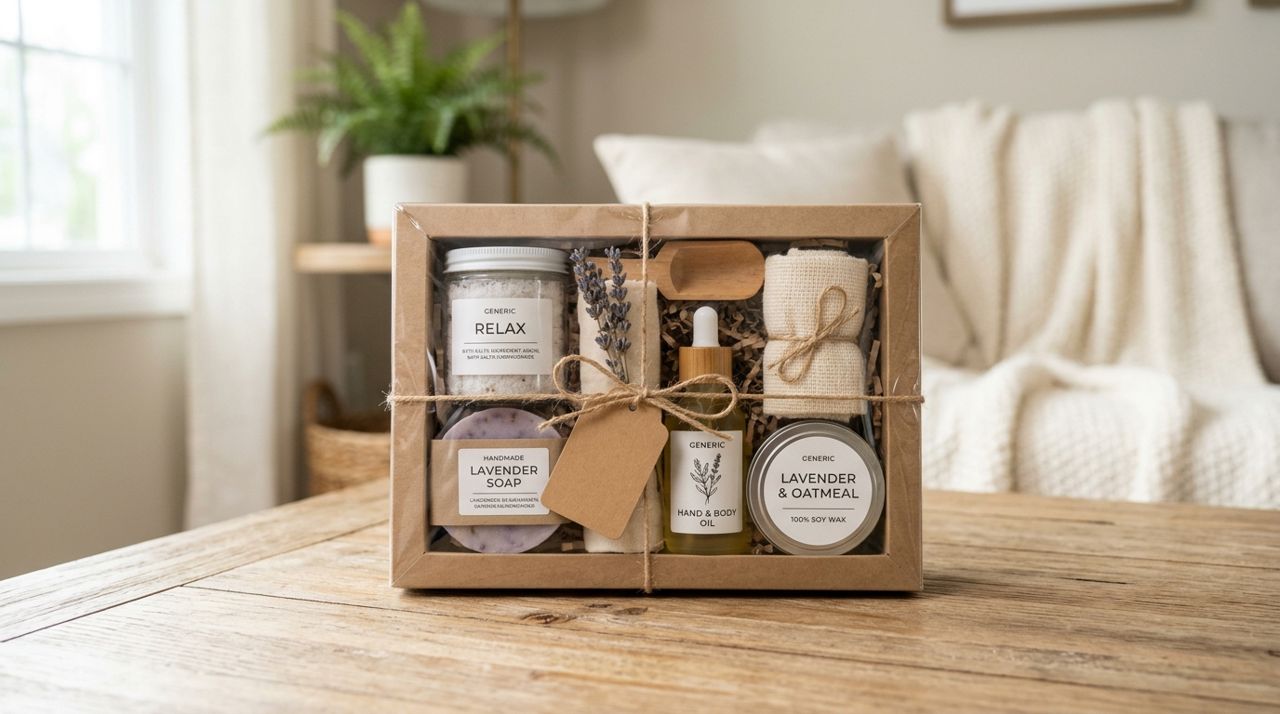
Attractive product bundle with multiple items packaged together as gift set The 5% fee applies to each sale, so a $12 order and a $40 order both cost you 5%—but the bigger order pays more of your fixed costs (your time, your packaging supplies, your customer service effort). Encourage larger orders with bundles: 'Three candles for $33' (saves $3.75) or 'Candle + matches + coaster = $18' (saves $2).
Add low-cost, high-margin items near checkout: sample sizes, gift cards, add-a-card-for-$2. A customer buying a $12 candle who adds a $3 box of matches increases your revenue by 25% for pennies in extra cost. On Lumo, you can create product variations (sizes, colors, bundles) in one listing, making it easy for customers to upgrade their order without hunting through your whole shop.
- 07
Step 7: Review and adjust pricing monthly

Person marking monthly review date on calendar next to laptop Your costs change—suppliers raise prices, shipping goes up, you find a better deal on packaging. Set a monthly calendar reminder to review your top 10 products. Recalculate true cost, check if your margin is still where you want it, and scan competitor pricing again.
If your costs went up 10% but your prices stayed flat, your margin is eroding. Don't be afraid to raise prices when justified; customers understand inflation. Announce changes with a simple message: 'Due to increased costs, prices will update on the 1st.' Loyal customers appreciate transparency. Likewise, if you negotiate a better deal with a supplier and can lower prices without hurting margin, do it—being known as the affordable option builds customer loyalty and word-of-mouth faster than almost anything else.
Pro tips
- Round up to psychological price points (.50, .95, .99, or whole dollars) rather than odd cents—it looks more professional.
- Offer a 'featured' or 'bestseller' item priced at breakeven or low margin to pull customers in, then profit on add-ons.
- Track cost-per-sale over time: if packaging costs spike during holidays, adjust December prices slightly to protect margin.
- Customers pay the same total whether they choose pickup or delivery—you don't need separate pricing for each.
Frequently asked questions
- Does Lumo charge the 5% on the total including tax, or just the product price?
- The 5% service fee applies to the product price (subtotal) before any applicable taxes. If your candle sells for $12.25 and local tax adds $1.10, Lumo takes 5% of $12.25 ($0.61), not 5% of $13.35.
- Can I charge different prices for pickup vs. delivery?
- Your product price stays the same; Lumo adds a delivery fee at checkout based on distance and order size, and that fee goes to the driver. You don't set or receive the delivery fee—it's separate from your 5%.
- What if I want to run a sale or discount—does the 5% come out of the sale price?
- Yes, the 5% applies to whatever the customer actually pays. If you mark your $12.25 candle down to $10 for a weekend sale, Lumo takes 5% of $10 ($0.50), and you keep $9.50 minus your costs. Plan sale pricing so you still cover costs and fees.
Pricing with a 5% fee is straightforward once you know your costs and desired margin. Calculate your baseline, divide by 0.95, check the competition, and test. Review monthly and adjust as your business grows. When you price strategically, that 5% feels small compared to the customers, orders, and revenue a platform like Lumo brings to your shop—without the upfront costs or monthly fees that eat into your budget before you ever make a sale.
Photos are illustrative. Service prices are typical ranges and vary by city. How we write our guides.
More guides like this

How to Open a Free Online Shop for Your Neighborhood Boutique
Your neighborhood boutique can reach more customers without paying monthly platform fees. Here's how to open a free online shop, list your inventory, and start taking orders today.
How to Manage Stock Levels for Your Retail Shop (And Never Oversell)
Selling out is great—selling something you don't have is a disaster. Here's how to keep your stock levels accurate and avoid disappointing customers.
How to Take Professional Product Photos Using Only Your Phone
You don't need a fancy camera to take product photos that sell. With the phone in your pocket and a few simple techniques, you can shoot images that look professional and make customers want to buy.