
How to Sell Your Used Car Safely to a Local Buyer
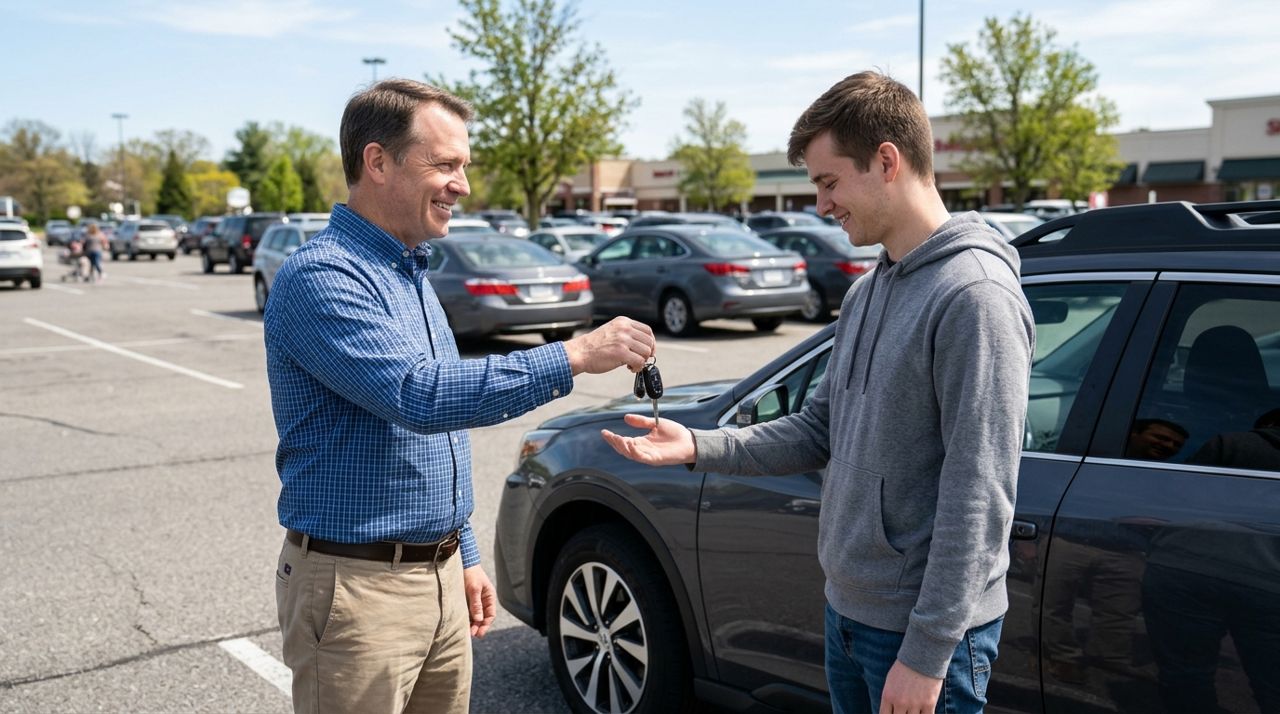
Selling your used car yourself means keeping every dollar instead of leaving money on the dealer's table. Private-party prices typically run 15–20% higher than trade-in values, which translates to real money: a car worth $12,000 privately might fetch only $9,000 as a trade. But selling privately also means you're responsible for screening buyers, arranging safe test drives, handling payment securely, and transferring ownership correctly.
The risks are real. Fake cashier's checks, fraudulent wire transfers, theft during test drives, and incomplete title transfers can turn a good sale into a nightmare. This guide gives you a tested checklist to price your car right, meet buyers safely, verify payment, and close the deal with proper paperwork so you're protected every step of the way.
- 01
Step 1: Price your car and gather the paperwork
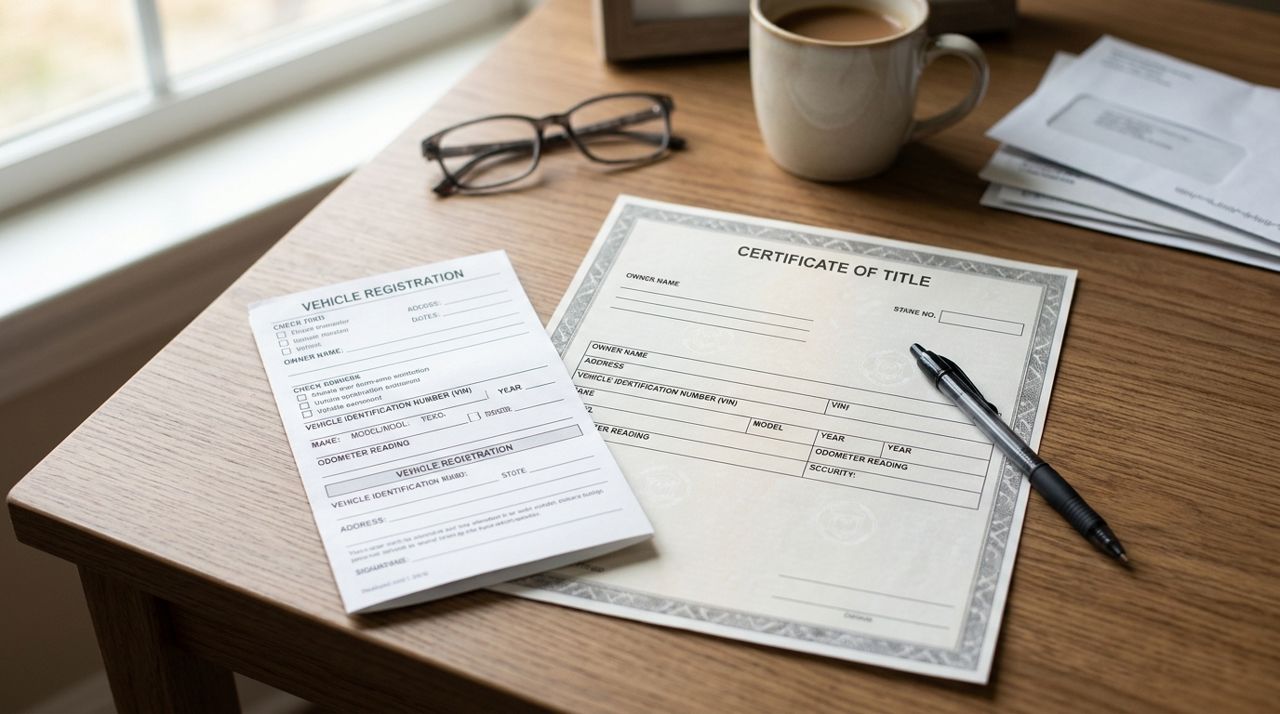
Car title and vehicle registration documents laid out on a desk with a pen Start by checking your car's current market value on Kelley Blue Book, Edmunds, and Cars.com. Enter your year, make, model, trim, mileage, and condition honestly. Private-party values will give you a realistic range; most cars sell within 5% of the midpoint. Add $200–500 to your asking price to leave negotiation room.
Gather every document: the title (or payoff information if you have a loan), maintenance records, owner's manual, and any warranty paperwork. In most states you'll also need to provide an odometer disclosure and a bill of sale. Check your state DMV website for the exact forms required. If your title has a lien, contact your lender now to understand the payoff process and how the buyer will receive a clear title.
- 02
Step 2: List your car with clear photos and honest details
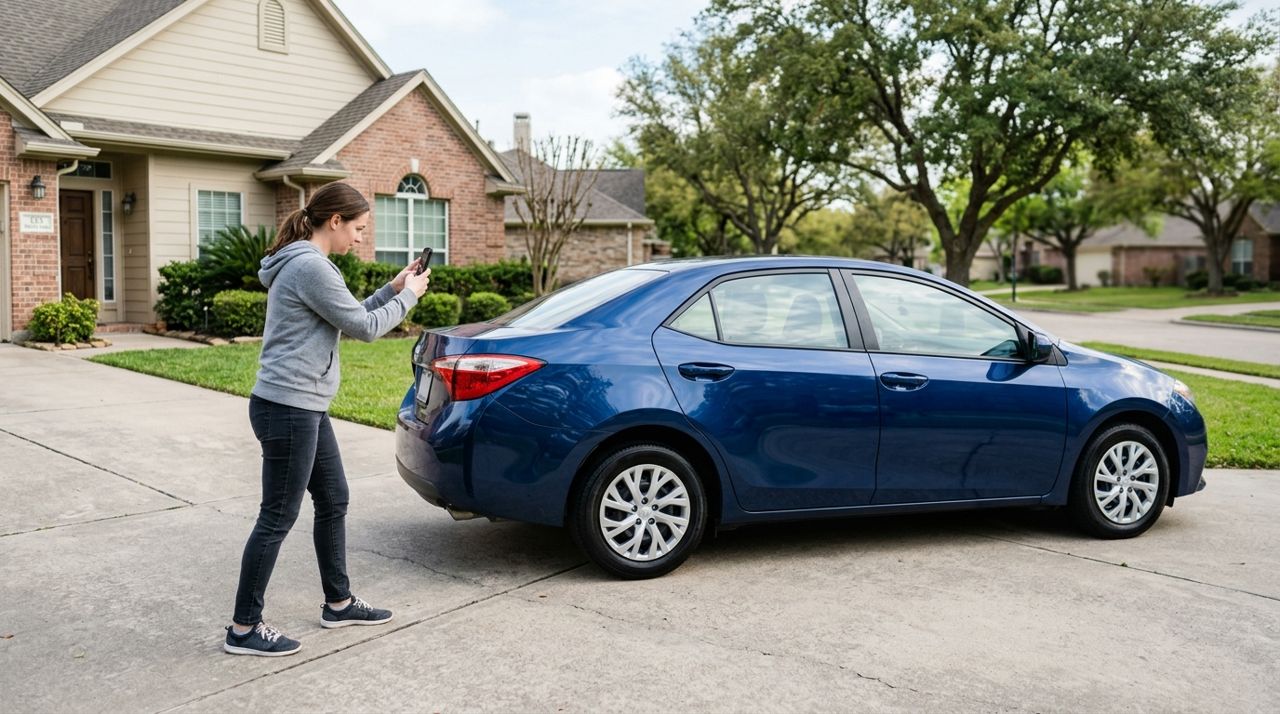
Person taking photos of a clean car in a driveway with a smartphone Take 15–20 photos in good daylight: front, rear, both sides, interior front and back seats, dashboard with mileage visible, engine bay, trunk, tires, and close-ups of any damage or wear. Clean the car thoroughly first; a $25 detail job can add $200–300 to your sale price.
Write a complete description: year, make, model, trim, mileage, color, transmission type, key features, service history, and any issues (even minor ones). Mention recent work like new tires or brakes. Being upfront about a small dent or worn seat saves time and builds trust; hiding problems invites lowball offers and angry calls.
You can list on platforms like Craigslist, Facebook Marketplace, and Autotrader. Lumo also lets you open a free shop where you can list your car with photos and price, reaching local buyers looking for vehicles from personal sellers, with in-app messaging to coordinate details safely.
- 03
Step 3: Screen inquiries and set safe meeting terms
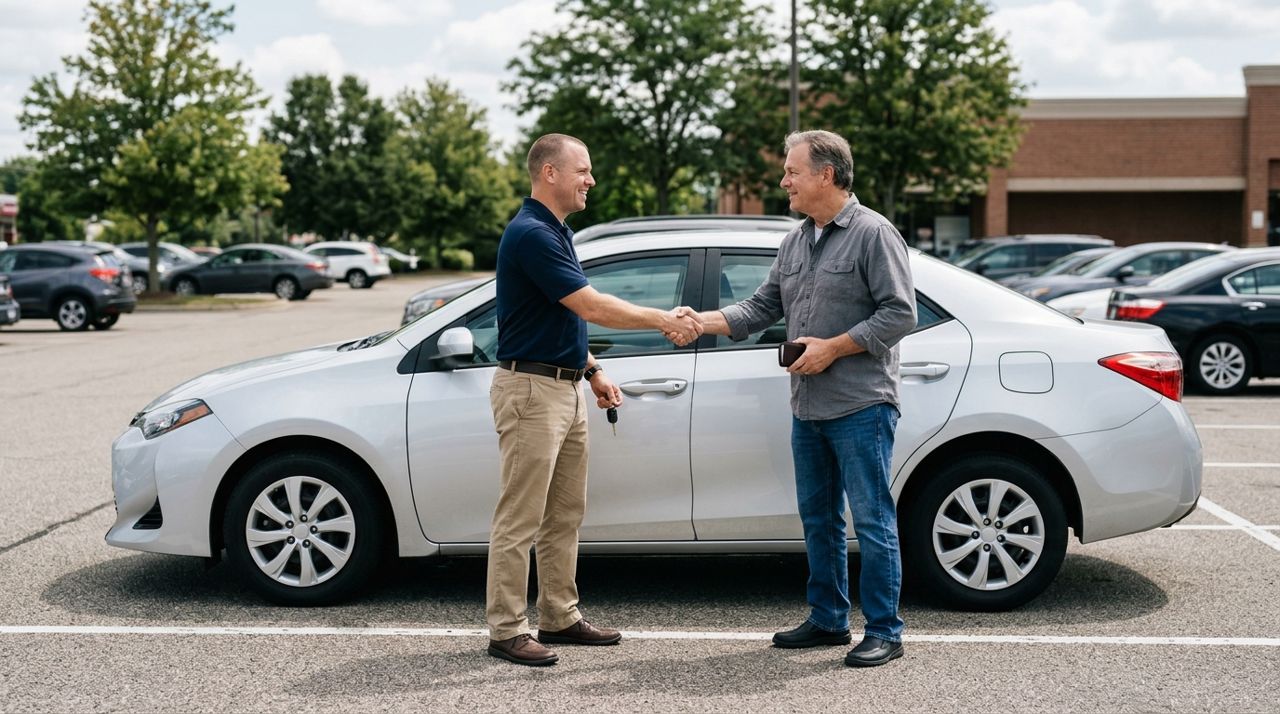
Two people shaking hands next to a car in a public parking lot Expect lots of messages. Ignore any buyer who offers to pay sight-unseen, wants you to ship the car, asks for your bank details, or sends a check before viewing. Real buyers ask about condition, service history, reason for selling, and when they can see it.
When someone sounds serious, propose a daytime meeting at a public place: a bank parking lot, police station visitor area, or busy shopping center. Tell the buyer you'll meet them there and will only accept verified payment (more on that in step five). Bring a friend or family member if possible.
For the test drive, require the buyer to show a valid driver's license and proof of insurance. Take a photo of both with your phone. Ride along during the drive. If someone refuses these terms, they're not a serious buyer.
- 04
Step 4: Conduct the inspection and test drive safely
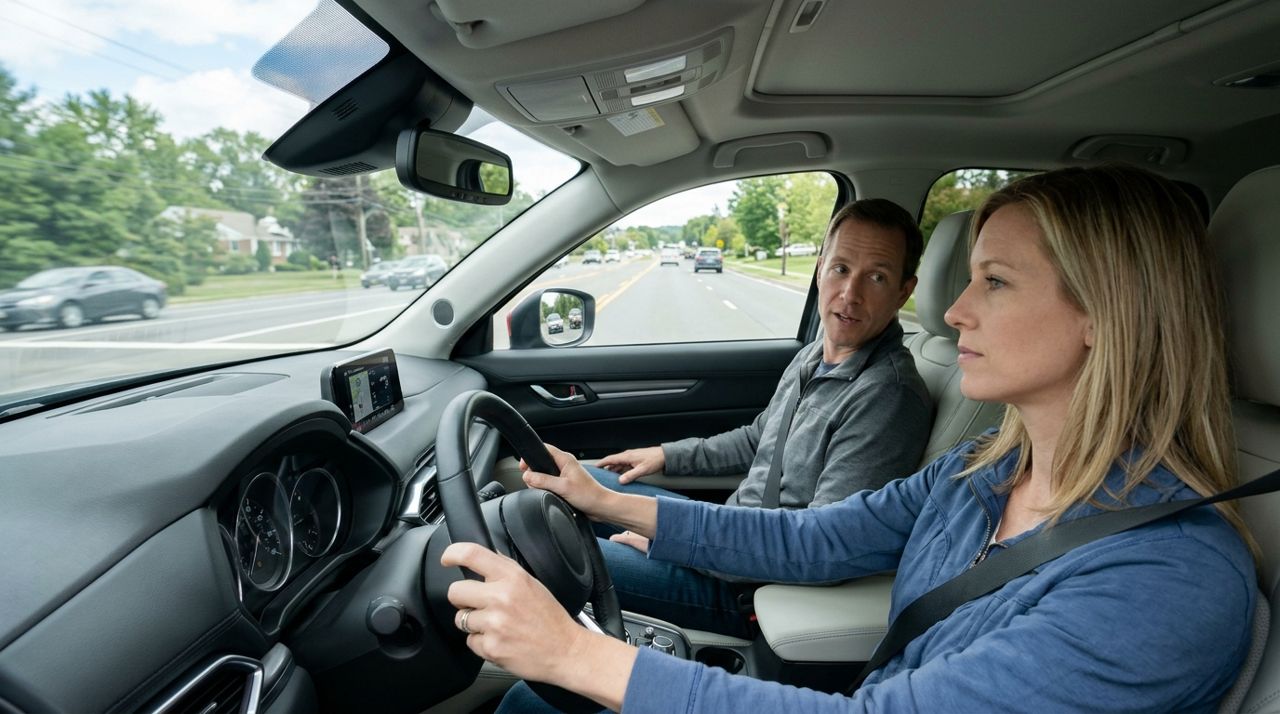
Driver and passenger inside a car during a daytime test drive Meet at the agreed location. Let the buyer inspect the car and ask questions. Start the engine, show them the clean title, and answer everything honestly. If they want a pre-purchase inspection by their mechanic, that's a good sign of a serious buyer; agree on a nearby shop and go together.
For the test drive, you sit in the passenger seat with your phone. Keep the route to main roads and 15–20 minutes. Watch for smooth acceleration, braking, and handling. If the buyer tries to take side trips or wants to drive alone, end the test drive.
After the drive, give the buyer space to think. Don't pressure; a real buyer will make an offer if they're interested. If they try to renegotiate dramatically based on minor flaws you already disclosed, walk away. Expect 5–10% negotiation from your asking price, not 20–30%.
- 05
Step 5: Accept only verified payment methods
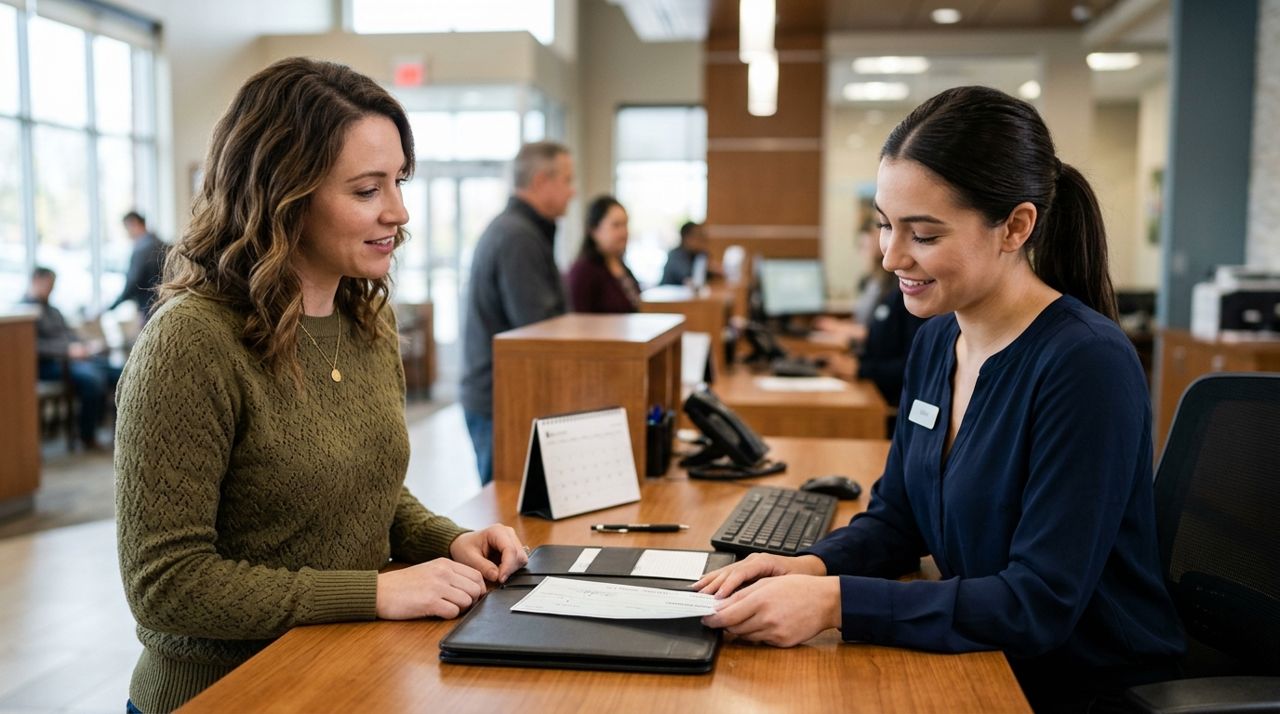
Bank cashier's check being reviewed by two people at a bank counter Cash, cashier's check from a bank you can verify immediately, or an escrow service are your only safe options. If the buyer offers cash, meet inside a bank so you can verify bills and deposit immediately. Amounts over $5,000 in cash make most sellers nervous; a cashier's check is better.
If they bring a cashier's check, call the issuing bank using the number you find independently (not one printed on the check) and verify the check is real and the funds are available. Do this before handing over keys. Fake cashier's checks are common and can take two weeks to bounce, leaving you without a car or money.
Never accept personal checks, money orders you can't verify on the spot, wire transfers to 'prove funds,' or payment apps for large amounts without waiting for the funds to fully clear. If a buyer can't pay the agreed method, they're not ready to buy.
- 06
Step 6: Complete the title transfer and bill of sale
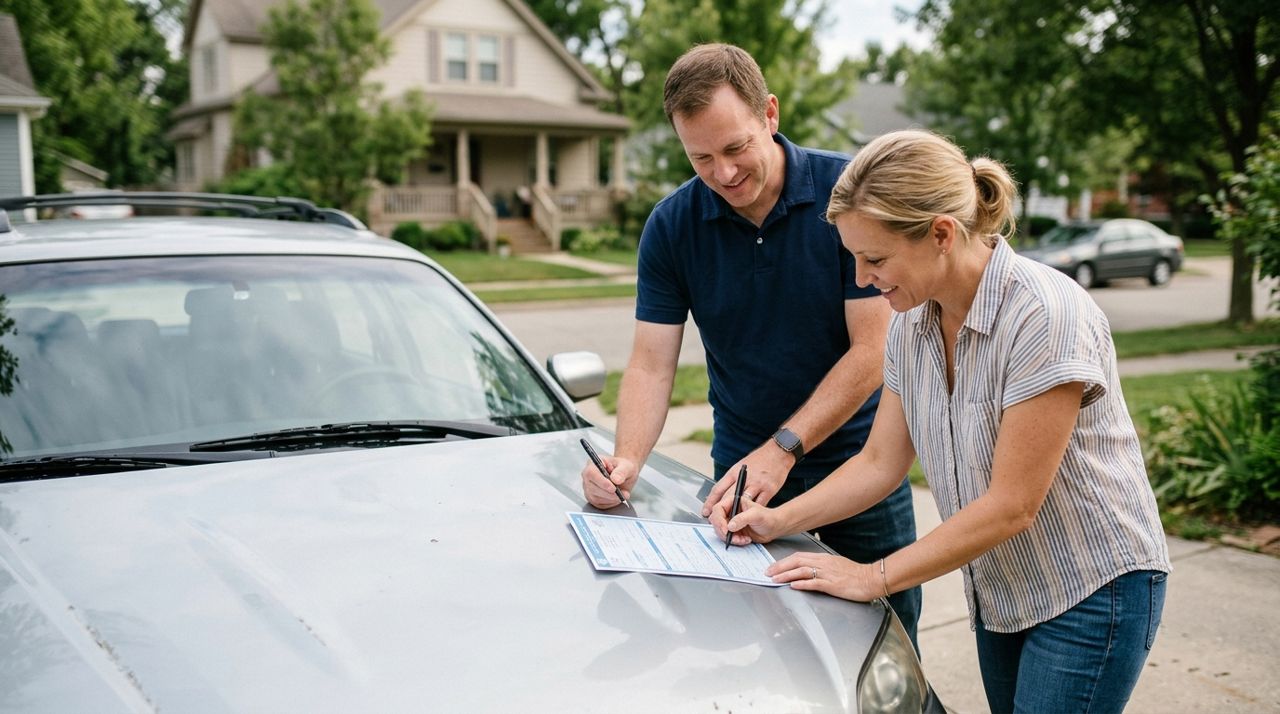
Two people signing a car title document on the hood of a vehicle Once payment is verified and in your possession, fill out the title transfer section on the back of the title. You and the buyer both sign and date it. Record the odometer reading and sale price. Make a copy for yourself before handing the original to the buyer.
Complete a bill of sale with both names, addresses, date, VIN, make, model, year, odometer reading, and sale price. Both of you sign it; each keeps a copy. Many states require this; templates are free on your DMV website.
Remove your license plates (in most states they stay with you, not the car). Give the buyer all keys, remotes, manuals, and service records. Within 5–10 days, notify your state DMV that you sold the vehicle and to whom; this protects you from liability if the buyer drives without registering it. Also call your insurance company immediately to cancel coverage or transfer it to your next car.
- 07
Step 7: Follow up to confirm the buyer registered the vehicle
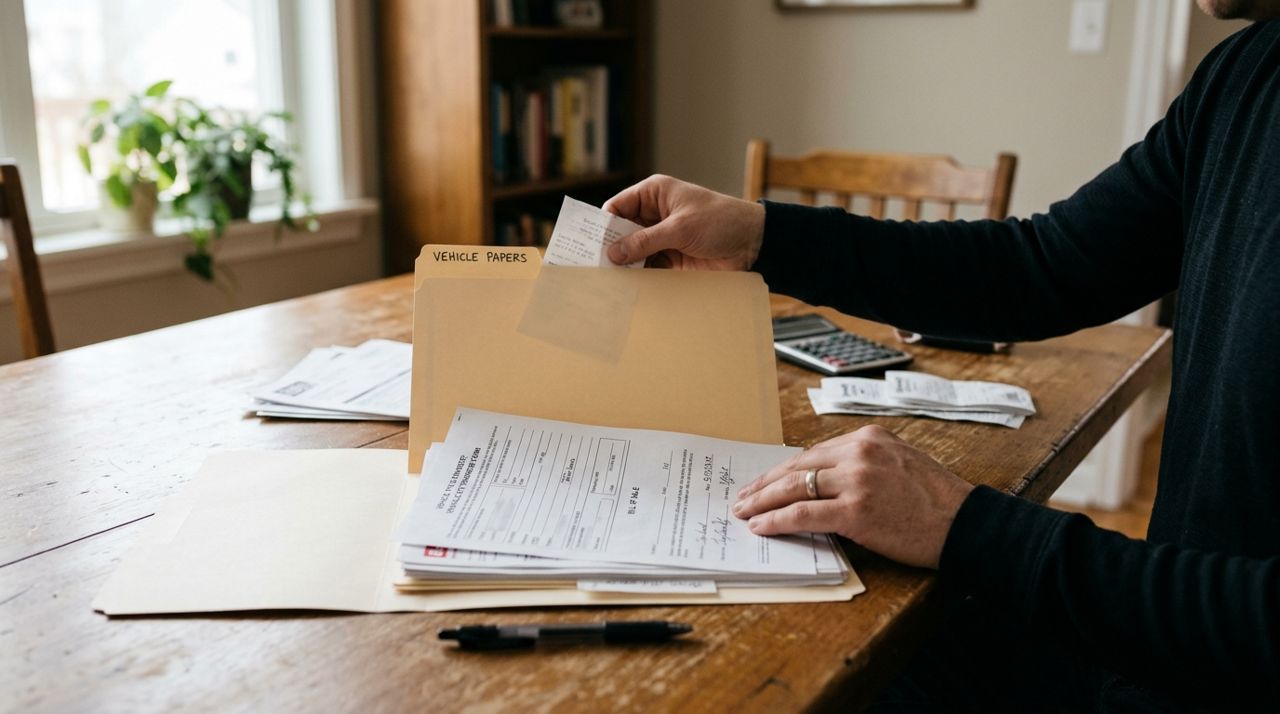
Person organizing vehicle sale paperwork and receipts in a file folder A week after the sale, check your state DMV website or call to confirm the title transfer was recorded. Some buyers delay registration to avoid sales tax or fees, which can leave you liable for tolls, tickets, or even accident claims. If the transfer isn't recorded after 10–14 days, contact the buyer with a friendly reminder.
Keep copies of the bill of sale, your notification to DMV, and any messages with the buyer for at least six months. If you receive any tickets or notices related to the car, respond immediately with proof you sold it, including the bill of sale and DMV notification.
If you listed on Lumo, the in-app messaging provides a timestamped record of your conversations, which can be useful if any questions arise. Once everything is settled, you're free to use the proceeds toward your next vehicle or whatever you had planned.
Pro tips
- Never let a buyer test-drive alone or take the car 'to show my spouse' without full payment.
- If your car has a loan, arrange for the buyer to pay off the lien directly at your bank so you both get the clear title immediately.
- Decline any buyer who wants to use a 'shipping service' or 'buyer's agent'—these are almost always scams.
- Keep your personal address private; meet buyers at neutral locations and don't show the car at your home unless you feel completely safe.
- Trust your instincts: if a deal feels wrong or a buyer is pushy, walk away; another buyer will come along.
Frequently asked questions
- What if I still owe money on the car?
- Contact your lender before listing and get the exact payoff amount and their process for releasing the title. Many sellers and buyers meet at the lender's bank, the buyer pays the lender directly for the loan plus the seller for the remaining equity, and the lender hands over the title once the loan clears. This usually takes a few business days but protects everyone.
- How do I avoid scams when selling a car online?
- Meet in person in a public place during daylight, verify buyer ID and insurance, accept only cash or verified cashier's checks, never ship the car, and ignore any buyer who offers to pay more than your asking price or wants to send a check before seeing the vehicle. Real local buyers will inspect the car in person and pay with verifiable funds.
- Do I need to provide a warranty or guarantee?
- No. Private-party used cars are typically sold 'as-is' with no warranty, which you should state clearly in your listing and bill of sale. This means the buyer accepts the car's current condition and you're not responsible for repairs after the sale, as long as you were honest about known issues.
Selling your car yourself takes more effort than trading it in, but the extra $1,000–3,000 you'll keep is worth a few hours of work. Stick to verified payments, meet safely, handle the paperwork correctly, and you'll close the sale with confidence. If you're ready to list, Lumo's Seller mode gives you a free shop to reach local buyers, with in-app messaging to coordinate the details and complete the transaction smoothly.
Photos are illustrative. Service prices are typical ranges and vary by city. How we write our guides.
More guides like this
How to Sell Your Used Furniture Online and Get Paid Quickly
Selling furniture you no longer need doesn't have to mean low-ball offers or sketchy parking-lot meetups. This guide walks you through photographing, pricing, listing, and getting paid for couches, tables, beds, and more.
How to List a Garage Full of Items for Sale Online (Step by Step)
Facing a garage full of stuff you want to sell? This guide walks you through listing dozens of items quickly—from sorting and photographing to pricing and managing your online shop.
How to Sell Kids' Clothes and Toys Online in Your Neighborhood
Your kids outgrow clothes and toys faster than you can keep up. Here's how to turn those gently used items into cash by selling locally to families who need them.