
How to Write Product Descriptions That Actually Sell Your Items

You've got great products, decent photos, and competitive prices. But your sales are flat. The problem might be your product descriptions. Too many sellers treat descriptions as an afterthought—copying manufacturer specs, writing one-sentence summaries, or skipping them entirely. That's leaving money on the table.
A well-written description answers the questions customers have before they ask, builds confidence in your product, and gives people a reason to choose you over the next seller. Whether you're running a retail shop on Lumo or selling anywhere else online, these six steps will help you write descriptions that actually move inventory.
- 01
Step 1: Start With the Benefit, Not the Feature

Woman writing product details in a notebook at a retail counter People don't buy features—they buy what those features do for them. Instead of leading with 'stainless steel construction,' start with 'stays rust-free for years, even in humid kitchens.' The feature is still there, but now the customer knows why it matters.
Write your first sentence to answer 'what does this do for me?' A phone case isn't '2mm thick TPU'—it's 'protects your phone from drops without adding bulk.' A candle isn't 'soy wax with essential oils'—it's 'fills your living room with lavender scent for 40 hours, no synthetic fragrance.' Lead with the outcome, then back it up with the specs. This approach hooks attention in the first line and keeps people reading.
- 02
Step 2: Use Specific Numbers and Measurements
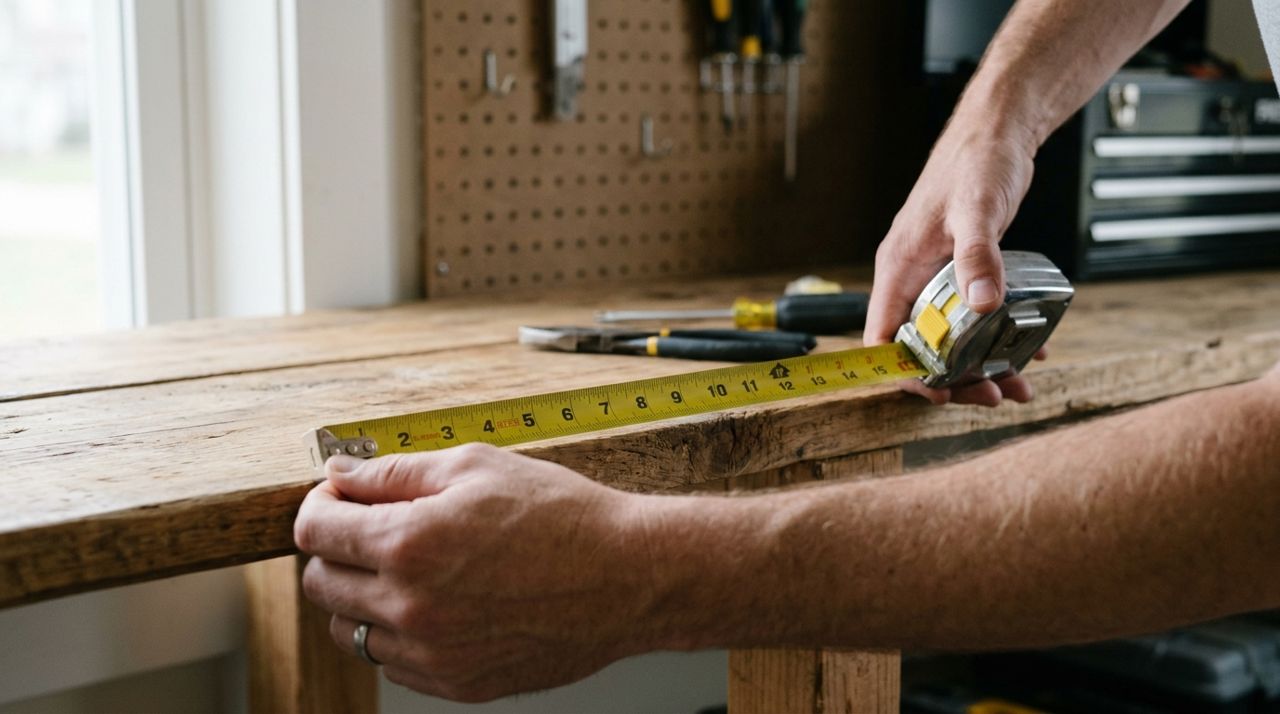
Close-up of hands measuring a product with a tape measure Vague descriptions create doubt. 'Large capacity' could mean anything. '32-ounce capacity—holds four full cups of coffee' tells the customer exactly what they're getting and helps them picture using it.
Include measurements that matter for your product: dimensions for furniture and decor, weight for anything portable, capacity for containers, thread count for linens, coverage area for cleaning products. If you sell clothing, list actual measurements in inches, not just S/M/L. For food items, specify weight, servings, or piece count. Numbers eliminate guesswork and reduce returns. When customers know exactly what size or quantity they're getting, they buy with confidence and complain less later.
- 03
Step 3: Answer the Questions You Always Get Asked

Customer in a shop asking questions about a product to a seller If you've sold products in person or online for any length of time, you know which questions come up over and over. Your description should answer them before customers have to message you.
- Is it dishwasher/machine washable?
- Does it require assembly?
- What's included in the box?
- Will it work with [common related item]?
- How long does it last?
- Is it suitable for [specific use case]?
On Lumo, customers can message you, but a complete description means fewer back-and-forth conversations and faster purchase decisions. Keep a running list of customer questions for a week, then add those answers to your templates for similar items.
- 04
Step 4: Write for Someone Who Can't See or Touch It

Hands holding and examining a retail product closely indoors Online shoppers can't pick up your product, feel the fabric, or test the weight. Your words have to do that work. Use sensory language: 'soft brushed cotton,' 'smooth matte finish,' 'clicks shut firmly,' 'bright lemon scent.'
Avoid jargon unless your audience knows it. If you sell to hobbyists who understand technical terms, use them. If you're selling to general customers, explain in plain language. 'Ergonomic grip' is fine, but 'contoured handle that fits comfortably in your hand for hours' is clearer.
Describe what it's like to use the product. Not just 'wireless speaker' but 'connect your phone in seconds and control volume from across the room.' Paint a picture of the experience, not just the object.
- 05
Step 5: Break It Up With Formatting
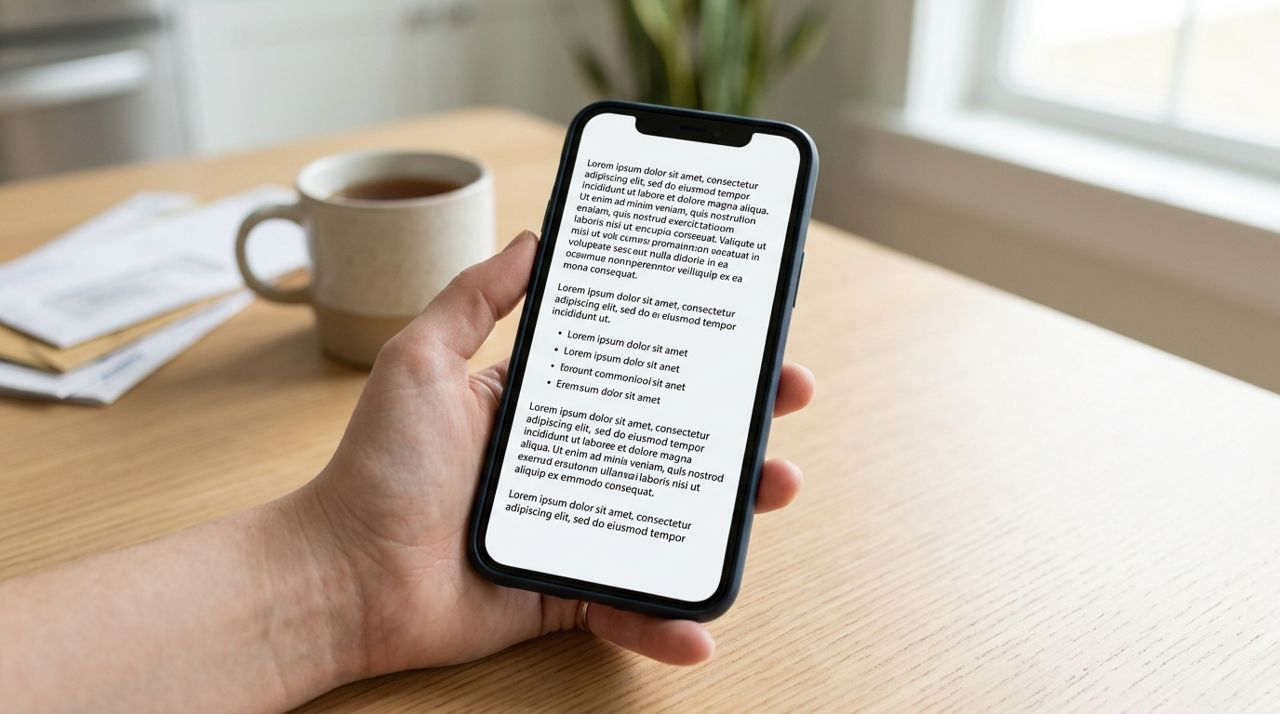
Smartphone displaying formatted product description with bullet points and short paragraphs Nobody reads a wall of text on a phone screen. Use short paragraphs—two to three sentences maximum. Add bullet points for specs, lists of included items, or key features.
- Opening sentence with the main benefit
- One paragraph on what it does and who it's for
- Bullets for specifications or features
- One paragraph on use cases or what makes it different
- Closing line with what's included or a confidence boost
When you list products on Lumo, clean formatting makes your shop look professional and helps customers scan for the information they need. A well-organized description gets read; a dense paragraph gets skipped. Use line breaks generously and group related details together.
- 06
Step 6: End With Confidence Builders and Next Steps

Person completing a purchase on a smartphone at a checkout screen Close your description by addressing any final hesitations and making it easy to buy. Mention your return policy if you have one, note if it's in stock and ready to ship, or highlight what makes your shop reliable.
Examples: 'In stock and ships same-day from our downtown shop.' 'Used daily in our own kitchen for two years.' 'Packaged carefully to arrive in perfect condition.' These lines reassure customers that you're a real person who stands behind what you sell.
If relevant, suggest the next step: 'Order now for pickup this afternoon' or 'Add to cart—limited stock available.' Don't be pushy, but do make the path to purchase clear. On Lumo, customers can choose pickup or delivery, so mention if same-day pickup is available or if you deliver locally.
Pro tips
- Read your descriptions out loud—if you stumble over a sentence, rewrite it.
- Keep a swipe file of descriptions you like from other sellers and adapt the structure (never copy word-for-word).
- Update descriptions when you notice patterns in customer questions or returns.
- Use the exact words your customers use when they ask about products—that's the language that resonates.
- Write one great description, then use it as a template for similar items to save time.
Frequently asked questions
- How long should a product description be?
- Long enough to answer key questions, short enough to stay readable. For simple items like snacks or basic supplies, 3-4 sentences plus specs works. For expensive or complex products like furniture or electronics, aim for 100-150 words with bullets. If you're writing more than 200 words, you're probably overdoing it.
- Should I use the manufacturer's description?
- No—manufacturer descriptions are written for retailers, not customers, and they're often stuffed with jargon or focused on features that don't matter. Pull useful specs from the manufacturer but write your own description in plain language focused on benefits. Plus, unique descriptions help you stand out from other sellers offering the same item.
- Can I use the same description for similar products?
- Yes, with modifications. Create a template for product categories (candles, t-shirts, kitchen tools) but customize each one with the specific scent, color, size, or feature that makes it unique. Customers notice when descriptions are lazy or generic, and it hurts trust.
Good product descriptions take a little extra time up front, but they pay for themselves in fewer questions, faster sales, and happier customers. Start with one product category and refine your template, then apply it across your inventory. If you're selling on Lumo, you can update descriptions anytime in your shop dashboard—test different approaches and see what works. Clear, honest, benefit-focused writing turns browsers into buyers.
Photos are illustrative. Service prices are typical ranges and vary by city. How we write our guides.
More guides like this

How to Open a Free Online Shop for Your Neighborhood Boutique
Your neighborhood boutique can reach more customers without paying monthly platform fees. Here's how to open a free online shop, list your inventory, and start taking orders today.
How to Manage Stock Levels for Your Retail Shop (And Never Oversell)
Selling out is great—selling something you don't have is a disaster. Here's how to keep your stock levels accurate and avoid disappointing customers.

How to Take Professional Product Photos Using Only Your Phone
You don't need a fancy camera to take product photos that sell. With the phone in your pocket and a few simple techniques, you can shoot images that look professional and make customers want to buy.