
Moving into a rental: from keys to unpacked in one weekend
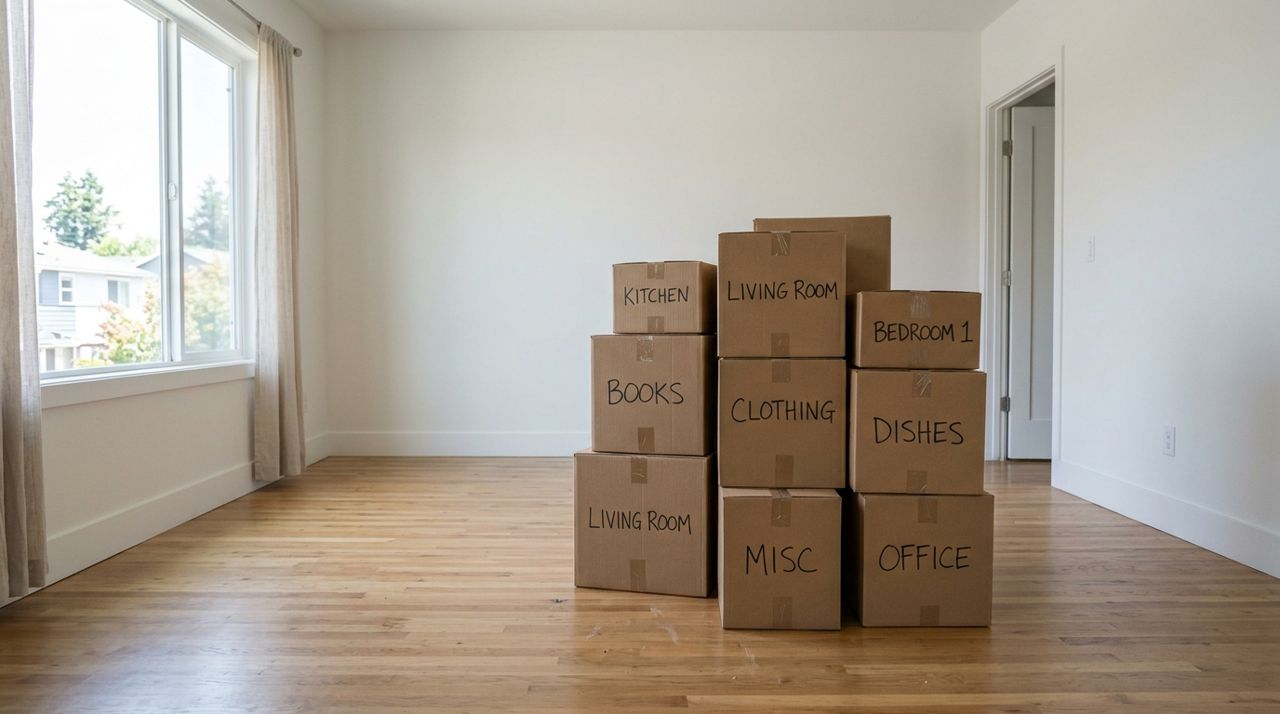
Most renters get their keys on a Friday or Saturday and face the reality of being work-ready by Monday. The difference between a smooth weekend move and a chaotic mess comes down to doing the right tasks in the right order, not working harder.
This guide walks through the 48-hour move-in process: what to handle before you pick up keys, how to organize moving day itself, and which tasks actually matter for getting settled quickly. Whether you're moving across town or across the state, the same framework applies.
- 01
Step 1: Handle utilities and address changes before key pickup
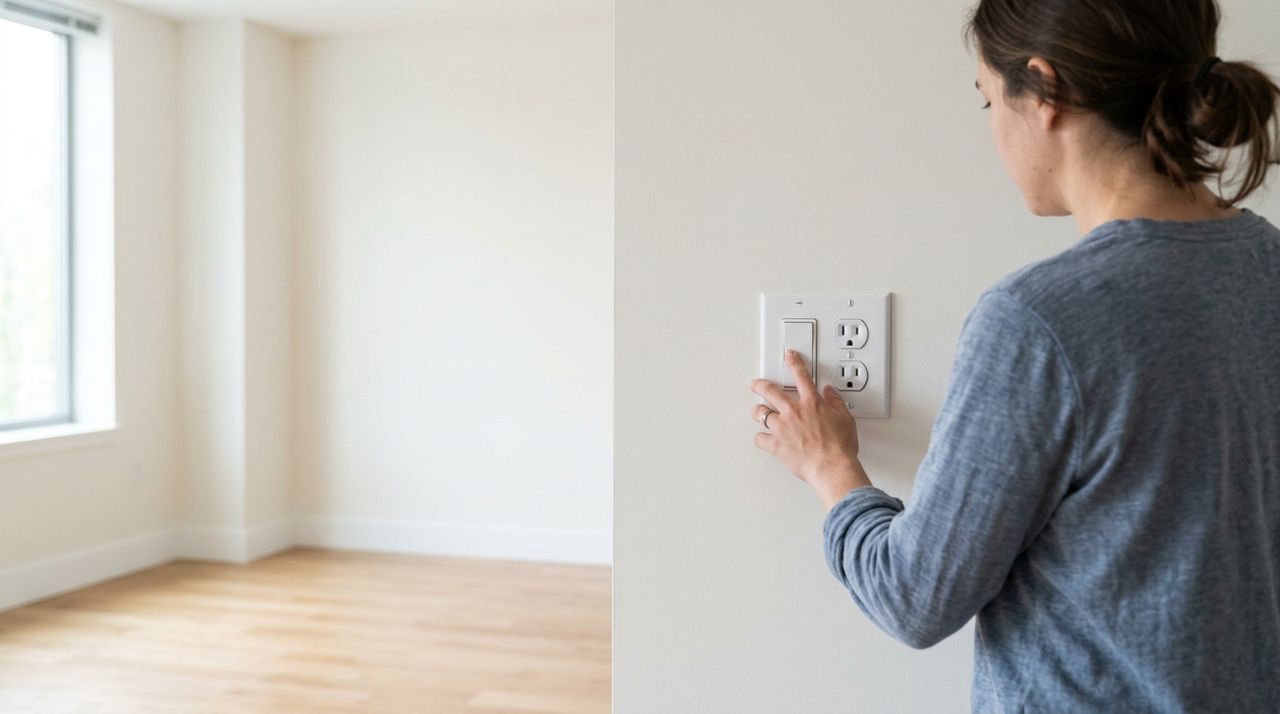
Person switching on electrical outlet in empty apartment room before moving in Start this checklist three to five days before move-in. Call or go online to schedule electric, gas, water, and internet service to start the day you get keys—not the day after. Update your address with USPS (costs $1.10 online, takes effect in 3 business days), your employer's HR department, banks, credit cards, insurance policies, and state DMV if required by your new state.
Order keys cut if your landlord only provided one set. Take photos of every room, wall, floor, and appliance while the place is empty; email these to your landlord with the date. This protects your deposit when you move out. Locate the circuit breaker, water shutoff, and HVAC filter while you're there.
- 02
Step 2: Pack a 'first 24 hours' box that travels with you
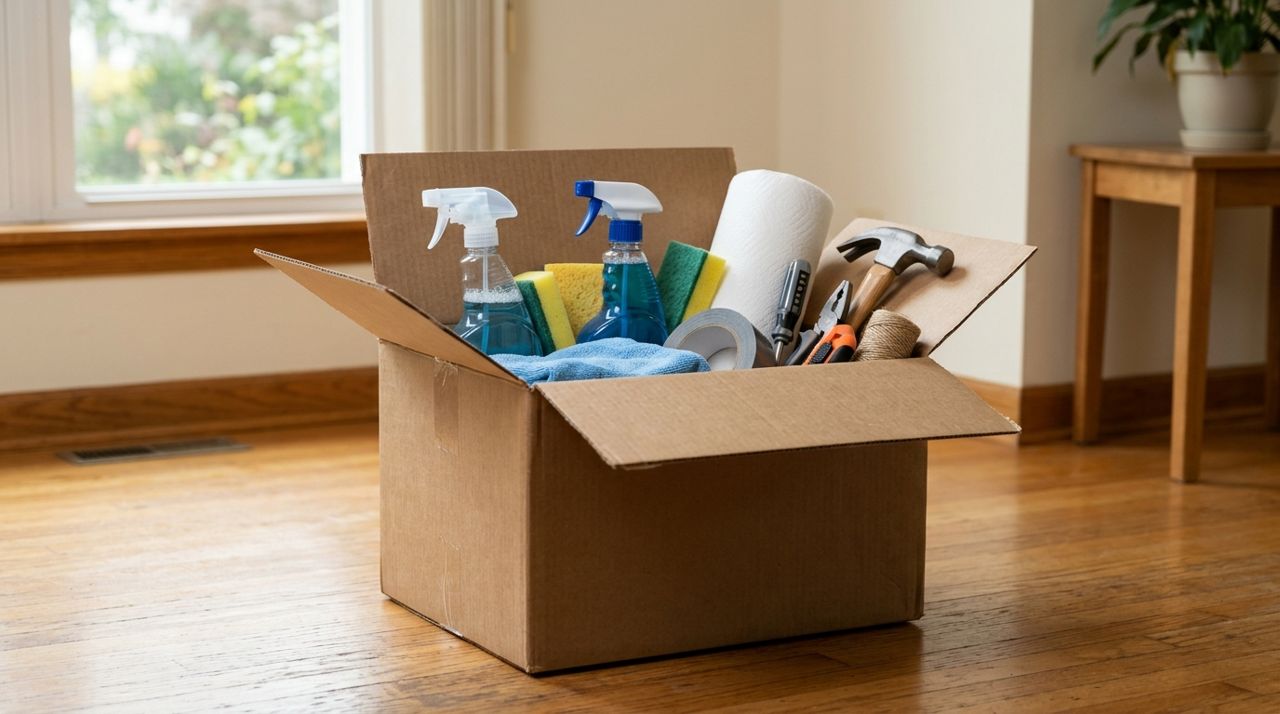
Open moving box packed with essential supplies, cleaning products and basic tools for first day One box or bag stays in your car, never on the moving truck. Inside: phone chargers, medications, toiletries, a change of clothes, paper towels, trash bags, toilet paper, hand soap, a few dishes and utensils, snacks, bottled water, scissors, a box cutter, lightbulbs, basic tools (screwdriver, hammer, tape measure), and copies of your lease and IDs.
Add cleaning supplies if you plan to wipe things down: all-purpose cleaner, disinfecting wipes, a sponge. This box lets you function the first night even if the moving truck is delayed or you're too exhausted to unpack. Label it clearly and load it last so it comes out first.
- 03
Step 3: Move furniture and heavy boxes first, room by room
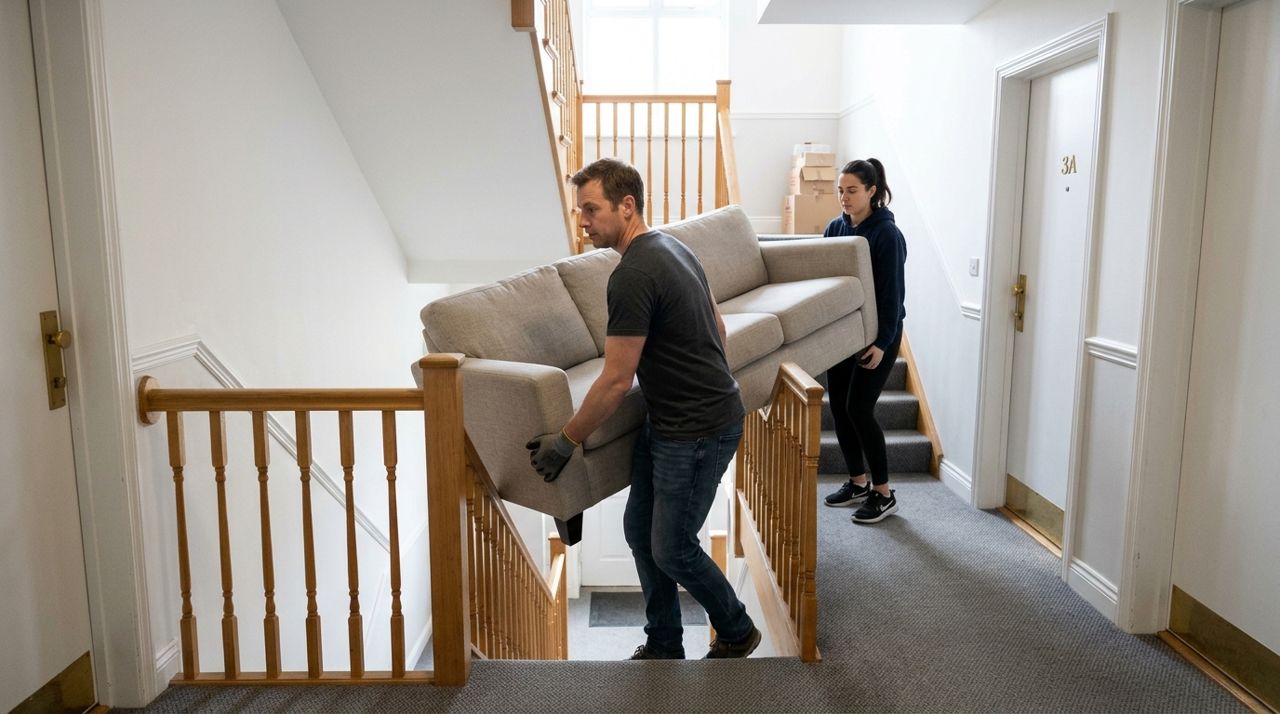
Two people carefully moving a couch up apartment staircase during moving day Start early—7 or 8 a.m. if your lease and neighbors allow. Tackle the heaviest items while everyone still has energy. Bring furniture into the correct room immediately; moving a couch twice wastes time. Assemble bed frames first so you have a place to sleep that night.
If you're hiring help, movers typically charge $80–$150 per hour for two workers (prices vary by city), and most local moves take 3–5 hours. You can also book moving labor through an app; on Lumo, for instance, you can hire local moving pros, set your budget, and track everything in one place. Protect floors with cardboard or old sheets, especially if your lease holds you responsible for damage.
- 04
Step 4: Set up the kitchen and one bathroom immediately
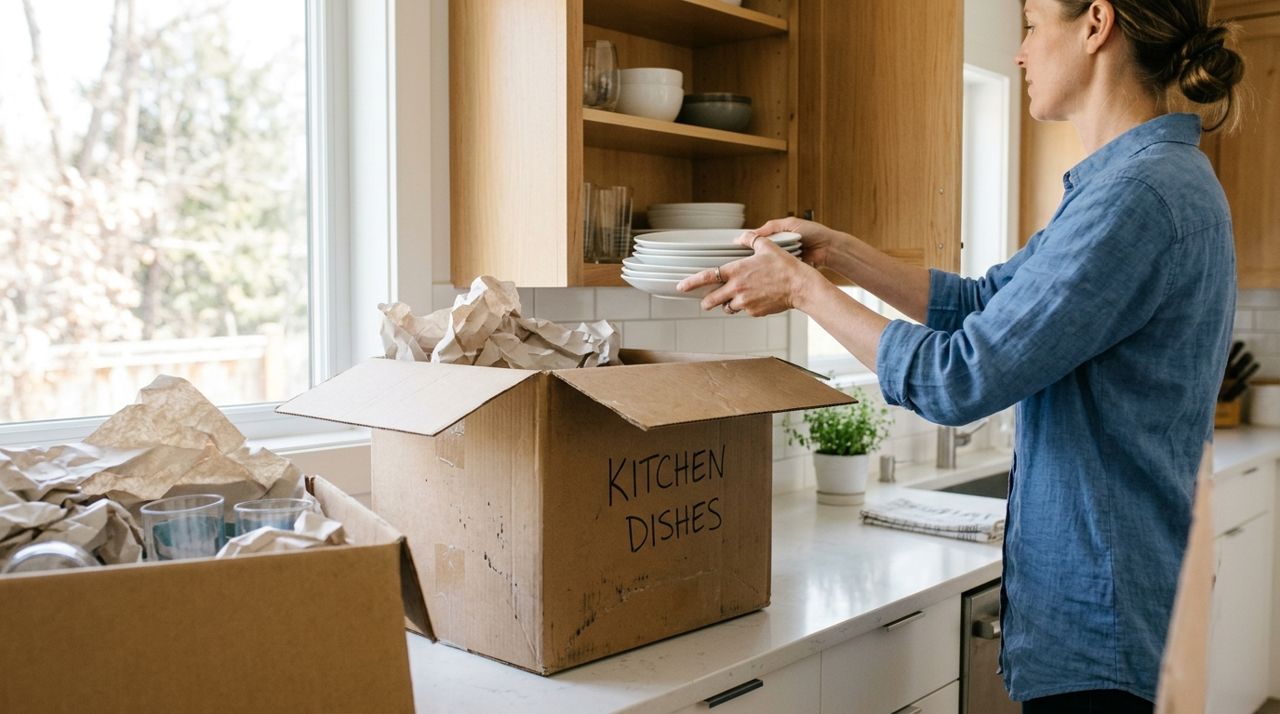
Hands unpacking plates and glasses from moving box into clean kitchen cabinet Unpack the kitchen and one full bathroom before you do anything else. You need running water, a working toilet, soap, towels, and the ability to make coffee and a simple meal. This takes about 90 minutes and makes the space livable.
Put shelf liner down before loading cabinets if you plan to use it. Arrange dishes, glasses, and utensils in the most logical spots—you can always rearrange later, but having them accessible now matters. Stock the fridge with basics: milk, eggs, bread, sandwich materials, fruit. Order takeout or grocery delivery for dinner if you don't want to cook; most delivery apps show restaurants near your new address.
- 05
Step 5: Make beds and hang shower curtains before nighttime
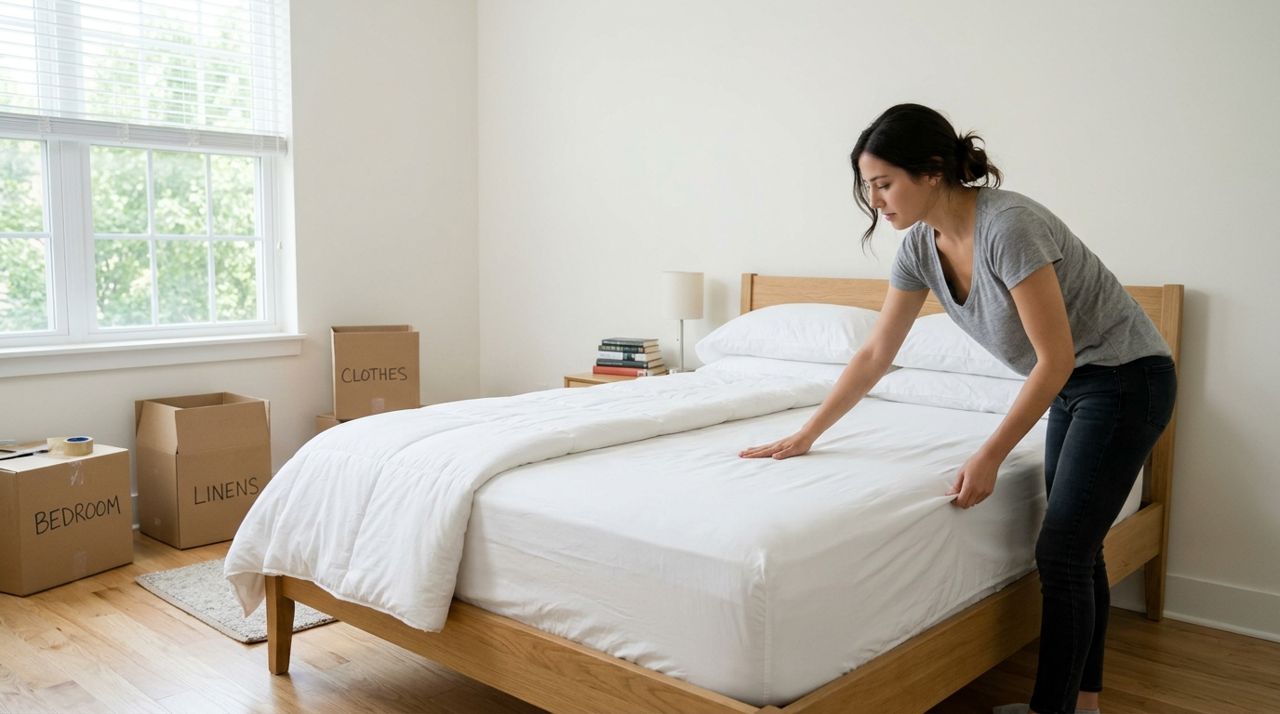
Person smoothing clean white sheets on bed in new bedroom during move-in day By 6 or 7 p.m., stop unpacking boxes and focus on the basics for sleeping and showering. Make every bed completely: mattress pad, sheets, pillows, blankets. Hang shower curtains and bathroom rugs. Set out towels. Plug in bedside lamps and phone chargers.
Set up your internet router if it arrived, or use your phone as a hotspot. Locate your toothbrush, pajamas, and tomorrow's clothes. Take out the trash and recycling so you're not dealing with moving debris in the morning. Run the dishwasher or do one load of dishes by hand. This 45-minute wind-down routine means you wake up in a functional home, not a construction zone.
- 06
Step 6: Unpack strategically on day two: clothing, then essentials

Hands hanging shirts on wooden hangers in organized bedroom closet after moving in Sunday morning, start with your closet and dresser. Hang or fold all your clothes so you can get dressed for work Monday without digging through boxes. Unpack your desk or workspace if you work from home. Set up your TV and living room seating if you want a place to relax by evening.
Work room by room, finishing one completely before starting another. Break down boxes as you go and pile them by the door—most cities offer free cardboard recycling pickup, or you can list them on a local Buy Nothing group. Don't aim for perfection; aim for 'functional and clear of tripping hazards.' By Sunday night, you should be able to find anything you need and navigate every room safely.
- 07
Step 7: Register with your landlord and explore the neighborhood
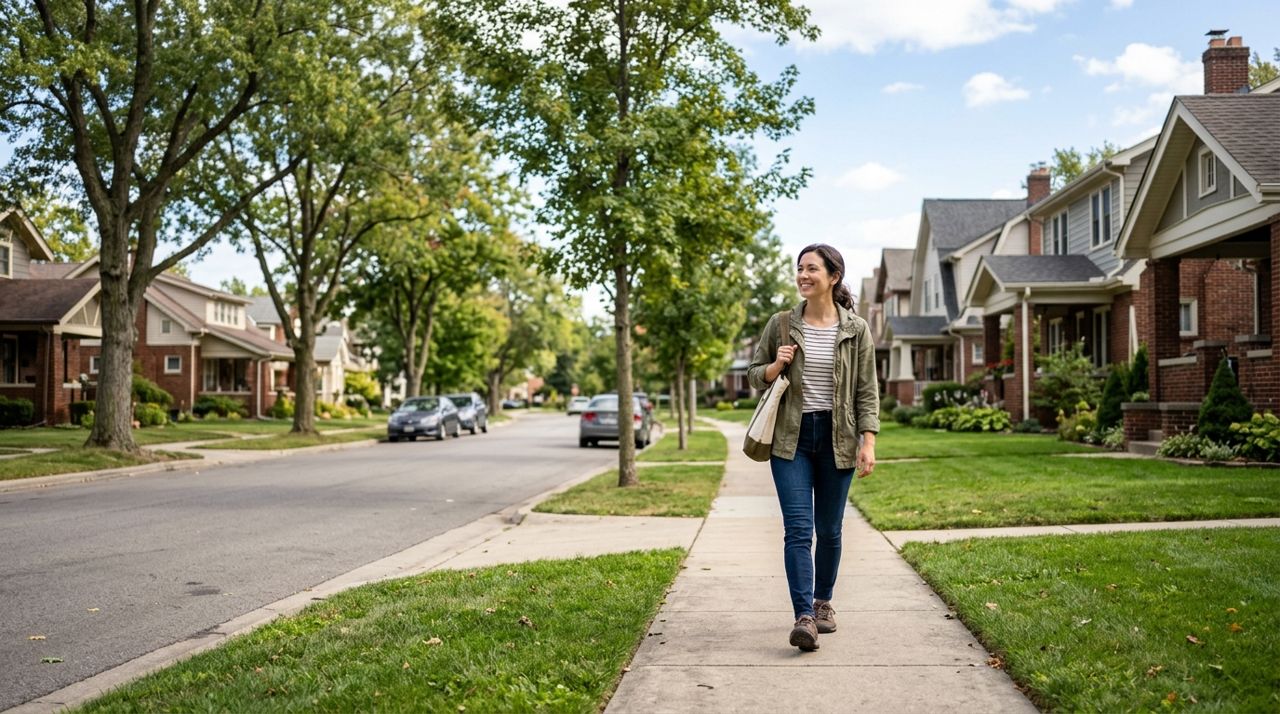
Person walking down suburban neighborhood street exploring new area after moving in to rental Finish any landlord paperwork: renter's insurance documentation, parking permits, key fob activation, mail room access. Walk or drive a 10-minute radius to locate your nearest grocery store, gas station, pharmacy, bank, post office, and urgent care clinic. Note which restaurants deliver and what their hours are.
Introduce yourself to one or two neighbors if you see them; a quick 'Hi, I just moved into 3B' goes a long way if you ever need a favor. Find out trash and recycling pickup days and where the dumpsters or bins are. Take a photo of your parking spot number or building entrance if the complex is large. These small orientation tasks prevent surprises during your first week.
Pro tips
- Label every box with the room AND a one-line contents list—'Kitchen – pots, pans, baking' saves hours of searching.
- Defrost your fridge 24 hours before moving day if you're bringing it; you don't want water leaking in the truck.
- Take meter readings (electric, gas, water) with photos the day you move in and email them to your landlord and the utility companies.
- Keep your old address active for mail forwarding through USPS for at least six months; some bills and documents will lag behind.
- Ask your landlord for the WiFi password if internet is included, or the provider name so you can set up service immediately.
Frequently asked questions
- How much does it cost to hire movers for a one-bedroom apartment?
- For a local move, expect $200–$500 total depending on your city, how much stuff you have, and whether there are stairs. That typically covers two movers for 2–4 hours. Long-distance moves are priced by weight and distance, usually $1,000–$3,000 for a one-bedroom. Always get a written estimate and confirm insurance coverage before hiring anyone.
- What if my internet service can't be installed until next week?
- Use your phone as a mobile hotspot in the meantime. Most carriers allow tethering on unlimited plans, though video streaming may slow down after a data cap. If you work from home and need reliable speed, ask your employer if they can cover a temporary hotspot device, or work from a coffee shop or library the first few days.
- Should I clean before or after I move my stuff in?
- Do a quick clean before furniture arrives—vacuum, wipe counters, clean the toilet and shower. It's easier to clean empty rooms. Then do a second pass once you're unpacked to deal with dust from boxes and any scuffs from moving furniture. Most landlords clean between tenants, but don't assume it's perfect.
A weekend move-in is completely doable when you plan the sequence: utilities and address changes first, heavy furniture and essentials on day one, clothing and finishing touches on day two. The goal isn't to have a magazine-ready home by Monday—it's to sleep well, shower easily, and leave for work without tripping over boxes. Everything else can happen over the next few weeks.
Photos are illustrative. Service prices are typical ranges and vary by city. How we write our guides.
More guides like this
How to Find a Long-Term Rental Apartment in a New City: A Step-by-Step Guide
Finding a rental apartment in an unfamiliar city can feel overwhelming, but breaking the process into clear steps makes it manageable. This guide walks you through searching listings, evaluating neighborhoods, and locking down the right place.

How to Book a Short-Term Rental for Your Work Trip in 7 Steps
Booking a short-term rental for a work trip doesn't have to be complicated. Follow these seven practical steps to find the right place, check what you need, and confirm your stay.
How to List Your Home for Sale Without Paying Listing Fees
Listing your home for sale doesn't have to cost you hundreds or thousands in upfront fees. Here's how to create a free listing that reaches serious buyers.